Every business makes decisions based on information. The problem is getting that information in a usable format. Right now, your team probably spends hours each week pulling data from different systems, copying numbers into spreadsheets, formatting tables and charts, checking calculations for errors, and creating presentation slides to share findings. By the time the report is finished, the data is already outdated and decisions get delayed.
This manual reporting cycle wastes valuable time and creates frustration. Important questions like "Which products generated the most profit last quarter?" or "Are our marketing campaigns actually working?" or "Which customers are at risk of leaving?" take days to answer when they should take seconds.
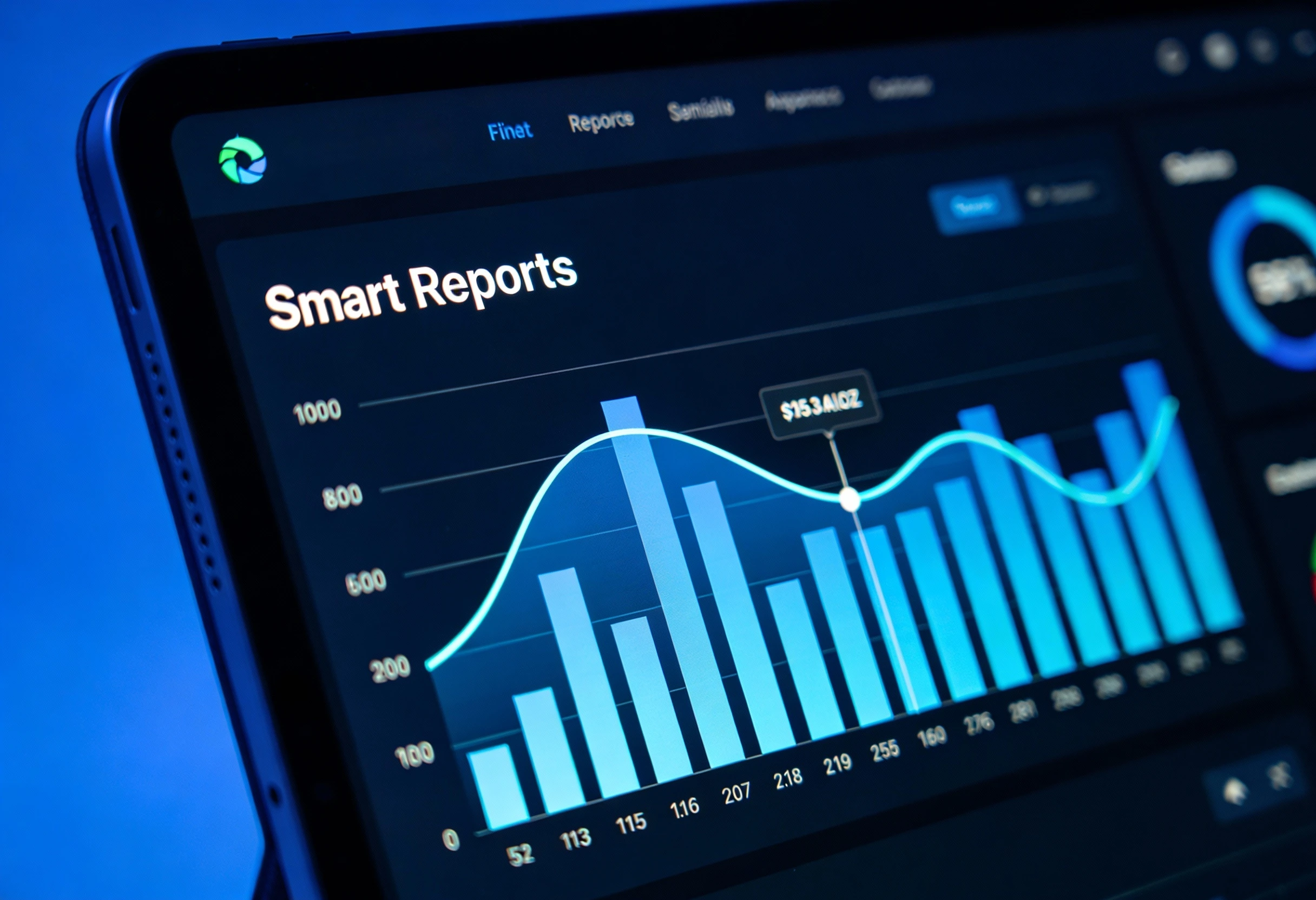
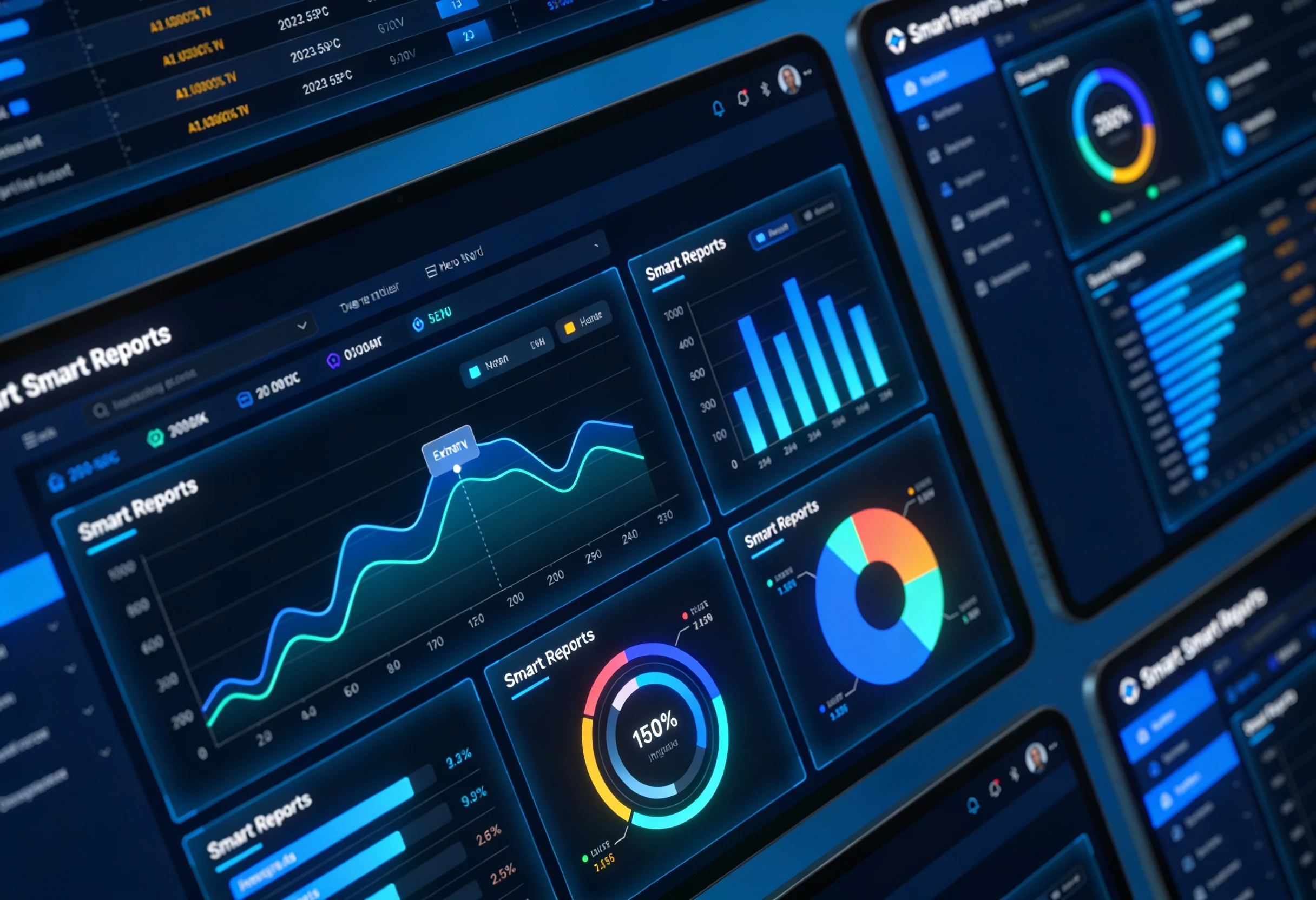
Smart reporting transforms this entire process. Imagine having every report you need generated automatically on schedule, pulling fresh data in real time from all your systems, displaying information in clear visuals that anyone can understand, and being delivered to the right people without you lifting a finger. The data is always current. The formatting is always professional. The insights are always actionable.
This is what modern businesses do. They automate reporting so their teams can spend time acting on insights instead of compiling numbers.

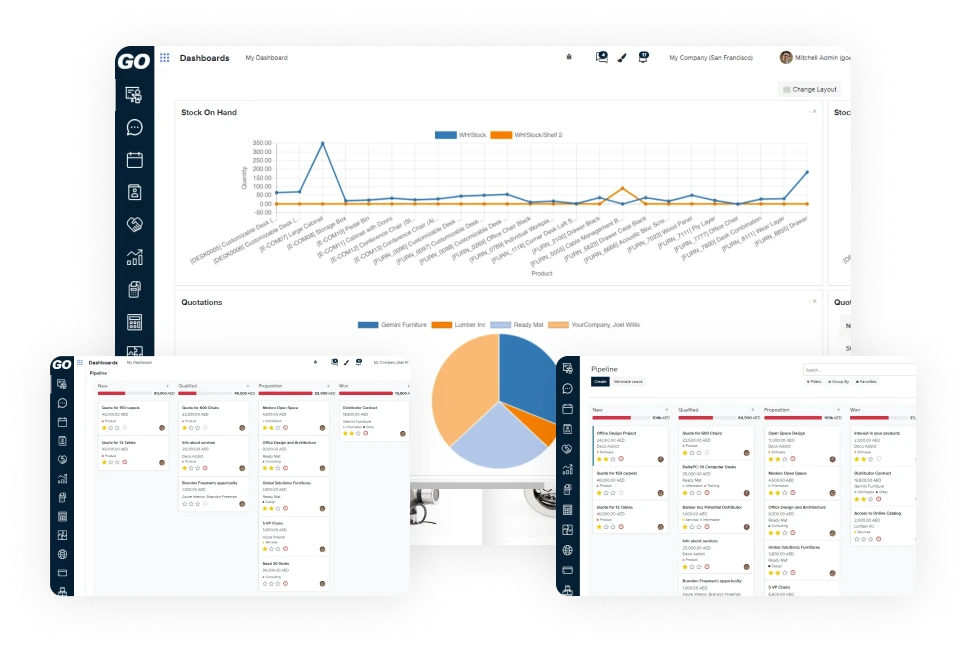
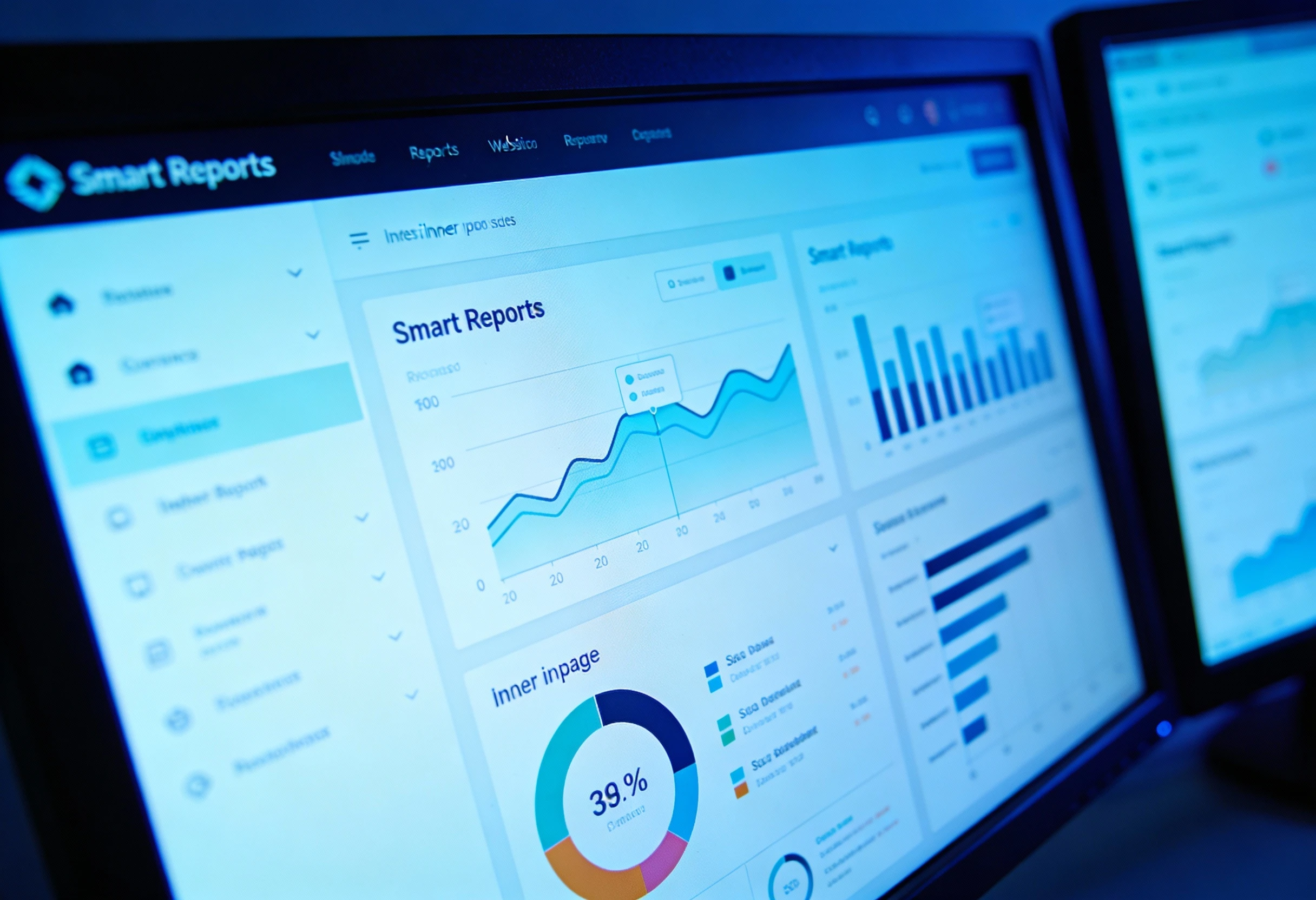
Smart reports are automated documents that pull data from your business systems, analyze it, and present it in easy-to-understand formats without any manual work. Think of them as self-updating reports that know exactly where to find the information you need, how to calculate what matters, and when to send it to you.
Here's how they work in practice. You define what information matters to your business like sales by product category, customer satisfaction scores, inventory levels, website conversion rates, or cash flow projections. You connect the reporting system to where that data lives including your CRM, accounting software, e-commerce platform, marketing tools, and databases. You design how you want information displayed using charts, graphs, tables, and key performance indicators. You set up schedules for when reports should generate like daily at 8 AM, every Monday morning, or the first day of each month.
Once configured, smart reports run automatically forever. Every scheduled time, they gather current data, perform calculations and analysis, generate professional documents with updated information, and distribute them to everyone who needs them. You wake up to fresh reports in your inbox showing exactly what happened in your business yesterday, last week, or last month.
The best part is you never touch them unless you want to change what they show. They just work.

Let's discuss the real problems that manual reporting creates and how automation solves them.
You Stop Wasting Dozens of Hours Every Month
Time is your most valuable resource. When staff spend 10 or 20 hours weekly creating reports, that's time they can't spend serving customers, developing strategy, or improving operations. For a manager earning 50,000 SAR annually, 15 hours monthly on reports costs your business about 4,500 SAR in salary just for data compilation.
Smart reports eliminate this cost entirely. Reports that previously took hours to create now generate in seconds. The system never gets tired, never makes calculation errors, and never forgets to run a report. Your team redirects those saved hours into activities that actually grow the business.
Most businesses find they save between 40 and 80 percent of the time previously spent on reporting after implementing automation. That's massive efficiency gain.
You Make Decisions Based on Current Information
By the time you finish compiling a weekly report manually, it's often Thursday or Friday. The data you're analyzing is already several days old. Markets move fast. Customer preferences shift. Competitors launch promotions. Making decisions on stale data means you're always reacting to yesterday instead of anticipating tomorrow.
Smart reports provide real-time or near-real-time information. You see what happened yesterday or even what's happening right now. This immediacy lets you spot opportunities quickly and address problems before they grow. When you notice a sudden drop in website traffic or a spike in customer complaints, you can investigate and respond the same day instead of discovering it a week later.
Current information drives better decisions. Better decisions drive better results.
You Eliminate Human Errors That Undermine Credibility
Manual reports are error-prone. Someone copies a number incorrectly. A formula breaks when rows are added. Data from one system doesn't match another. Version control gets confused and people use outdated reports. These mistakes undermine confidence in your data and can lead to seriously flawed decisions.
Smart reports eliminate human error because everything is automated. Data flows directly from source systems with no manual transcription. Calculations execute the same way every time. Version control is automatic because everyone sees the same current report. When stakeholders trust the accuracy of reports, they make decisions confidently.
You Maintain Consistency Across Your Organization
Different people creating similar reports often use different methods, timeframes, or definitions. Sales might calculate conversion rate differently than marketing. One region measures customer satisfaction one way while another region uses a different scale. This inconsistency makes comparisons impossible and creates confusion.
Smart reports enforce consistency automatically. Everyone uses the same calculations, the same data sources, the same definitions, and the same timeframes. When the CEO looks at revenue numbers and the CFO looks at revenue numbers, they see identical figures. When you compare regional performance, you know the metrics are calculated the same way everywhere.
This consistency creates a shared understanding of business performance across your entire organization.
You Scale Reporting Without Scaling Headcount
As businesses grow, reporting needs multiply. You need reports for more products, more regions, more campaigns, more customers. With manual reporting, this means hiring more analysts or accepting that you'll have less visibility as you scale. Neither option is attractive.
Smart reports scale effortlessly. Whether you're generating 5 reports or 500 reports, the system handles it automatically. Adding a new report is simple configuration work that takes minutes, not hiring a full-time employee. This means you can monitor everything that matters without increasing your reporting headcount as you grow.
You Ensure the Right People Get the Right Information
Different stakeholders need different information at different times. Executives need high-level summaries weekly. Managers need detailed operational metrics daily. The board needs comprehensive performance reviews quarterly. Ensuring everyone gets what they need when they need it is complex with manual reporting.
Smart reports handle distribution automatically. You configure who receives which reports on what schedule. The system ensures every stakeholder gets precisely the information relevant to their role exactly when they need it. Nobody is forgotten. Nobody is overwhelmed with irrelevant data. Everyone stays informed.
You Create Audit Trails and Historical Records Automatically
Compliance, audits, and historical analysis require maintaining accurate records over time. With manual reports, this means saving countless files, managing version control, and hoping you can find what you need months or years later.
Smart reports create perfect historical records automatically. Every report generated is stored with a timestamp. You can instantly retrieve any report from any date. You can compare current performance to any historical period with a few clicks. When auditors need documentation, you provide it immediately without searching through folders.
We've built automated reporting systems for businesses across finance, retail, healthcare, manufacturing, technology, and professional services. Here's what makes our solution comprehensive.
Complete Data Integration
Our smart reporting connects to virtually every business system where your data lives. This includes accounting platforms like QuickBooks, Xero, Sage, and NetSuite. CRM systems including Salesforce, HubSpot, Zoho, and Microsoft Dynamics. E-commerce platforms such as Shopify, WooCommerce, Magento, and custom stores. Marketing tools including Google Analytics, Facebook Ads, Google Ads, and email platforms. ERP systems for manufacturing, inventory, and operations. HR systems for workforce analytics. Payment processors and banking systems. Custom databases and internal applications.
Data flows automatically from these sources into your reports. Updates happen in real time or on scheduled intervals. You never manually export data or copy numbers between systems.
Flexible Report Design
Every business is unique, so generic report templates rarely work perfectly. We build reports specifically for your business needs. This includes selecting which metrics matter most to you, choosing how information should be visualized through charts, graphs, tables, and KPIs, organizing data logically for your workflow, applying your branding including logos, colors, and styling, and formatting reports for different output types like PDF, Excel, web dashboards, or presentations.
The result is professional reports that look like they were carefully crafted by an analyst but generate automatically without human touch.
Advanced Analytics and Calculations
Smart reports go beyond simply displaying raw numbers. They perform sophisticated analysis automatically. This includes calculating trends and growth rates over different time periods, comparing performance against targets and benchmarks, identifying anomalies and outliers that need attention, performing statistical analysis like correlations and distributions, forecasting future performance based on historical patterns, and highlighting key insights and recommended actions.
The system doesn't just show you numbers. It helps you understand what those numbers mean and what you should do about them.
Scheduled Automation
Set reports to generate and distribute automatically on any schedule you need. Daily reports can be delivered every morning before you arrive at work. Weekly summaries might go out every Monday with the previous week's performance. Monthly reports compile at month end with comprehensive monthly analysis. Quarterly business reviews generate automatically for board meetings. Annual reports summarize the entire year's performance. Ad-hoc reports can be triggered by specific events like when inventory drops below thresholds or when sales targets are hit.
You define the schedule once and the system executes perfectly every time without reminders or manual intervention.
Multi-Format Output
Different situations require different formats. Our smart reports can output to PDF documents for email distribution and printing, Excel spreadsheets for detailed data analysis and manipulation, PowerPoint presentations for meetings and presentations, web dashboards for real-time viewing, mobile apps for on-the-go access, and API feeds for integration with other systems.
The same report can generate in multiple formats simultaneously so everyone gets information in the format that works best for them.
Intelligent Distribution
Reports automatically reach the right people at the right time. You configure distribution lists that define who receives which reports. The system can send via email with reports as attachments or embedded links, post to shared drives or collaboration platforms like SharePoint or Google Drive, publish to internal portals or intranets, push notifications to mobile devices, and post to messaging platforms like Slack or Teams.
Different stakeholders can receive different versions of the same report. Executives might get high-level summaries while managers receive detailed data. Everyone sees what's relevant to their role.
Interactive Filtering and Drill-Down
While automated reports are powerful, users sometimes want to explore data differently. Our smart reports include interactive features that allow filtering by date ranges, regions, products, customers, or any other dimension, drilling down from summary views into detailed transactions, comparing different segments side by side, exporting custom slices of data, and saving favorite views for quick access later.
This interactivity means you're not locked into a static report. You can explore and investigate when questions arise.
Exception-Based Alerting
Sometimes you can't wait for the next scheduled report. When something critical happens, you need to know immediately. Our system includes intelligent alerting that monitors key metrics continuously and sends notifications when sales drop below critical thresholds, costs exceed budgets, customer complaints spike, inventory runs low, website performance degrades, or any other condition you define requires attention.
These alerts ensure you're never blindsided by problems. You can respond proactively before small issues become major crises.
Collaboration and Annotation
Reports should facilitate discussion and decision-making. Our platform includes collaboration features that let users add comments and notes to specific data points, share findings with colleagues, tag team members to draw attention to insights, track who has viewed reports, and maintain conversation threads around specific metrics.
This transforms reports from static documents into living tools for team collaboration and continuous improvement.
Security and Access Control
Business data is sensitive. Not everyone should see everything. Our smart reports include robust security with role-based access control that ensures people only see data they're authorized to view, encryption of data in transit and at rest, audit logs showing who accessed what and when, compliance with relevant data protection regulations, and secure authentication including single sign-on integration.
You maintain complete control over who sees what while making information readily available to those who need it.


Sales organizations rely on reports showing pipeline health and forecast accuracy, sales performance by rep or territory, win rates and sales cycle length, customer acquisition costs and lifetime value, quota attainment tracking, and revenue trends by product or segment.
Marketing departments track campaign performance and ROI, website traffic and conversion metrics, lead generation by channel, cost per lead and cost per acquisition, email engagement rates, social media performance, and brand awareness indicators.
Operations teams monitor inventory levels and turnover rates, production output and efficiency, supply chain performance, quality metrics and defect rates, equipment uptime and maintenance needs, and fulfillment speed and accuracy.
Human resources tracks headcount by department and location, hiring pipeline and time-to-fill, employee turnover and retention rates, training completion, performance review status, and compensation benchmarks.
Customer service uses reports on ticket volume and resolution time, customer satisfaction scores, first contact resolution rates, top issue categories, agent performance metrics, and escalation tracking.
E-commerce businesses monitor daily sales and order volume, conversion rates by traffic source, average order value, cart abandonment rates, product performance, customer acquisition costs, and return rates.
We start by understanding what information you need to run your business effectively. What decisions do you make regularly? What questions do your stakeholders ask repeatedly? What reports do you currently create manually? What data sources contain the information you need? Who needs which reports and how often?
We document all requirements and create a comprehensive reporting plan.
Data Source Integration (Week 2)
Our technical team connects to all systems where your business data lives. We establish secure API connections, configure data extraction schedules, map data fields to ensure consistency, implement data transformation rules where needed, and set up data quality checks to catch errors.
This foundation ensures your reports always pull accurate, current information.
Report Design and Build (Weeks 3-4)
We design each report based on your requirements and our expertise in data visualization best practices. We build the actual reports with calculations, charts, and formatting. We create different versions for different audiences if needed. We implement interactive features for exploration and analysis.
You review and approve all designs before we move forward.
Automation and Scheduling Configuration (Week 5)
We configure when reports should generate, who should receive them, what format they should use, and what triggers should initiate report generation. We set up distribution lists and delivery methods. We configure alerts for exception conditions.
Everything is tested to ensure reports generate correctly and reach the right people reliably.
Testing and Validation (Week 6)
Before going live, we thoroughly test every report. We verify calculations are accurate by comparing to manually created reports. We confirm data sources connect properly and update on schedule. We test distribution to ensure everyone receives reports correctly. We validate formatting displays properly across different devices. We review security and access controls.
You participate in testing to confirm everything meets your needs.
Training and Launch (Week 7)
We train your team on accessing and using the reports effectively. This covers understanding what each report shows and why it matters, using interactive features to explore data, interpreting charts and metrics correctly, creating custom views and exports, and understanding when to investigate anomalies or trends.
We provide documentation for future reference and onboarding new team members.
Monitoring and Optimization (Ongoing)
After launch, we continue supporting your smart reporting through regular check-ins to ensure everything runs smoothly, monitoring system performance and reliability, adding new reports as needs evolve, refining existing reports based on feedback, and providing technical support for any issues.
Your reporting capabilities grow with your business.

Perhaps most importantly, your team shifts from spending time creating reports to spending time acting on the insights those reports provide. That's the transformation that drives real business value.
Stop wasting time on manual report creation. Stop making decisions based on outdated information. Stop tolerating errors that undermine confidence in your data. Stop letting reporting challenges limit your growth.
Smart reporting gives you professional, accurate, current insights automatically. Your team focuses on action instead of compilation. Your decisions are informed by real-time data. Your organization operates with transparency and consistency.
The businesses winning in your industry use data effectively. They automate routine tasks. They make decisions faster. They optimize constantly. You can join them.
Most implementations are complete within 6 to 8 weeks from project start. Simple reporting needs with few data sources can be faster. Complex enterprises with many systems and extensive reporting requirements may take longer.
Almost certainly yes. We integrate with hundreds of common business platforms. If your system has an API, we can connect to it. For systems without APIs, we work with your technical team to establish data feeds.
Smart reports are designed to evolve with your business. Adding new reports, modifying existing ones, or changing distribution is straightforward configuration work. We support you as your needs change over time.
Security is fundamental. We implement encryption, access controls, secure authentication, and compliance with relevant regulations. Your sensitive business data remains protected throughout the reporting process.
Absolutely. Smart reporting automates routine reports, but you retain the ability to create ad-hoc analyses whenever you need something custom. The best approach combines automated reporting for regular needs with manual analysis for special investigations.