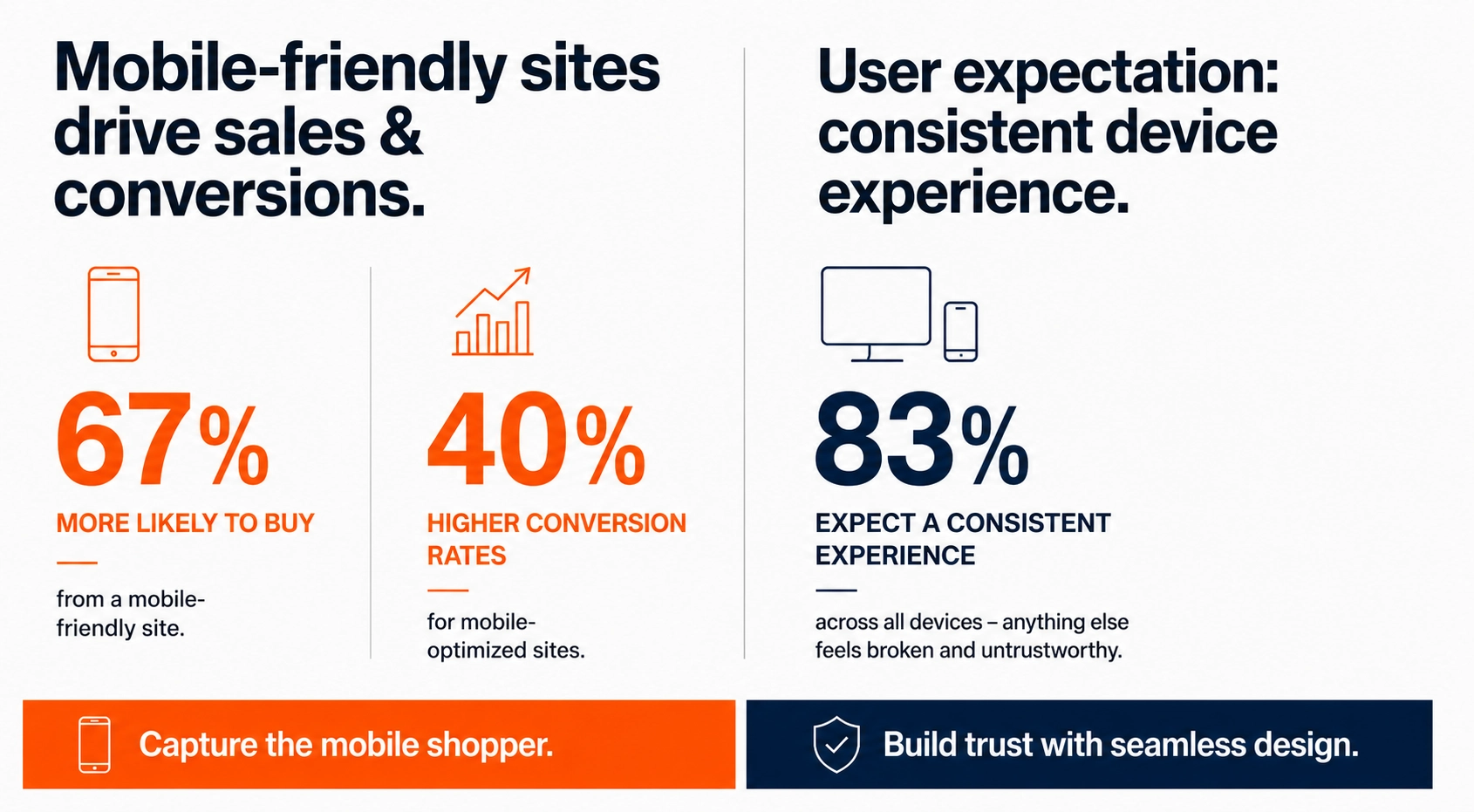
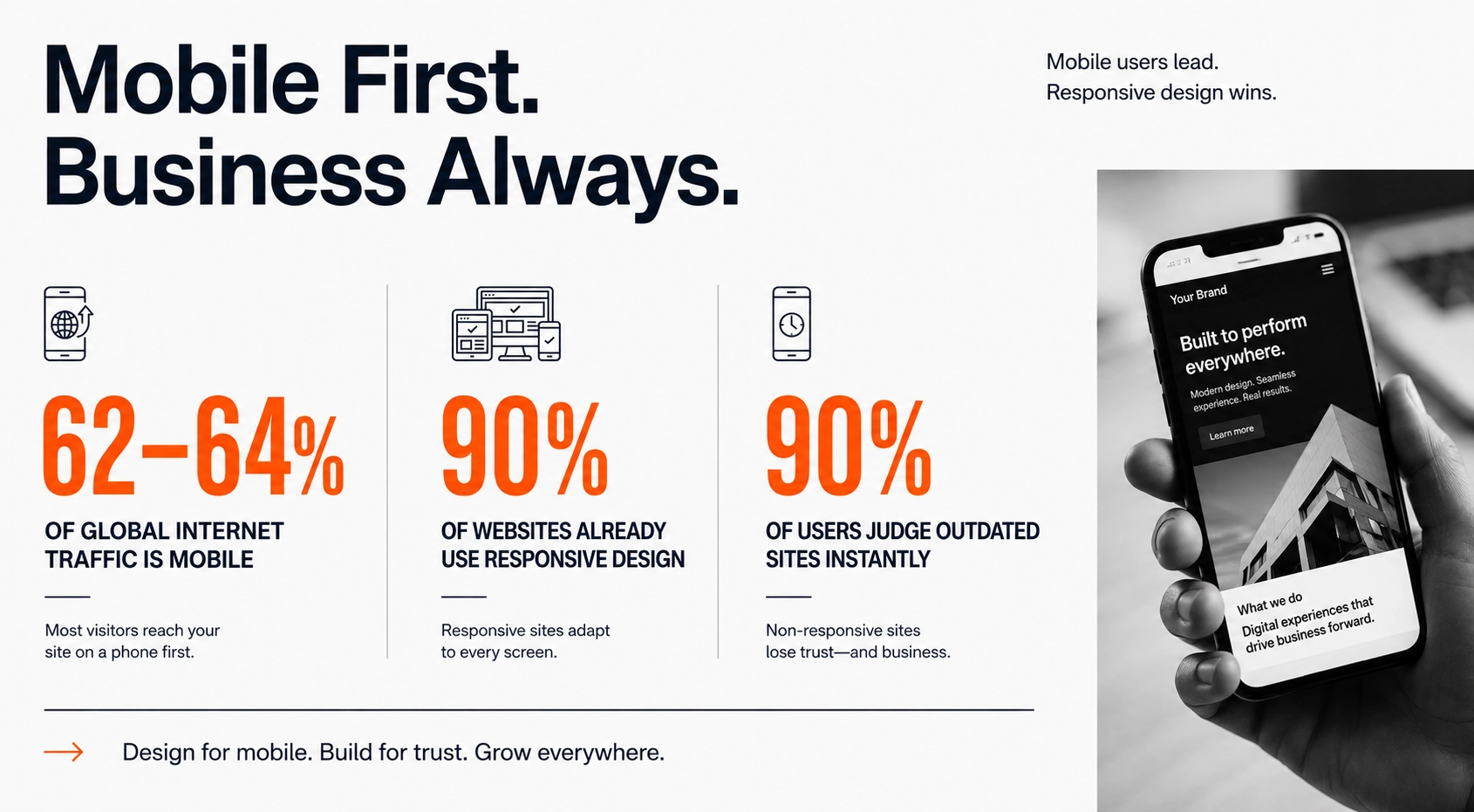
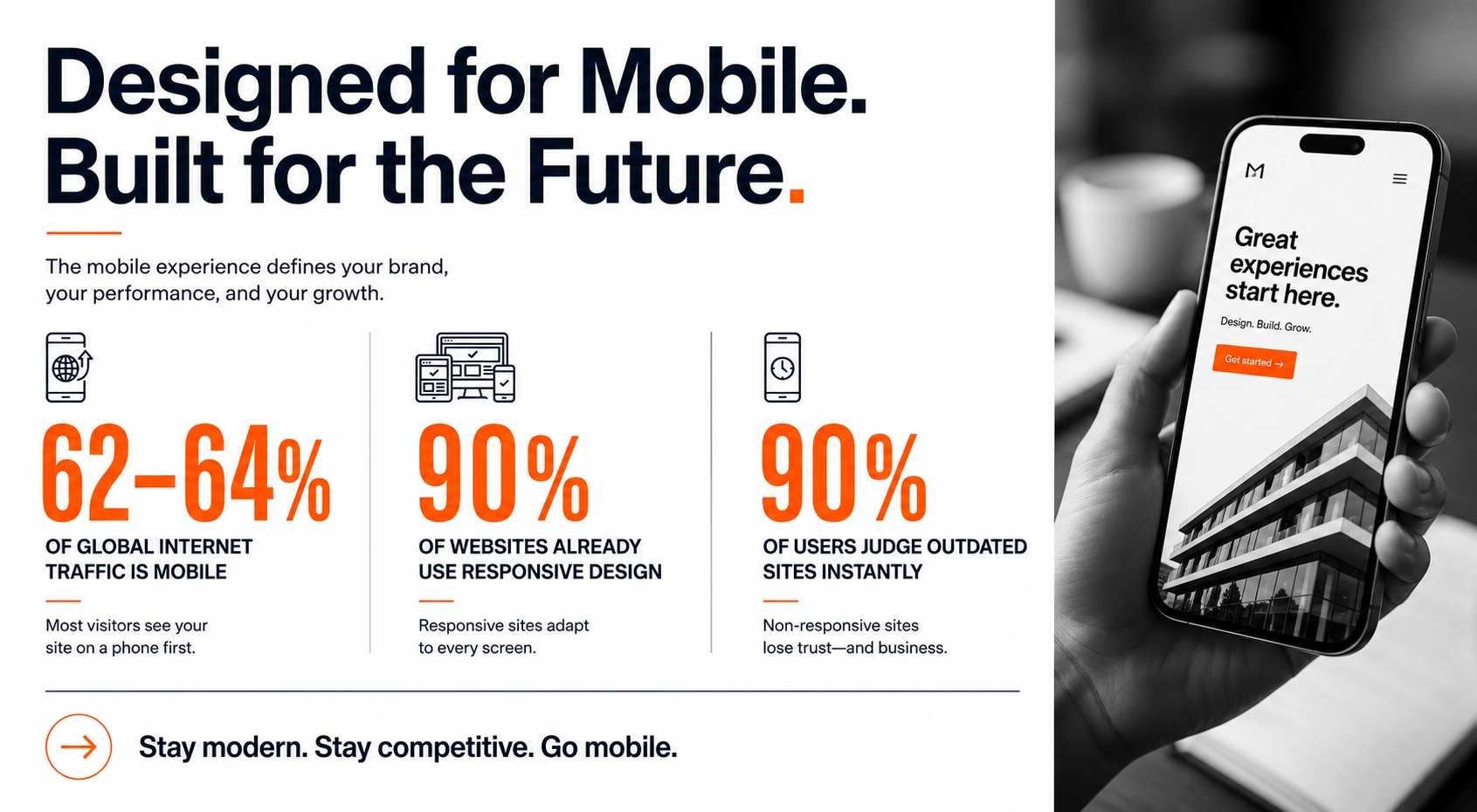
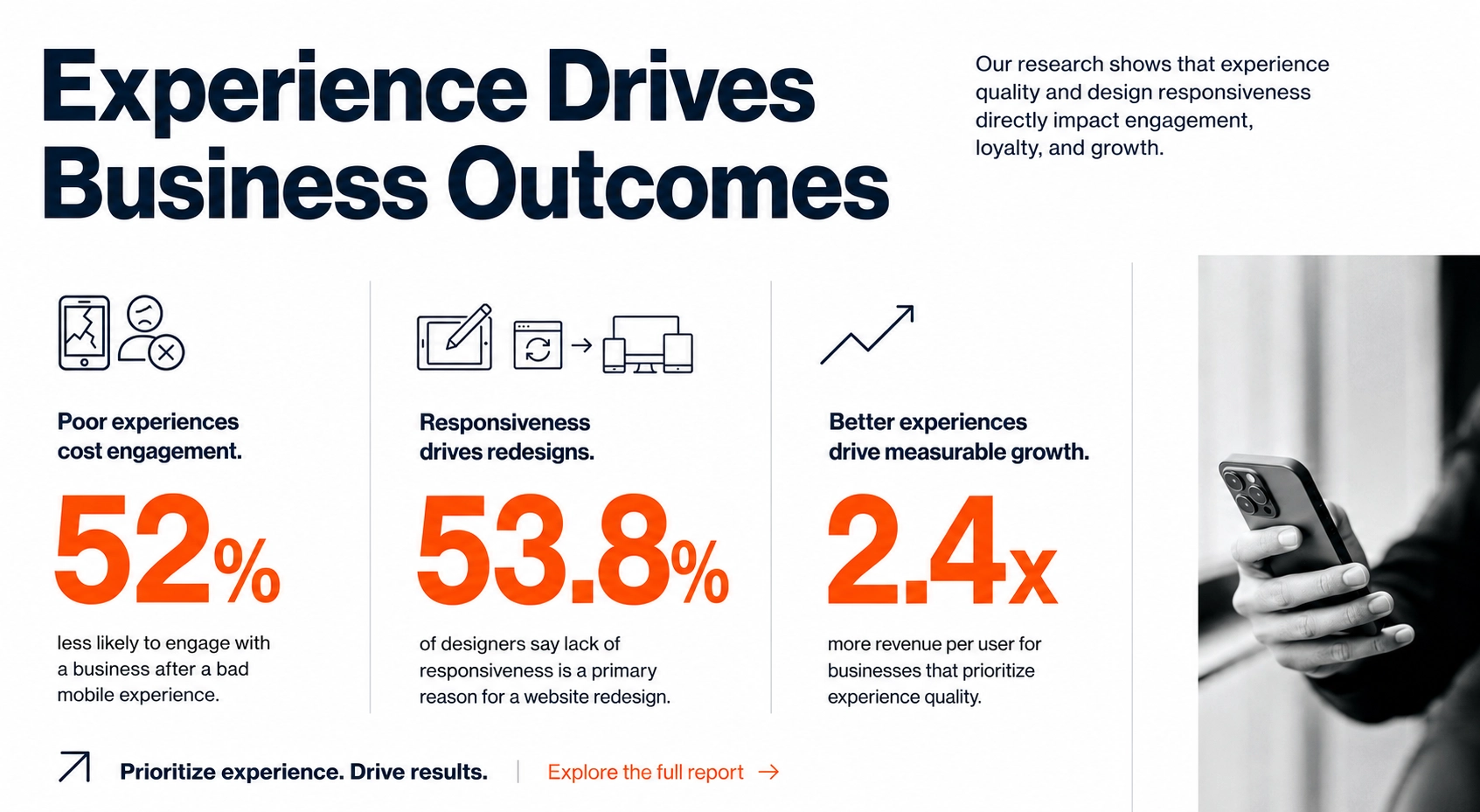
More than 60 percent of all website traffic now comes from mobile devices like smartphones and tablets. Your potential customers browse websites on phones during commutes, on tablets while relaxing at home, on desktop computers at work, and on various screen sizes in between. If your website doesn't adapt seamlessly to all these different devices, you're frustrating visitors and losing business every single day.
Think about your own experience as a user. You visit a website on your phone and find yourself pinching to zoom in on tiny text, scrolling horizontally to see content that extends beyond the screen, tapping buttons that are too small or too close together, waiting forever for oversized images to load, or giving up entirely because the experience is so frustrating. When you encounter these problems, what do you do? You leave and find a competitor whose website actually works on your device.
Your customers do exactly the same thing when they visit a non-responsive website. They don't wait. They don't give you a second chance. They simply leave and take their business elsewhere. Every visitor who leaves because of poor mobile experience represents lost revenue, lost opportunity, and damaged brand perception.
Responsive web design solves this problem completely. A responsive website automatically adapts its layout, images, navigation, and functionality to provide optimal viewing and interaction experience across all devices. Text remains readable without zooming. Navigation works intuitively whether someone taps on a touchscreen or clicks with a mouse. Content reflows gracefully to fit any screen width. Forms are easy to complete on any device. The experience feels native and natural regardless of how visitors access your site.
This isn't optional anymore. This is the baseline expectation. Businesses with responsive websites capture mobile traffic that competitors with outdated sites lose. They rank higher in search results because Google prioritizes mobile-friendly sites. They convert more visitors because user experience is optimized. They project professionalism because their digital presence works flawlessly.


Responsive web design is an approach to building websites that makes web pages render properly and function correctly on all devices and screen sizes. Instead of creating separate versions of your website for desktop, tablet, and mobile (which is expensive to maintain and creates consistency problems), responsive design uses flexible layouts, proportional images, and CSS media queries to make a single website adapt intelligently to any viewing environment.
Here's how it works technically. The design uses fluid grid layouts where elements resize proportionally based on screen width rather than fixed pixel dimensions. Images scale automatically without losing quality or extending beyond screen boundaries. Typography adjusts to remain readable at different sizes. Navigation menus transform from horizontal bars on desktop to hamburger menus on mobile. Multi-column layouts on large screens reorganize into single columns on small screens. Touch targets like buttons and links expand to appropriate sizes for finger tapping on touchscreens.
All this happens automatically through clever use of CSS media queries that detect screen characteristics and apply appropriate styling rules. When someone visits your website, their browser reports its viewport dimensions, and the website responds by rendering the version optimized for that specific screen size. The adaptation is instantaneous and seamless.
From a user perspective, responsive design means your website simply works perfectly no matter what device they use. They don't think about technical implementation. They just experience a fast, functional, professional website that meets their needs.
Let's explore the specific problems that non-responsive websites create and the value that responsive design delivers.
You Stop Losing Mobile Visitors Immediately
If your current website wasn't built with responsive design, mobile visitors are having terrible experiences right now. They're zooming, scrolling sideways, misclicking tiny buttons, and ultimately leaving in frustration. Analytics data consistently shows that non-responsive websites have much higher bounce rates on mobile devices compared to desktop. These bounces represent direct revenue loss.
Responsive design fixes this instantly. Once implemented, mobile visitors suddenly have excellent experiences. They can read content easily, navigate intuitively, complete forms without frustration, and accomplish their goals whether that's making purchases, booking appointments, or contacting you. The bounce rate drops dramatically and mobile conversion rates increase substantially.
For many businesses, mobile traffic represents 50 to 70 percent of total visitors. If your non-responsive site is losing even 20 percent of mobile visitors due to poor experience, you're throwing away 10 to 14 percent of your total potential business. Responsive design captures this lost opportunity.
You Improve Search Engine Rankings
Google uses mobile-first indexing, which means it primarily uses the mobile version of your website for ranking and indexing. If your website isn't mobile-friendly, Google considers this a significant ranking factor and penalizes you in search results. Your competitors with responsive websites rank higher and capture the organic traffic you're missing.
Additionally, Google's page speed algorithms heavily favor mobile-optimized sites. Responsive design typically includes mobile performance optimizations like appropriate image sizing, efficient code, and fast load times. These technical improvements directly boost search rankings.
Better rankings mean more organic traffic, which means more leads and sales without increasing advertising spend. The SEO benefit of responsive design often generates substantial value independently of the improved user experience.
You Maintain Consistent Brand Experience
When you have separate desktop and mobile versions of your website (or no proper mobile version at all), consistency suffers. Content might differ between versions. Branding elements might look different. User journeys might be inconsistent. This fragmentation confuses customers and weakens brand identity.
Responsive design ensures absolute consistency. The same content, branding, messaging, and functionality exists across all devices. The presentation adapts but the substance remains identical. Customers get the same high-quality brand experience whether they visit on desktop, tablet, or phone. This consistency strengthens brand perception and builds trust.
You Enable Multi-Device User Journeys
Modern customers frequently switch devices during their journey. They might research products on their phone during lunch, compare options on their tablet at home in the evening, and complete the purchase on their desktop computer at work the next day. If your website provides inconsistent experiences across these devices, you create friction in the customer journey.
Responsive design supports these multi-device journeys seamlessly. The customer encounters the same familiar interface and functionality on each device. Their experience is continuous rather than jarring. This continuity increases the likelihood of conversion because you're not introducing unnecessary barriers at any stage of the journey.

We've built responsive websites for businesses across e-commerce, professional services, healthcare, education, finance, manufacturing, and countless other industries. Here's what our comprehensive responsive design solution includes.
Mobile-First Design Approach
We design for mobile devices first, then progressively enhance the experience for larger screens. This mobile-first methodology ensures the mobile experience is prioritized and optimized rather than being an afterthought. We consider touch interaction patterns, smaller screen constraints, mobile user behavior patterns, limited bandwidth scenarios, and mobile-specific user needs from the very beginning of the design process.
This approach consistently produces better mobile experiences than desktop-first designs that attempt to scale down.
Flexible Grid Layouts
We build layouts using flexible grids that resize proportionally based on screen width. Instead of fixed pixel dimensions, elements size themselves relative to the viewport. Multi-column layouts on desktop reorganize intelligently into single columns on mobile. Sidebars reposition or hide on small screens. Content hierarchy remains clear regardless of screen size.
These fluid layouts create visual harmony across all devices without the jarring inconsistencies that characterize poorly responsive sites.
Responsive Images and Media
Images and videos present unique responsive challenges. We implement comprehensive media optimization including automatically serving appropriately sized images based on screen resolution and size, implementing modern responsive image techniques like srcset and picture elements, lazy loading images to improve mobile performance, optimizing video players for mobile viewing, ensuring graphics and icons render crisply on high-resolution retina displays, and compressing media files appropriately for mobile bandwidth constraints.
The result is fast-loading media that looks great on any device without wasting bandwidth or slowing page load.
Accessible Design
Responsive design and accessibility go hand in hand. We ensure sites meet WCAG accessibility standards including proper heading hierarchy and semantic HTML, appropriate color contrast ratios, keyboard navigation support, screen reader compatibility, descriptive alt text for images, accessible form labels and error messages, and responsive accessibility features like appropriate zoom behavior.
This makes your website usable by everyone including people with disabilities, which expands your potential audience and demonstrates corporate responsibility.
E-commerce stores require responsive design for mobile shopping experiences with easy product browsing, simple add-to-cart functionality, streamlined mobile checkout processes, high-quality product images that load quickly, product filters and search that work on small screens, and account management accessible from any device.Professional service firms need responsive sites where potential clients can learn about services on any device, easily contact the firm via mobile-friendly forms, read case studies and testimonials, access resources and downloads, and book consultations or appointments from their phones.Healthcare organizations serve patients who book appointments via mobile, access patient portals for lab results and records, find location and contact information, complete intake forms before visits, pay bills online, and access health information resources.
Educational institutions reach prospective students who research programs on mobile, submit applications via any device, access course information and schedules, register for classes, participate in online learning, and stay connected with campus news and events.
Real estate agencies showcase properties to buyers who browse listings on mobile during commutes, view high-quality property photos on tablets, access virtual tours, submit inquiry forms, schedule showings, calculate mortgage payments, and research neighborhood information.

Analysis and Strategy (Week 1)We analyze your current website, user analytics, target audience device usage patterns, business objectives, and competitor landscape. We identify responsive design requirements and create a strategic plan that prioritizes mobile user needs while enhancing desktop experience.Design and Prototyping (Weeks 2-3)
We design responsive layouts starting with mobile views and progressively enhancing for larger screens. We create interactive prototypes that demonstrate how designs adapt across breakpoints. We refine designs based on your feedback before moving to development.
Development and Build (Weeks 4-6)
Our developers build the responsive website using modern HTML5, CSS3, and JavaScript frameworks. We implement all responsive features, optimize performance, integrate with your existing systems, and ensure cross-browser compatibility.
Testing and Quality Assurance (Week 7)
We test exhaustively across devices, browsers, and screen sizes. We verify all functionality works correctly, test forms and interactive elements, measure and optimize performance, check accessibility compliance, and fix any issues discovered.
Launch and Monitoring (Week 8)
We launch your responsive website and monitor performance closely. We track mobile versus desktop traffic and conversion rates, gather user feedback, measure page load speeds, identify any post-launch issues, and make quick refinements as needed.
Ongoing Optimization
After launch, we continue improving your responsive site through regular performance monitoring, user behavior analysis, mobile usability testing, SEO optimization, and implementing emerging responsive design best practices.
Businesses implementing responsive design typically see mobile bounce rates decrease 20 to 40 percent as user experience improves dramatically. Mobile conversion rates increase 50 to 200 percent because visitors can actually complete desired actions. Overall website traffic increases 15 to 30 percent as search rankings improve. Development and maintenance costs decrease 30 to 50 percent through code consolidation. Brand perception improves as customers encounter consistent professional experiences.The investment in responsive design pays for itself quickly through increased revenue and reduced costs.

Stop losing mobile visitors. Stop harming search rankings with non-responsive design. Stop frustrating customers with poor mobile experiences. Stop wasting money maintaining multiple website versions. Stop projecting outdated brand impressions.
Responsive design makes your website work perfectly everywhere. You capture mobile traffic instead of losing it. You rank higher in search results. You provide consistent professional brand experiences. You reduce development costs. You future-proof your digital presence.
Every day without responsive design means lost customers and lost revenue. Your competitors with modern responsive sites are winning business you could capture.
Most projects complete within 8 to 12 weeks depending on website complexity, number of pages, custom feature requirements, and integration needs. Simple sites can be faster while large complex sites may take longer.
It depends on current site architecture. Some sites can be retrofitted with responsive features. Others require rebuilding to achieve proper responsive functionality. We assess your current site and recommend the most cost-effective approach.
Yes, positively. Google prioritizes mobile-friendly sites in search results. Responsive design typically improves rankings, increases organic traffic, and enhances overall SEO performance.
Cost varies based on project scope, complexity, and requirements. We provide transparent pricing with no hidden fees. Most businesses find the investment returns quickly through increased conversions and reduced maintenance costs.
Absolutely. While responsive design for simple websites is straightforward, we have extensive experience making complex web applications including e-commerce platforms, customer portals, dashboards, and custom applications fully responsive.