The biggest mistake modern businesses make is assuming that, just because their company is ready to grow, expanding it will continue to grow the same way.
Many are proven wrong when they make moves to expand, while just analyzing their internal data without thinking about whether that new market is ready for them or not.
So, that's when it is useful to look up to leading global brands, as each of them had a different approach led by the same analysis. Because of elements such as customer behavior, underlying operational challenges, local conditions, etc., every step is made with a deep, detailed analysis.
Knowing all the major criteria they cover will make it easier over time to actually expand your business in the most efficient way.
The biggest mistake modern businesses make is assuming that, just because their company is ready to grow, expanding it will continue to grow the same way.
Contents
The Data Global Companies Analyze Before Expanding
Modern systems have taken business expansion strategy to another level; there are no more pure assumptions, and it depends on intuition and luck.
Integrated systems are found in every part of the company, no matter if it's for planning or customer relationships. Also, data analytics systems have been shown to be the real game changers when analyzing patterns and fixing problems.
Customer Behavior and Cultural Fit Across Markets
As mentioned above, companies that live off the success in one location don't necessarily mean it will be the same when they expand.
The main issue here is the assumption that customers will behave the same way as those who are used to your brand and service.
Every company's goal is to get others to behave the way they want to, but to get there, each business has to oblige customers and the culture of that region.
That means that purchase behavior and price sensitivity are tied to the standard of living in a particular city or state. Also, timing and cultural expectations change the way customers view products and companies.
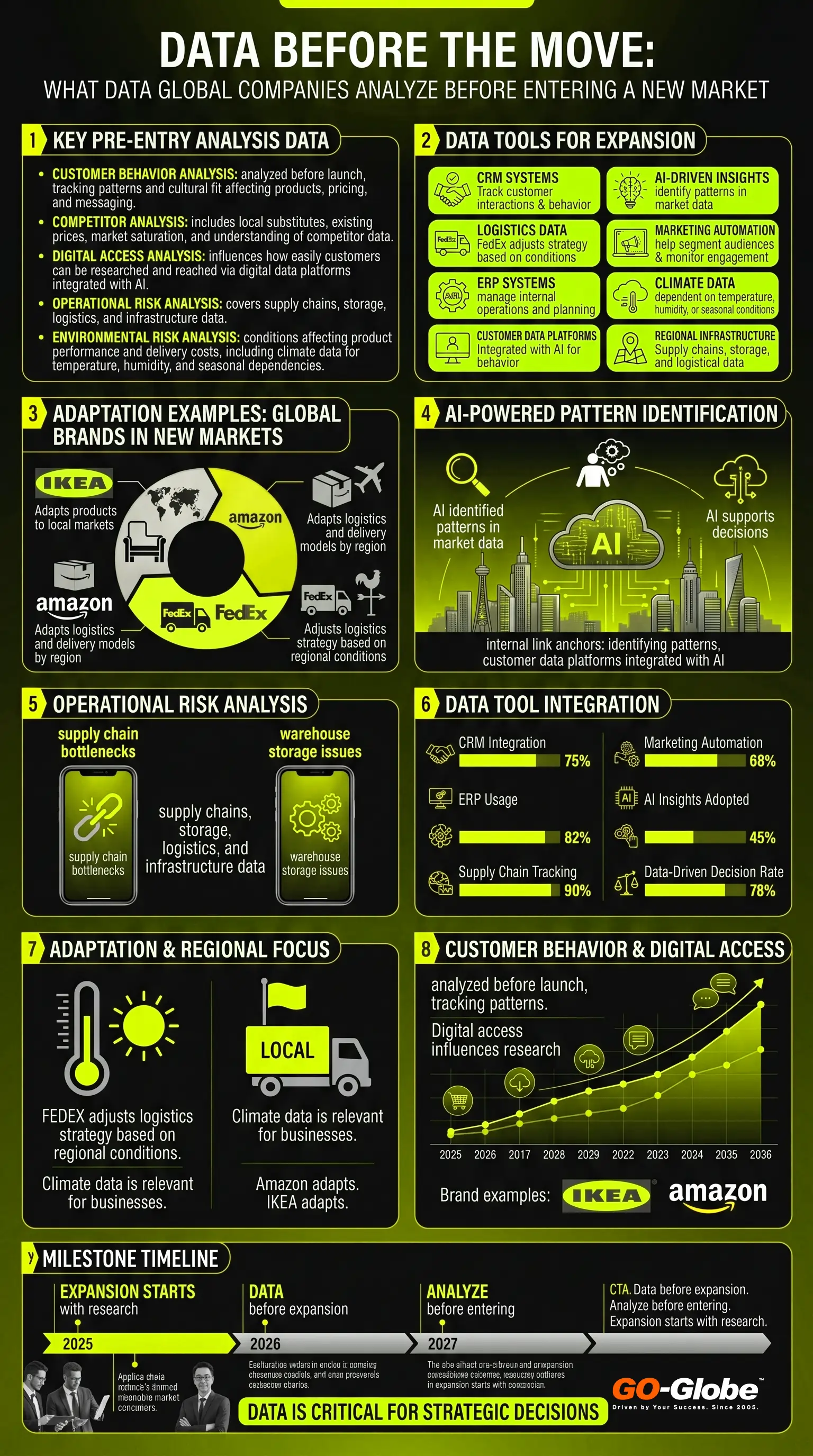
There are a few leading examples, one of which is IKEA. They have won the global market with fundamental analyses of cultures. They tailor product sizes and patterns to match local life.
Putting extra attention to culture and customers' lifestyles, as cultural mismatches are one of the leading causes why global extensions fail.
To overcome this bridge, luckily, there are integrated systems like a marketing automation platform and CRM. They can help track market segmentation and behavior, while also analyzing browsing patterns.
Competition, Market Saturation, and Digital Access
Closely tied to becoming familiar with customers, now companies have to face their competitors and break into the market.
Before even entering, there is analysis to go through, such as becoming familiar with locals, potential substitutes already on the market, the prices already offered, etc.
As a matter of fact, customer loyalty plays a huge role in this section, so using customer data platforms integrated with AI will help you in making further decisions on how to win those customers.
With that being said, competition has stopped being only physical a long time ago, so proper marketing strategies before even entering new markets are crucial.
For instance, through digital feedback and regular activities, Amazon adapts logistics and delivery models, building its infrastructure.
Digital access allows you to do your own research on the market, while having systems generate feedback and giving you reliable data. That way, businesses wait for perfect timing to enter new markets; if customers and competitors are not ready or informed, it will lead to failure.
Operational and Environmental Risks
Even if the market is ready for new business, and all factors match, there are underlying operational risks that have to be factored in.
Potential delays in supply chains or local climate affecting storage and internal operations are risks that are predictable with the right tools.
So, to avoid delays and inefficiencies, businesses once again face the need to analyze long-term patterns firsthand.
Here's a quick example of why knowing the infrastructure and climate of a new location is important:
If a business is closely tied to plant-based products, it must carefully evaluate climate conditions. Entering drought-prone markets can increase operational costs and result in customer complaints.
That's why many rely on data tied to historical weather for any location that may help them adapt their business to the new markets. Companies like FedEx are known to adjust their equipment and logistics strategies based on the regional climate.
Conclusion
These factors above are nothing new to the company, as it has already covered them once. Each of them represents functions that are a necessity for business maintenance.
However, problems arise when you have to keep the core system working while everything else is changing; that's the basis of successful expansion.
Introducing modern systems into your work and learning how to cooperate will put the company a few steps ahead.
Combining those internal and external data results in cost efficiency and mainly in reducing unnecessary risks.