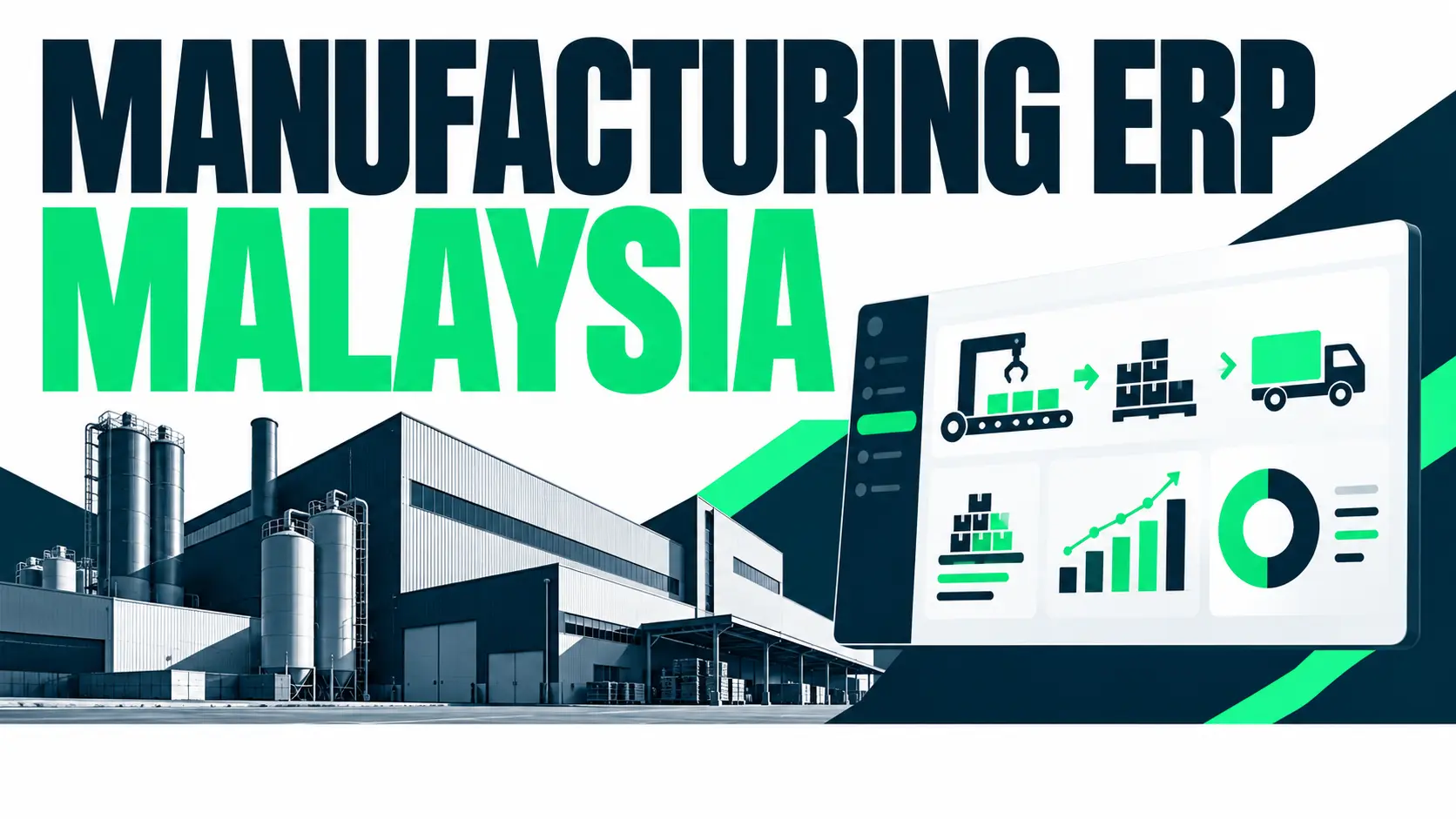
A manufacturing ERP for Malaysian factories must cover production planning, bills of materials, inventory, quality control, costing, and local compliance such as SST and MyInvois. Match features to the production model, check integrations, and test with real factory data before signing.
Manufacturing ERP Malaysia buyers compare dozens of features, but a few decide success. A manufacturing ERP is software that connects production, inventory, purchasing, quality, and finance in one system. This GO-Globe guide lists the features, compliance checks, and selection steps that matter most for factories.
Contents
- 1 What Does Manufacturing ERP Malaysia Software Cover?
- 2 What Are the Signs a Factory Has Outgrown Spreadsheets?
- 3 How Do Production Models Change ERP Requirements?
- 4 Which Manufacturing ERP Malaysia Features Matter Most?
- 5 Which Malaysian Requirements Must the ERP Handle?
- 6 How Does a Manufacturing ERP Connect to Sales Teams?
- 7 Can Customers and Suppliers See ERP Data?
- 8 How Does an ERP Support Delivery of Finished Goods?
- 9 Should a Factory Buy Packaged ERP or Build Custom Software?
- 10 How Do You Select and Implement a Manufacturing ERP?
- 11 How Do You Measure ERP Success in a Factory?
- 12 Need an ERP That Matches Your Production Floor?
- 13 Frequently Asked Questions
- 13.1 What is a manufacturing ERP?
- 13.2 What features should a manufacturing ERP in Malaysia include?
- 13.3 Is manufacturing ERP only for large factories?
- 13.4 How is an industry-specific ERP different from a standard ERP?
- 13.5 How long does manufacturing ERP implementation take?
- 13.6 Can an ERP connect to machines on the shop floor?
- 13.7 What is the difference between ERP and MES?
- 13.8 Does a manufacturing ERP support lot traceability?
What Does Manufacturing ERP Malaysia Software Cover?
Manufacturing ERP software covers 6 core areas: production planning, inventory, purchasing, quality control, costing, and finance. A manufacturing ERP links these areas through one database. A change in one area updates the others. Production, warehouse, and accounting teams then work from the same figures.
Which Departments Does a Manufacturing ERP Connect?
A manufacturing ERP connects 5 departments: production, warehouse, purchasing, quality, and accounting. Production sees material availability. Purchasing sees production demand. Accounting sees actual production costs. Each department reads and writes the same records, which removes duplicate entry and conflicting spreadsheets.
How Does a Manufacturing ERP Differ From a General ERP?
A general ERP handles accounting, sales, and HR. A manufacturing ERP adds bills of materials, work orders, routings, and shop floor tracking. An industry-specific ERP in Malaysia also adds sector rules, such as expiry dates for food. Compare these differences during ERP system services selection.
What Are the Signs a Factory Has Outgrown Spreadsheets?
A factory has outgrown spreadsheets when planning errors repeat across 5 areas:
- Stock counts differ between the warehouse and the accounts
- Production runs stop because material is missing
- Costs per product are estimated, not calculated
- Customers receive delivery dates that production cannot meet
- Staff retype the same order data in 3 or more files
Each sign points to disconnected records. An ERP replaces separate files with one shared database, so planners, buyers, and accountants use identical figures.
How Do Production Models Change ERP Requirements?
The production model decides which ERP features matter most. Discrete, process, make-to-stock, and make-to-order factories use different planning logic. Identify the production model first. Then compare systems against that model, not against a generic feature list.
What Is the Difference Between Discrete and Process Manufacturing?
Discrete manufacturing builds countable units from parts, such as electronics, furniture, and machinery. Process manufacturing blends ingredients by formula, such as food, chemicals, and coatings. Discrete factories rely on bills of materials. Process factories rely on recipes, batch yields, and expiry dates.
How Do Make-to-Stock and Make-to-Order Differ?
Make-to-stock factories build products from demand forecasts and hold finished inventory. Make-to-order factories build after receiving a customer order. Engineer-to-order factories design each product per order. Forecast accuracy drives the first model. Quotation, drawing, and job costing features drive the other two.
Which Manufacturing ERP Malaysia Features Matter Most?
Seven features matter most in a manufacturing ERP: production planning, inventory control, quality management, purchasing, costing, maintenance, and shop floor data. Each feature ties to a measurable factory problem, such as stockouts, scrap, or late orders. The sections below define each feature.
Bill of Materials and Production Planning
A bill of materials (BOM) lists every component, quantity, and sub-assembly needed to make one product. Material requirements planning (MRP) compares the BOM with demand and stock levels. The ERP then calculates what to buy, what to make, and when to start each work order.
Inventory and Warehouse Control
Inventory control tracks raw materials, work in progress, and finished goods across locations. Lot and serial tracking records which material batch went into which product. Reorder rules flag low stock before production stops. Accurate stock counts also prevent over-purchasing, which ties up cash.
Quality Management
Quality management records inspections at receiving, in-process, and final stages. The ERP logs defects, scrap, and rework against the work order. Failed batches trigger holds, so stock cannot ship. A defect history by supplier or machine shows where recurring problems start.
Purchasing and Supplier Management
Purchasing turns MRP demand into purchase requests, quotations, and orders. Approval rules control spending limits. Supplier performance records show late deliveries and rejected lots. Factories with complex approval chains benefit from dedicated procurement management software logic inside or beside the ERP.
Costing and Finance
Costing assigns material, labour, and overhead costs to each product. Common methods are standard costing, actual costing, and average costing. Work-in-progress valuation shows the cost of unfinished goods. Margin per job or product then reveals which items earn profit and which lose it.
Maintenance and Shop Floor Data
Maintenance modules schedule preventive servicing and record machine downtime. Overall equipment effectiveness (OEE) measures availability, performance, and quality for each machine. A manufacturing execution system (MES) or machine sensors can feed live data into the ERP. Factories without sensors enter counts manually or by barcode.
Which Malaysian Requirements Must the ERP Handle?
A Malaysian manufacturing ERP must handle SST, LHDN MyInvois e-invoicing, statutory payroll contributions, and multi-currency trade. A missing capability forces manual workarounds and creates compliance risk. Verify each item in writing with the vendor before signing a contract.
How Does an ERP Support SST and MyInvois?
Sales and Service Tax (SST) rules apply to manufacturers depending on registration and product type. The ERP must apply correct tax codes to invoices and credit notes. MyInvois is the LHDN e-invoicing system. Depending on turnover, invoices must reach LHDN electronically, and the ERP must support that submission.
How Does an ERP Handle Payroll for Shift Workers?
Factories run shifts, overtime, and allowances. Payroll must calculate these correctly. Statutory items include EPF, SOCSO, EIS, and monthly tax deductions. Some factories use a separate payroll system. In that case, the ERP must export attendance and overtime data in a format payroll accepts.
How Does an ERP Support Exports and Multi-Currency Trade?
Exporting factories invoice in currencies such as USD, SGD, or CNY while accounts stay in ringgit. The ERP must record exchange rates by transaction date. It must also calculate currency gains and losses. Export documents, such as commercial invoices and packing lists, should generate from order data.
How Does a Manufacturing ERP Connect to Sales Teams?
A manufacturing ERP connects to sales teams through quotations, order confirmations, and delivery dates. Sales staff see live stock and production capacity before promising a delivery date. This prevents overcommitment. Production then receives confirmed orders without retyping. Factories with an existing CRM software platform must check how deeply the ERP integrates with it.
Can Customers and Suppliers See ERP Data?
Customers and suppliers can see selected ERP data through a secure portal. Customers check order status, delivery dates, and invoices. Suppliers confirm purchase orders and upload delivery notes. The ERP decides which records each user sees. A client portal development project connects this external access to ERP records.
How Does an ERP Support Delivery of Finished Goods?
An ERP supports delivery by releasing finished goods, printing delivery orders, and updating stock on dispatch. Factories with their own trucks also track vehicles, drivers, and routes. This tracking sits in a separate system. Fleet management software can share delivery data with the ERP so invoices follow confirmed deliveries.
Should a Factory Buy Packaged ERP or Build Custom Software?
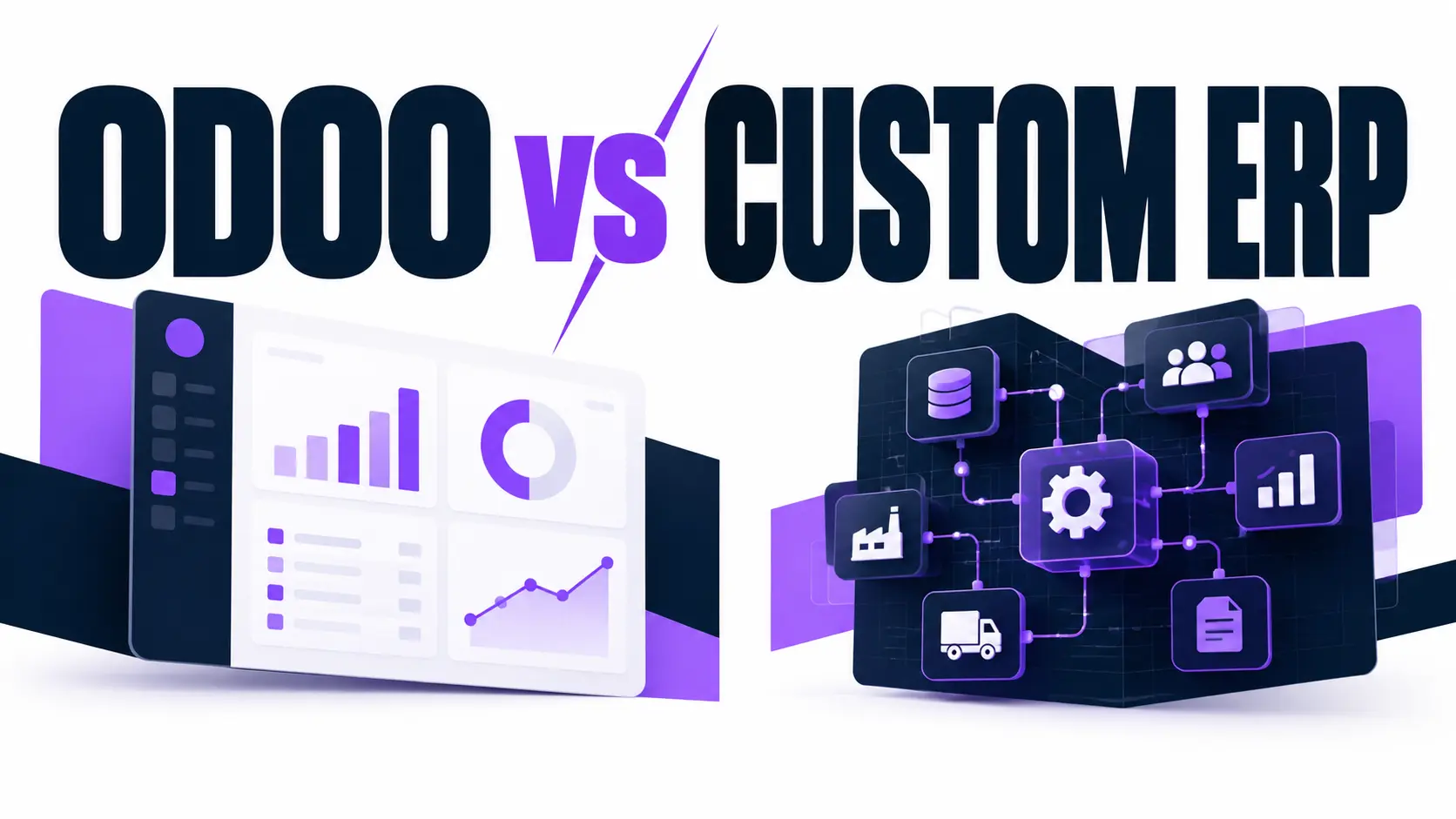
A factory with standard processes buys a packaged ERP. A factory with unusual production steps considers custom development or a packaged ERP with custom modules. The decision depends on how closely standard software matches real workflows. The two options differ in cost, speed, and control.
When Does a Packaged Industry-Specific ERP Fit?
A packaged industry-specific ERP in Malaysia fits factories whose processes follow common patterns for their sector. Packaged systems launch faster and arrive with tested modules. Vendors release updates and fixes. Customisation stays limited, because heavy changes raise upgrade costs and testing effort.
When Does Custom ERP Development Fit?
Custom ERP development fits factories with unique routings, pricing rules, or machine integrations. A developer builds each module from written requirements. The factory controls scope and release timing. Custom software development requires longer delivery and a plan for ongoing maintenance and documentation.
How Do You Select and Implement a Manufacturing ERP?
Selection follows 5 steps:
- Document current processes, products, and pain points
- Define the production model and must-have features
- Shortlist 3 to 5 vendors that match those requirements
- Run demos using your own product data
- Check references, contract terms, and support arrangements
A written requirements list keeps vendor demos comparable and exposes feature gaps early.
What Does Implementation Involve?
Implementation has 4 phases: requirements, configuration or development, data migration with testing, and go-live with training. Data migration moves items, BOMs, suppliers, customers, and balances into the new system. Factories often start with 1 plant or module, then extend.
How Should Data Be Prepared Before Migration?
Data preparation cleans item masters, BOMs, supplier lists, and opening balances before import. Remove duplicate item codes and inactive records. Standardise units of measure, such as kilograms and pieces. Confirm that every BOM matches the current production method. Clean data prevents the import errors that delay go-live.
Which Mistakes Delay ERP Projects?
Four mistakes delay ERP projects: unclear scope, dirty data, weak staff training, and too many customisations. Unclear scope causes repeated change requests. Duplicate item codes cause import errors. Untrained operators enter wrong data. Excess customisation slows upgrades. Each mistake is avoidable with early planning.
How Do You Measure ERP Success in a Factory?
ERP success is measured with 5 factory metrics: on-time delivery, inventory accuracy, scrap rate, OEE, and production cost variance. Each metric has a baseline before go-live and a target after. Reports inside the ERP track all five without manual compilation.
What Does Each Metric Show?
On-time delivery shows the share of orders shipped by the promised date. Inventory accuracy compares system stock with physical counts. Scrap rate shows material lost to defects. Production cost variance compares actual cost with standard cost. OEE shows machine productivity.
Why Record a Baseline Before Go-Live?
A baseline is the measured value of each metric before the ERP starts. Record it across at least one full production cycle. Without a baseline, the factory cannot prove whether the ERP improved delivery, stock accuracy, or scrap. Comparisons then rely on memory instead of data.
Need an ERP That Matches Your Production Floor?
GO-Globe provides ERP system services for businesses in Malaysia. Share your production model, number of users, and the systems that must connect. The team can then advise whether a packaged ERP, custom development, or a combination fits your factory. Request an ERP consultation to begin.
Frequently Asked Questions
What is a manufacturing ERP?
A manufacturing ERP is business software that connects production, inventory, purchasing, quality, and finance in one database. It adds bills of materials, work orders, and shop floor tracking to standard accounting and sales functions.
What features should a manufacturing ERP in Malaysia include?
A manufacturing ERP in Malaysia must include production planning, BOM management, inventory with lot tracking, quality control, costing, and purchasing. It must also support SST, MyInvois e-invoicing, statutory payroll contributions, and multi-currency invoicing.
Is manufacturing ERP only for large factories?
No, Small and mid-sized factories also use manufacturing ERP. The scope differs. Smaller plants often start with inventory, BOM, and production orders, then add quality, costing, and maintenance modules as operations grow.
How is an industry-specific ERP different from a standard ERP?
An industry-specific ERP includes features built for one sector, such as batch expiry for food or serial tracking for electronics. A standard ERP covers general functions and relies on customisation for sector rules.
How long does manufacturing ERP implementation take?
Duration depends on factory size, number of modules, data quality, and customisation. A single-plant rollout with standard modules takes less time than a multi-plant rollout with custom integrations. Vendors set a timeline after reviewing requirements.
Can an ERP connect to machines on the shop floor?
Yes, An ERP can receive machine data through a manufacturing execution system, sensors, or barcode scans. Factories without connected machines record production counts and downtime manually in the ERP.
What is the difference between ERP and MES?
An ERP manages business planning, inventory, purchasing, and finance. A manufacturing execution system (MES) monitors and controls production on the shop floor in real time. Many factories connect the two so the MES reports output and downtime to the ERP.
Does a manufacturing ERP support lot traceability?
Yes, Lot traceability records which material batch went into each finished product and which customers received it. This supports quality investigations and product recalls. Confirm that the ERP tracks lots through every production stage, not only at receiving.