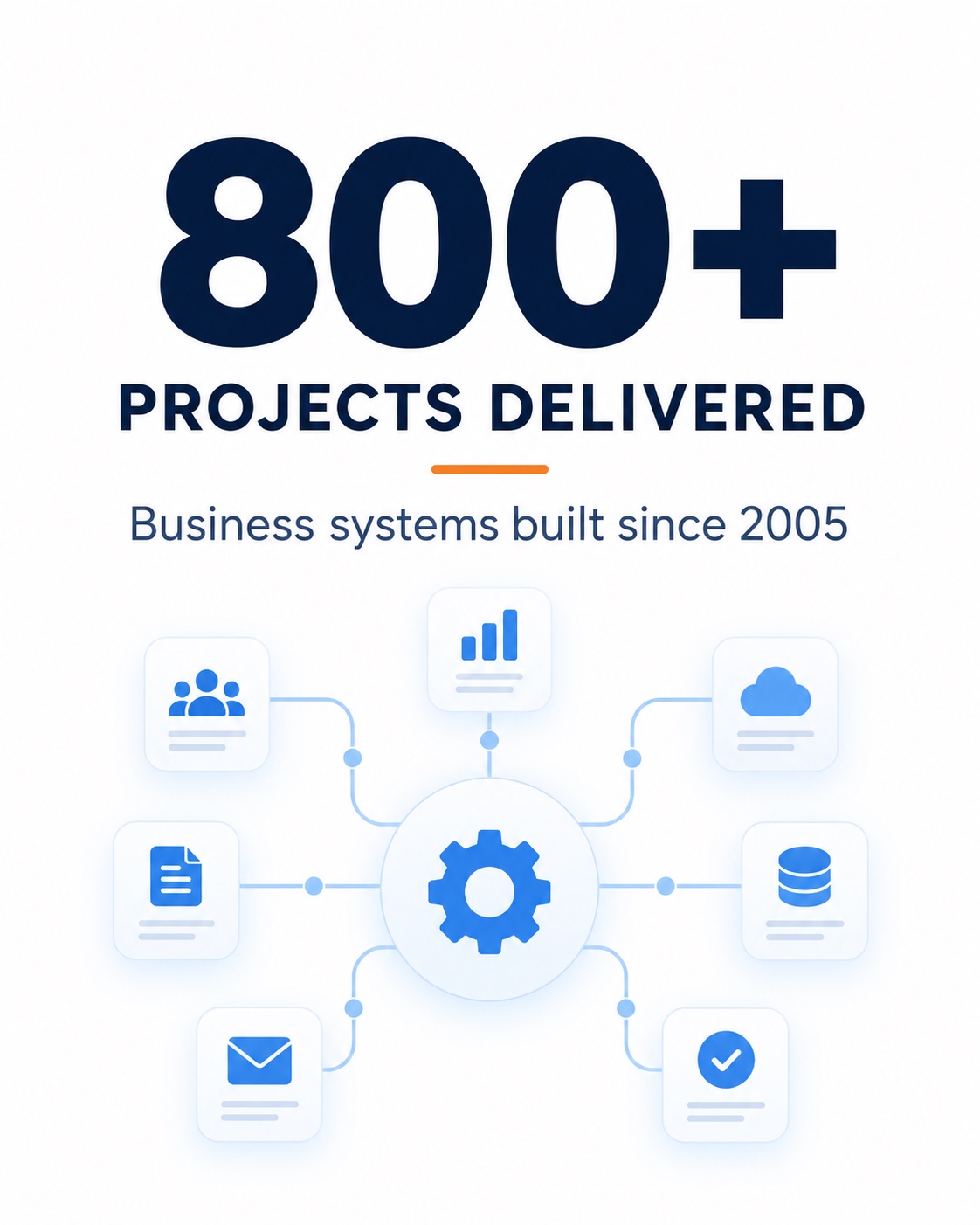
GO-Globe builds custom workflow automation for businesses in Dallas. We have delivered more than 800 projects for clients in over 25 countries since 2005.
Workflow automation removes the manual steps between one part of a process and the next. The approval sitting unread in someone's inbox for three days. The invoice retyped from a PDF into an accounting system. The onboarding checklist that lives in a spreadsheet and gets forgotten. Those are the steps automation takes out.
This page covers what workflow automation actually is, which processes are worth automating first, when a connector platform is the right answer and when it isn't, and what drives cost and timeline.

Workflow automation is software that moves a business process from step to step without a person having to push it along. It handles the routing, the reminders, the record keeping and the handoffs that people currently do by hand.
It's worth separating two terms that get used interchangeably.
Task automation handles one repeated action, like sending a confirmation email when a form is submitted.
Workflow automation handles a whole sequence, including the decisions and approvals inside it. A purchase request that routes to a manager, escalates if unanswered after two days, checks the amount against a spending threshold, routes again to finance if it exceeds that threshold, then creates the purchase order and notifies the supplier. That's a workflow, not a task.
Workflow automation is one method inside the wider field of business process automation, which covers where a business should be automating in the first place. This page assumes that decision has already been made.
Two things workflow automation is not. It's not the same as replacing staff, since the work it removes is coordination, not judgement. And it's not a chatbot, though the two often get sold together.
The processes worth automating first share three traits: they repeat on a predictable schedule, they follow rules that can be written down, and they currently pass through more than one person.
If a process fails any of those three tests, automating it usually locks in a problem rather than solving one.
Processes that automate well:
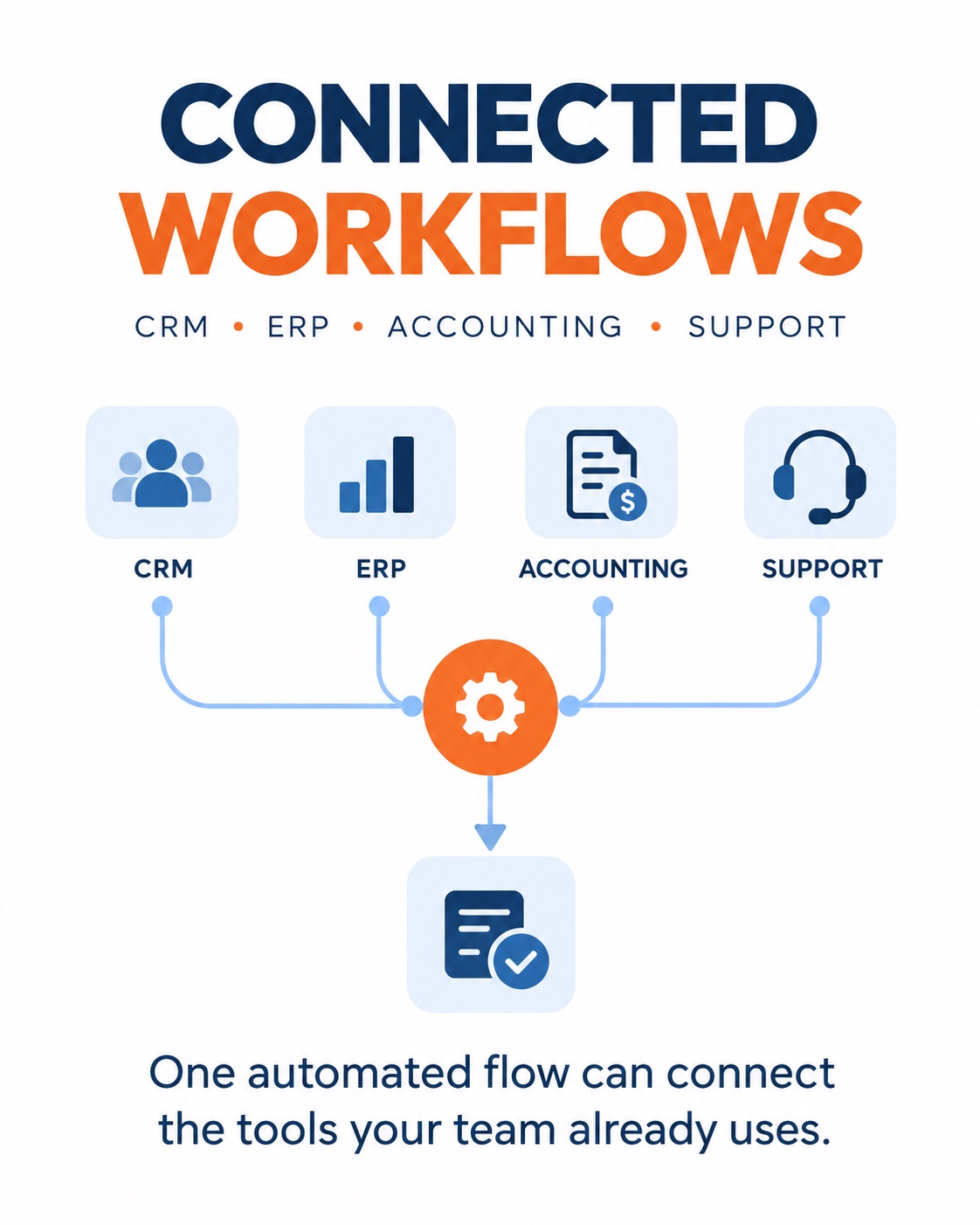
Most of these processes already run inside systems the business owns. Purchase orders and approvals usually sit in an ERP system. Customer records sit in a CRM system. Procurement documents move through a supplier portal, client requests through a client portal. Workflow automation is the layer that connects them, so a step finishing in one system starts the next step in another, instead of a person carrying the information across by hand.
Processes that do not automate well: anything still changing week to week, anything nobody in the business can fully explain, and anything where the rules are actually judgement calls being described as rules. In those cases the first job is writing the process down, not automating it.
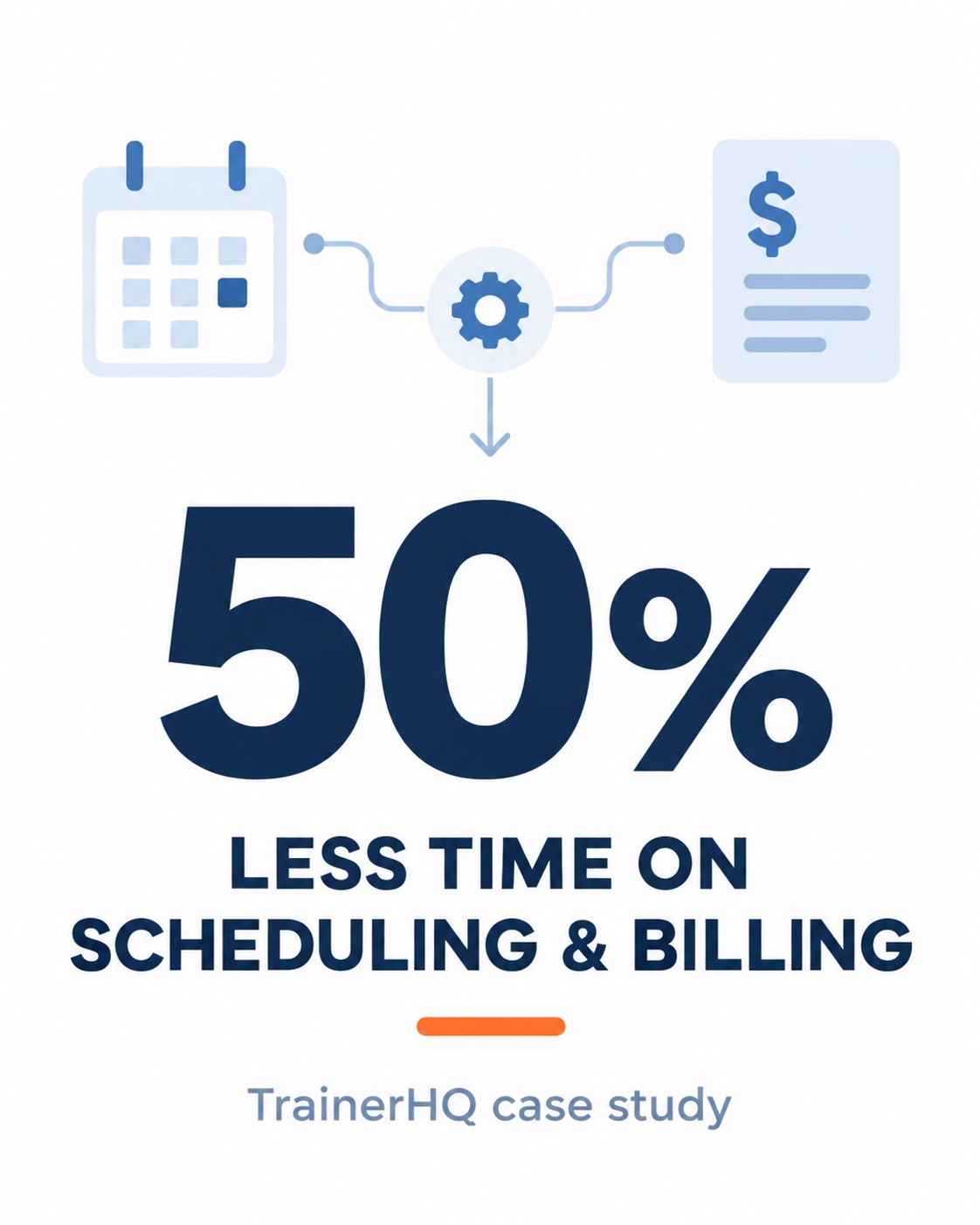
TrainerHQ is a fitness marketplace connecting personal trainers with clients. Scheduling, billing, coaching content and messaging each lived in a separate tool, and nothing passed information to anything else, so every booking and every payment involved manual coordination.
GO-Globe built a single platform with two connected portals, one for trainers and one for clients, covering scheduling, payments and subscriptions, video lessons, nutrition planning, chat and progress tracking.
Time spent on scheduling and billing dropped by 50%.
That reduction didn't come from doing the same work faster. It came from the work no longer needing to be done at all, the exact outcome a Dallas business with a similarly fragmented process should expect.



Document workflow automation moves a document through its full lifecycle without manual handling: capture, data extraction, routing, approval, storage and retrieval.
The typical starting point is invoices. An invoice arrives by email, someone opens it, reads the supplier name and amount, types both into an accounting system, saves the file somewhere, then emails a manager for approval. Automated, the same invoice is captured on arrival, its data extracted, matched against the purchase order, routed to the right approver based on value, and filed with the approval recorded against it.

Document processes we automate:
The measurable gain is usually not the time saved per document. It's the exceptions caught. A document workflow that flags a mismatch between an invoice and a purchase order pays for itself the first time it catches one.

An approval workflow routes a request to the right person, tracks whether they've responded, escalates when they haven't, and keeps a record of the decision.
Most approval processes in a business are not written down anywhere. They exist as habits. Automating one forces the rules into the open, which is often the first useful outcome before any software even runs.
What an automated approval workflow handles:
The audit trail matters more than it first appears. In a regulated or contractual process, common across Dallas's finance and energy sectors, being able to show the decision path is often worth more than the time the automation saves.


This is the decision most workflow automation projects get wrong, so it's worth being direct about it.
GO-Globe builds custom automation solutions. When connector platforms such as Make, n8n, Power Automate or Zapier are the right tool, we integrate them. When the business needs more flexibility, security or scalability, we develop custom automation instead.
We are not a connector implementation agency. That distinction is deliberate, and here's the honest version of when each approach wins.
The trap is per-task pricing. A connector platform is cheap at a thousand operations a month and expensive at a million. Businesses often discover this a year in, at which point the process is embedded and moving it is a project of its own. Worth modelling the cost at your expected volume before committing, not after, particularly for a high-transaction-volume Dallas logistics or manufacturing operation.
Our stack. Custom automation built in Node.js, PHP (Laravel), React and .NET, connected through REST APIs. Integrations with ERP, CRM and accounting systems. AI agents where the process needs interpretation rather than fixed rules. Connector platforms integrated where they're genuinely the better tool.
Where an automation needs an interface of its own, a dashboard, a request form, an approval queue, we build it as one of our custom web applications. It runs on the same stack as our website development in Dallas work, so the automation and the system it sits inside don't end up as two disconnected projects with two different owners.
We don't publish fixed prices, because the same brief costs very different amounts depending on scope. What we can tell you is exactly what moves the number.
Six factors determine the cost of a workflow automation project:
One cost point most agencies won't mention. Connector platforms carry ongoing per-task or per-user fees that scale with your usage. Custom automation carries a higher build cost and a lower running cost. Over a three-year horizon, the cheaper option on day one is frequently the more expensive one overall. Ask any agency to model both.
How our pricing works. We quote after discovery, once the process is mapped and the scope is written down. The quote is fixed against that scope. Changes are priced before the work is done, not after.


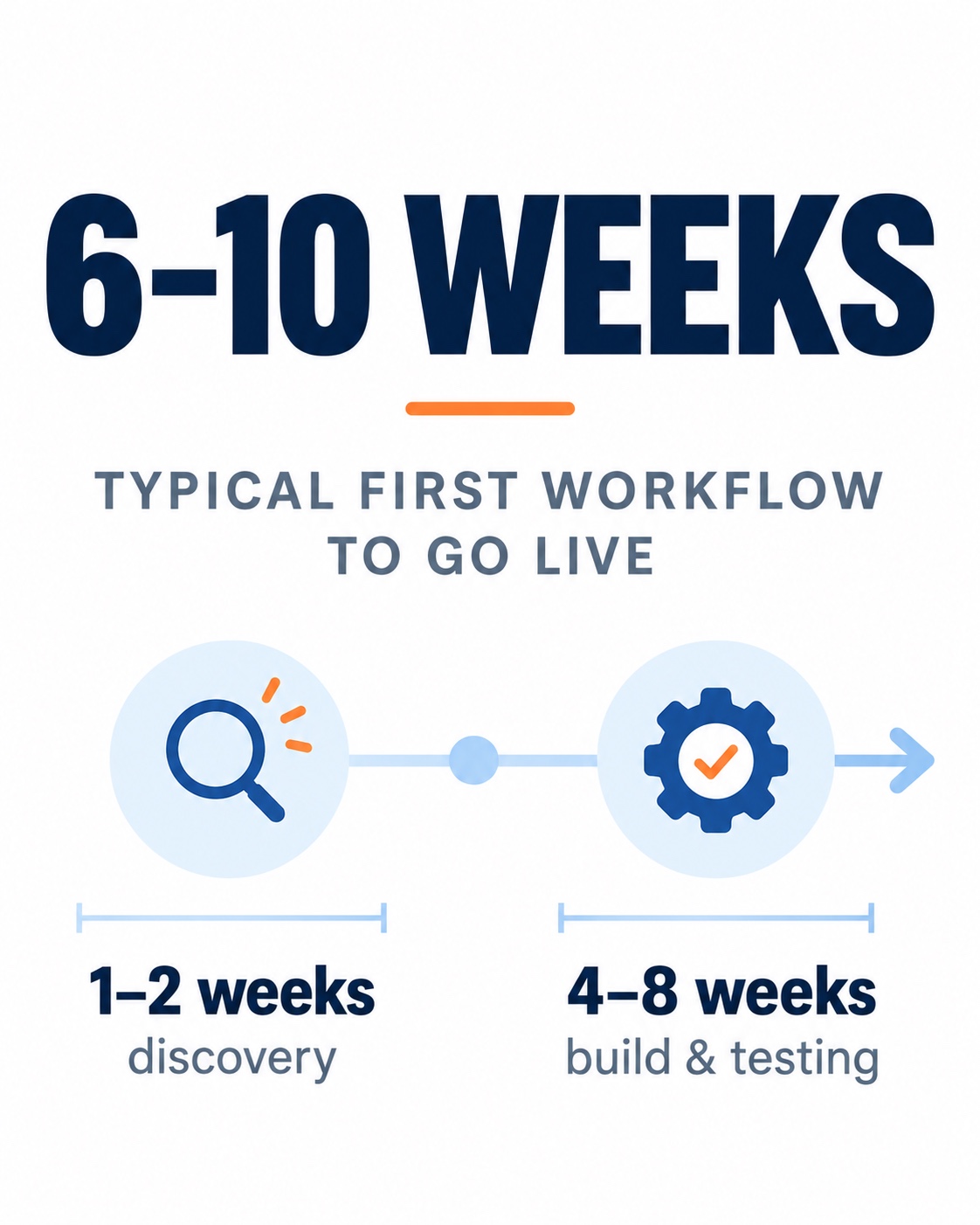
A first automated workflow typically goes live in six to ten weeks: one to two weeks of discovery and process mapping, then four to eight weeks of build and testing.
What extends it: systems without APIs, processes nobody has documented, approval chains that turn out to be undefined, and waiting on access to the systems being connected.
What shortens it: a written process map before the project starts, and one person on your side who can decide what the rules actually are.
The most common mistake is automating five processes at once. One process, live and working, teaches you more about the next four than any amount of planning does.
Most automation agencies describe themselves the same way. These seven questions separate them quickly.


Twenty years of building business systems. Founded in 2005, more than 800 projects delivered.
International scale. Clients in over 25 countries across corporate, government and enterprise sectors.
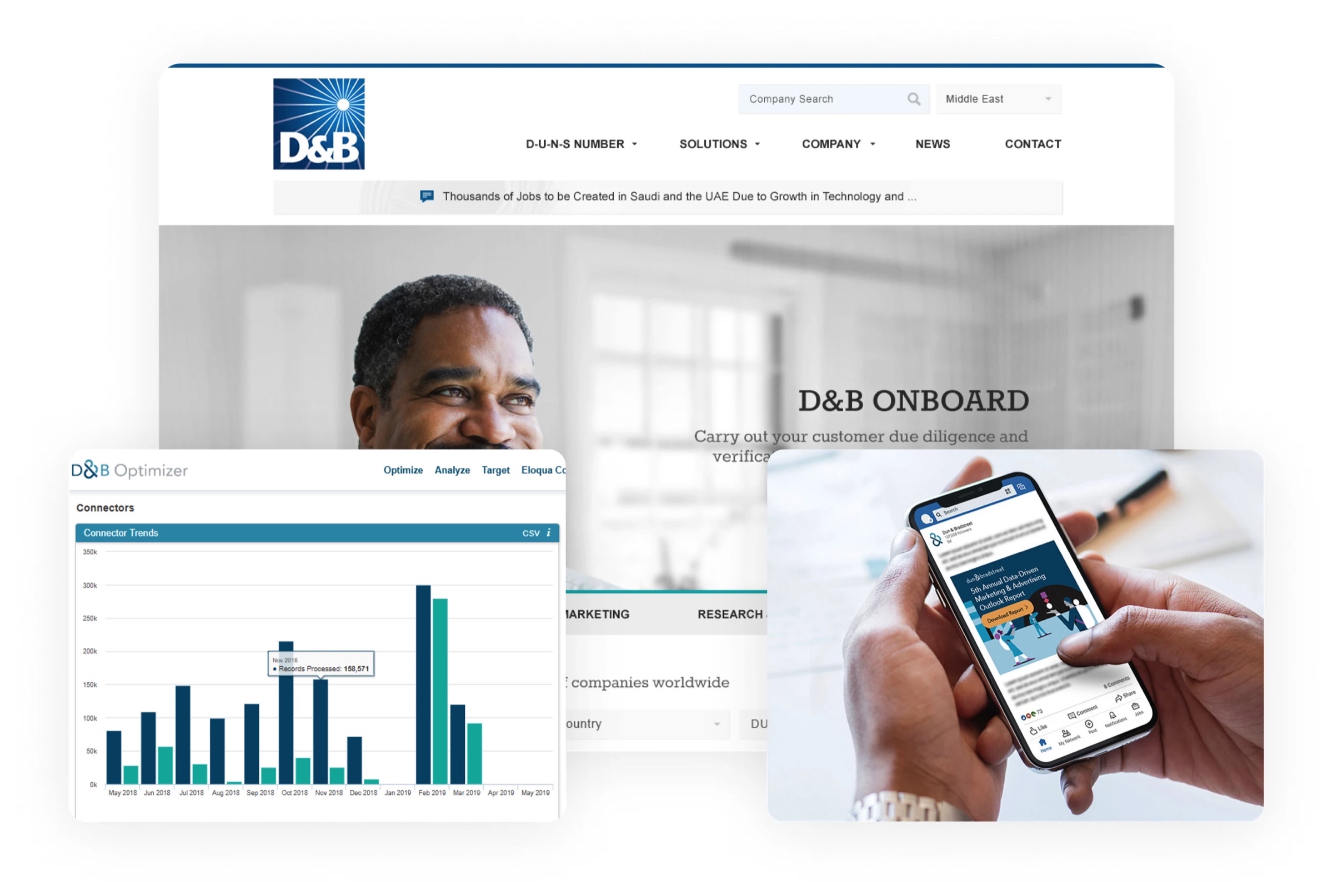
Enterprise experience. Systems delivered for organisations including Shell, Nestlé, LG and Dubai Municipality.
Custom first, platform when it makes sense. We're not tied to a single tool, so the recommendation isn't decided before we understand the process.
A named stack. Node.js, PHP (Laravel), React, .NET, REST APIs, PostgreSQL, MySQL, AWS and Azure. You always know what your automation is built in and who can maintain it.
Recognised work. Named UI Design Agency of the Month in November 2019 by TDA.
Talk to us. Call +1 571 208 8604 or book a strategy session.
Workflow automation is software that moves a business process from step to step without a person having to push it along. It handles routing, reminders, record keeping and handoffs. The benefit isn't that people work faster, it's that coordination work stops existing, which removes both the time it consumed and the errors it introduced.
Processes that repeat predictably, follow rules that can be written down, and pass through more than one person. Common examples are approvals such as purchase orders and expense claims, document processing such as invoice capture and matching, employee and customer onboarding, compliance and certification tracking, ticket routing, and keeping data synchronised between separate systems.
Cost is determined by six things: how many processes are being automated, how many steps and decision points each contains, how many systems must connect and whether they have usable APIs, transaction volume, whether documents need to be read and their data extracted, and what compliance and audit requirements apply. GO-Globe quotes after discovery, once the process is mapped, and prices any change to that scope before the work is done.
A first automated workflow typically goes live in six to ten weeks. That breaks down into one to two weeks of discovery and process mapping, followed by four to eight weeks of build and testing. Systems without APIs and undocumented approval chains are the two most common causes of delay.
Ask seven questions: whether they build or only configure, what happens if the platform's pricing changes, who owns the automation logic, whether they map the process before quoting, what the exception path is when an automation fails, how access is controlled and audited, and whether they can provide a reference with a comparable process rather than a comparable industry.
Business process automation is the broader category, covering an organisation's approach to automating work across departments. Workflow automation is one method inside it, focused on a specific sequence of steps, approvals and handoffs within a defined process. A business process automation programme usually contains several individual workflow automations.
Use a connector platform such as Zapier, Make, n8n or Power Automate when you're joining two or three mainstream apps with good APIs, at low volume, in a stable process. Build custom when the process spans many systems, involves sensitive or regulated data, needs logic a connector can't express, or runs at a volume where per-task pricing becomes expensive. GO-Globe does both and will say which one fits before quoting.
Every automated workflow eventually encounters an input, an API change or an edge case it wasn't built for. A well-built automation routes the failure to a person, alerts someone specific, and holds the work in a queue rather than dropping it silently. Ask any automation provider to explain their exception handling before signing, since silent failure is far more damaging than no automation at all.