


































Dallas runs on volume. Finance teams close books across multiple entities. Logistics operators track fleets and shipments in real time. Energy and manufacturing companies manage inventory and compliance at a scale a spreadsheet was never built to handle. An ERP system connects every one of those departments into one platform, so your whole company works from the same numbers at the same time.
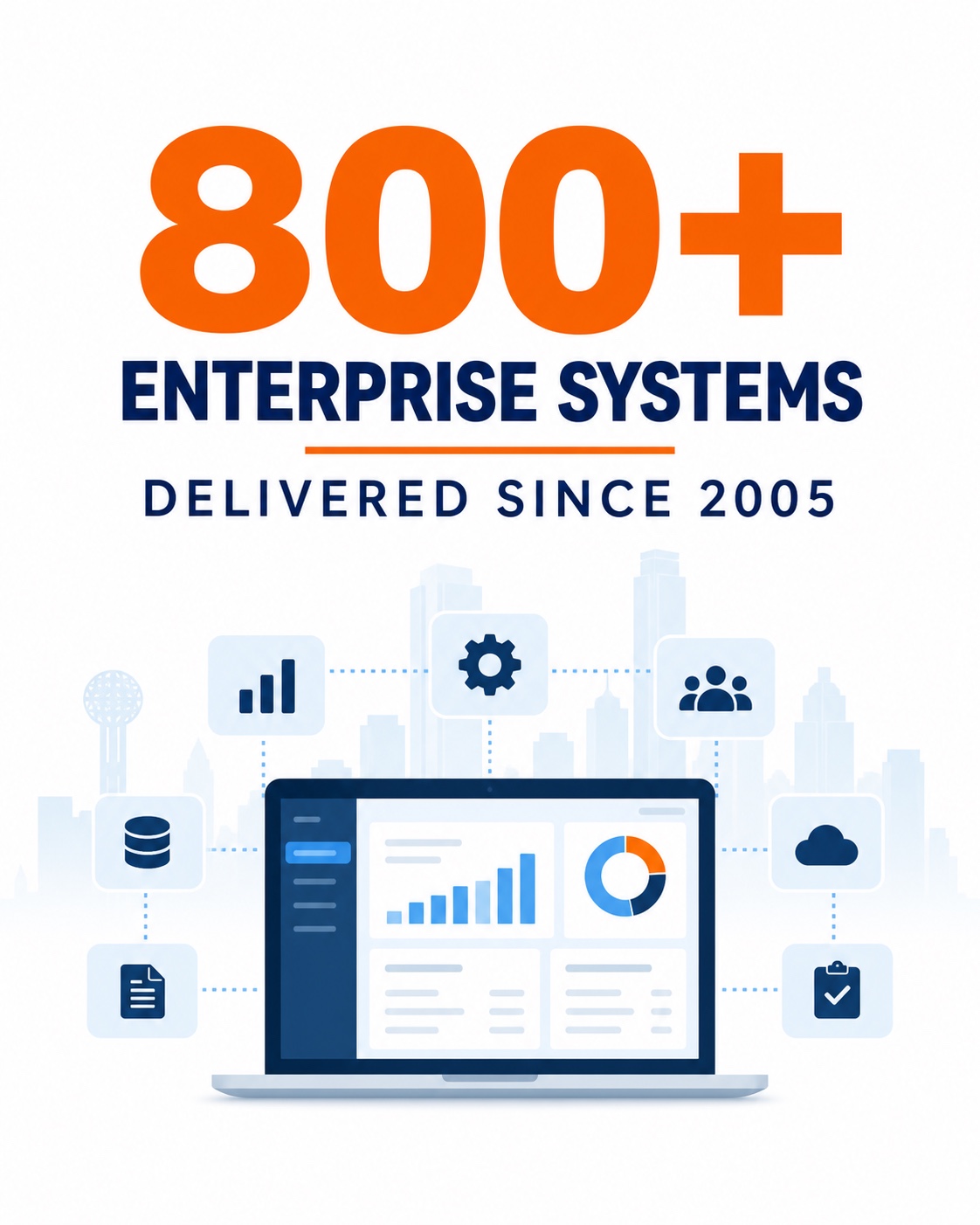
GO-Globe builds custom ERP systems for Dallas companies across logistics, finance, energy, real estate and manufacturing. We have delivered more than 800 enterprise systems since 2005. If your ERP needs to talk to a customer-facing site too, our website development company in Dallas builds that connection in from the start rather than bolting it on afterward.

An ERP system, short for enterprise resource planning, manages your finances, inventory, orders, staff and reporting in one place. When a shipment leaves the warehouse, the system updates stock, generates the invoice and records the revenue, without anyone touching a second piece of software.
Dallas companies that move off spreadsheets and disconnected tools typically see a real drop in time spent on manual data entry. Finance teams close monthly books with fewer manual steps. Operations stops chasing status updates over email and phone. Your team spends time making decisions instead of re-entering the same numbers three times.
| Deployment | Best fit | What it means day to day |
|---|---|---|
| Cloud ERP | Most small and mid-size Dallas businesses | Access from any device, automatic updates, no server hardware on site, paid as a monthly per-user cost, live in weeks rather than months |
| On-premise ERP | Larger enterprises with strict compliance needs | Runs on your own servers, full control over where data physically sits, works without an internet connection, common in finance, energy and healthcare |
GO-Globe builds both and recommends the right fit based on your size, industry and budget, not a default answer given to every client.


A standard ERP records data and produces reports after the fact. An ERP with automation built in goes further. It reads incoming data, flags problems before they become real ones, and takes routine action on its own. When stock drops below a set threshold, the system generates a purchase order and sends it to the approved supplier without anyone opening a screen.
GO-Globe builds ERP systems for Dallas businesses with automated alerts, smart reporting and workflow rules your team sets once and never touches again. Finance gets instant variance alerts. Operations sees a delay coming before it hits a customer. Managers work from facts, not from a hunch pieced together from three different reports.
GO-Globe builds on Odoo or a fully custom framework, depending on what actually fits your business. We do not resell a packaged platform and call it done. Every system connects to your existing accounting software, CRM, ecommerce platform and payment tools, including real-world platforms like QuickBooks, Salesforce, Shopify and Microsoft 365 through secure APIs, so nothing you already run gets thrown away to make room for the new system.
Our Dallas ERP builds cover finance modules, inventory, procurement, HR, sales pipelines and reporting dashboards in one connected system. We do not start from a fixed template. Every build maps to how your business actually operates, so your team works faster from week one, not after months of workarounds.


Dallas is not one industry wearing different logos. Here is how ERP need actually differs by sector, based on real research into what's actually here.
Logistics and Distribution. Dallas-Fort Worth carries real weight in freight and transportation, with carriers and logistics operators including Union Pacific, Stevens Transport and MV Transportation maintaining a major presence in the metro. An ERP system here tracks fleet schedules, shipment status and customer invoicing from one platform, so dispatchers see live vehicle locations next to order data instead of switching between four different screens.
Finance and Corporate Enterprise. Dallas is home to 11 Fortune 500 company headquarters on its own, and Goldman Sachs runs a roughly 800,000-square-foot regional campus in the city. Finance and professional services firms at this scale use ERP to manage multi-entity billing, compliance reporting and revenue tracking in one platform, producing audit-ready statements instead of a monthly scramble.
Energy and Manufacturing. Energy Transfer and HF Sinclair are both headquartered in Dallas, and manufacturing and energy operations run on inventory, asset tracking and regulatory reporting that a spreadsheet cannot keep up with at scale. ERP here means real-time inventory counts, maintenance scheduling and compliance documentation that generates itself instead of getting rebuilt by hand every quarter.
Real Estate and Professional Services. CBRE, the commercial real estate giant, is headquartered in Dallas, part of a genuinely large professional services base built around the city's corporate concentration. Firms in this space use ERP to manage client billing, project costing and reporting across dozens of active engagements at once.
| Stage | What happens |
|---|---|
| 1. Map | We map your current process and identify exactly which modules your business actually needs |
| 2. Design and build | We design the system architecture and build the custom workflows, reports and integrations |
| 3. Test | We test every module against real business scenarios before any data moves over |
| 4. Launch | Go live with full staff training beforehand, so nobody learns the system during a live workday |
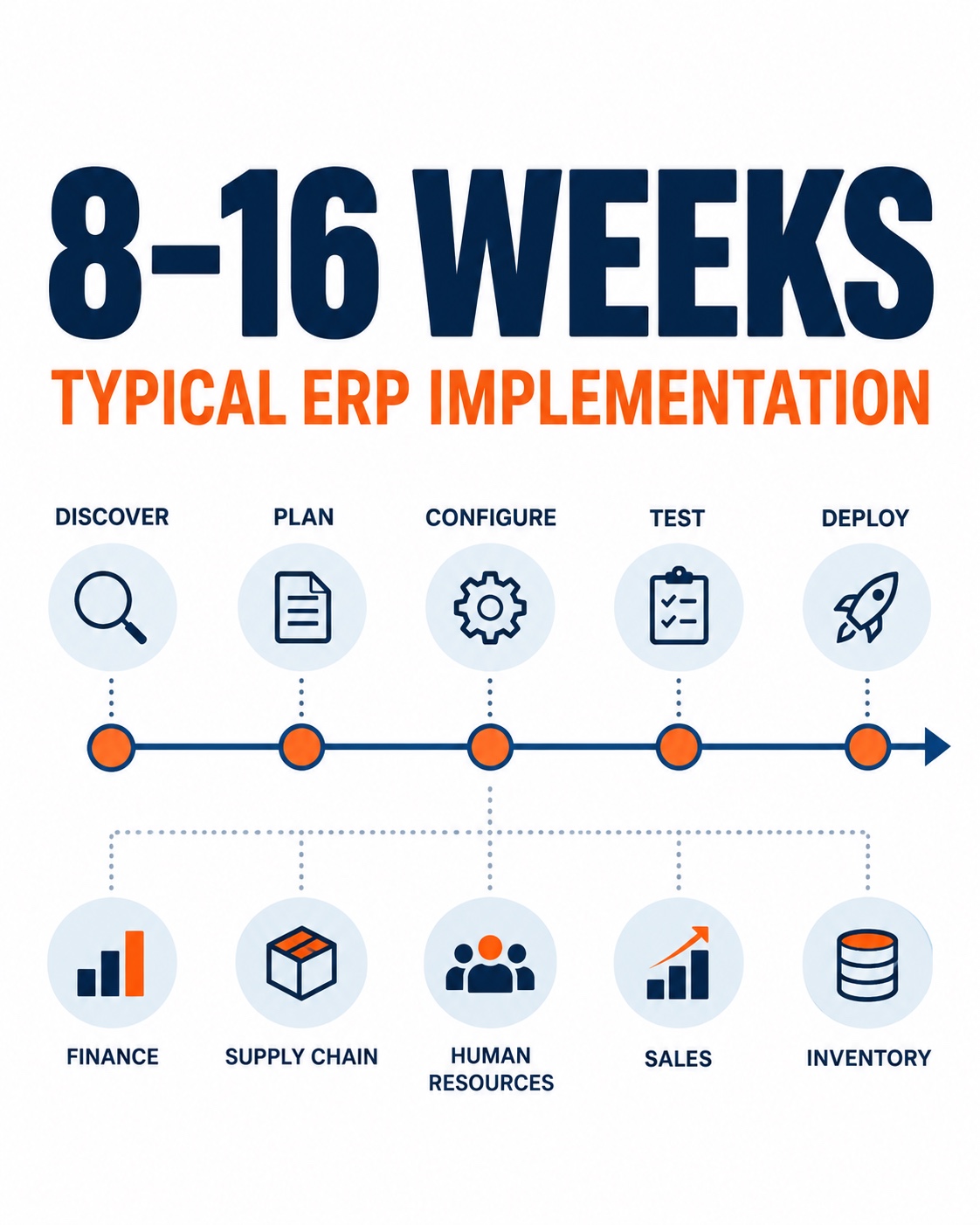
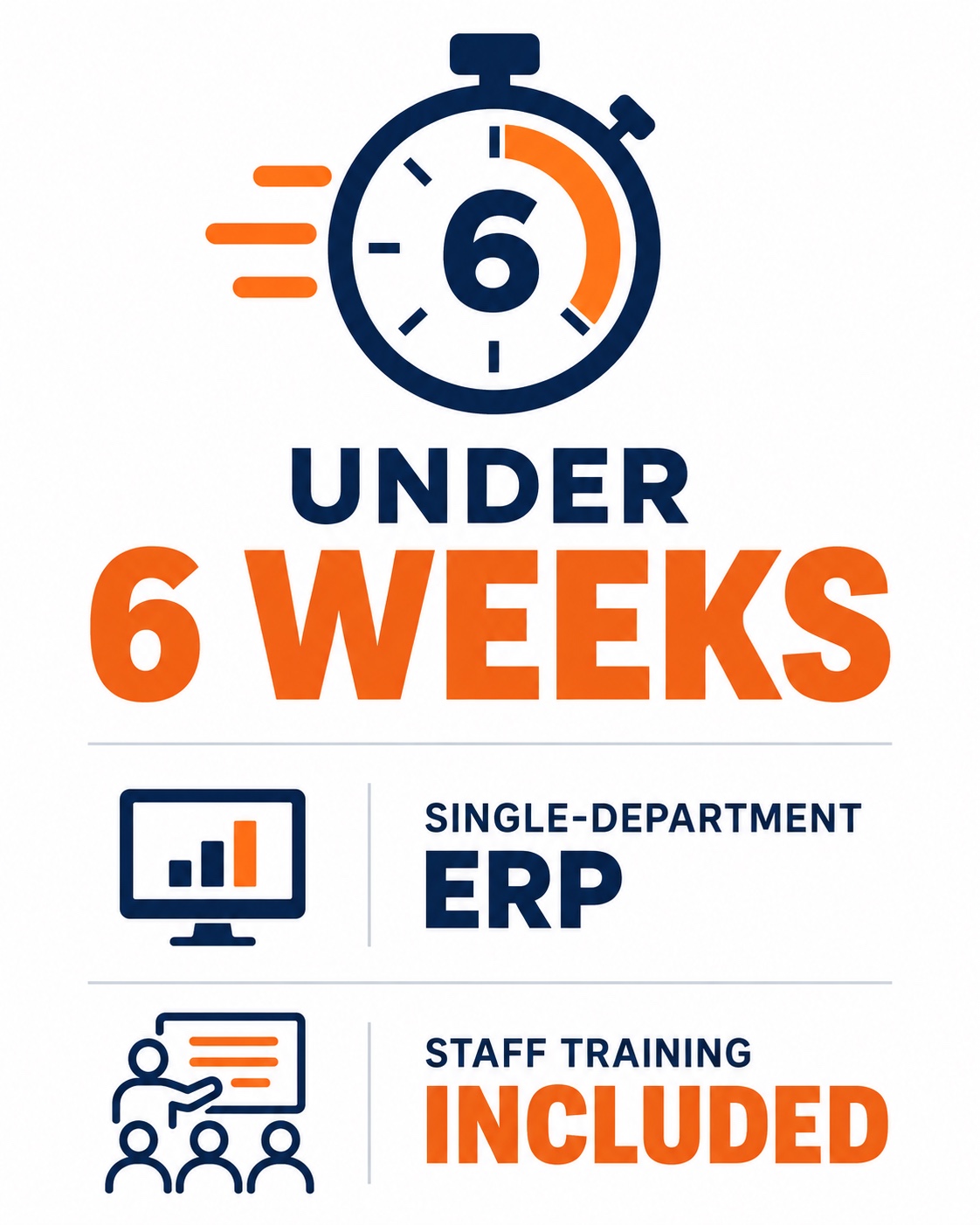
Most GO-Globe ERP implementations run eight to sixteen weeks depending on complexity. A single-department implementation can go live in under six weeks, staff training included.


Not every Dallas business needs a system built from zero. GO-Globe also provides ERP consulting for companies that already run a system and need it improved, extended or fixed. We assess your current setup, identify exactly where it's slowing your team down, and recommend specific fixes without tearing out everything you already have. Many clients recover real efficiency from their existing ERP once it is properly configured, before ever needing a replacement.
For new builds, our team documents every process the system has to handle with your department heads before a single line of code gets written. This is what prevents the most common ERP failure: a system that does not match how the business actually runs. GO-Globe has maintained active support contracts with clients for more than ten years.
GO-Globe does not yet have a named ERP case study to point to, and we would rather say that plainly than stretch an unrelated project to fit. What we can show is the same underlying principle at work: replacing several disconnected tools with one system that actually reflects how a business runs.
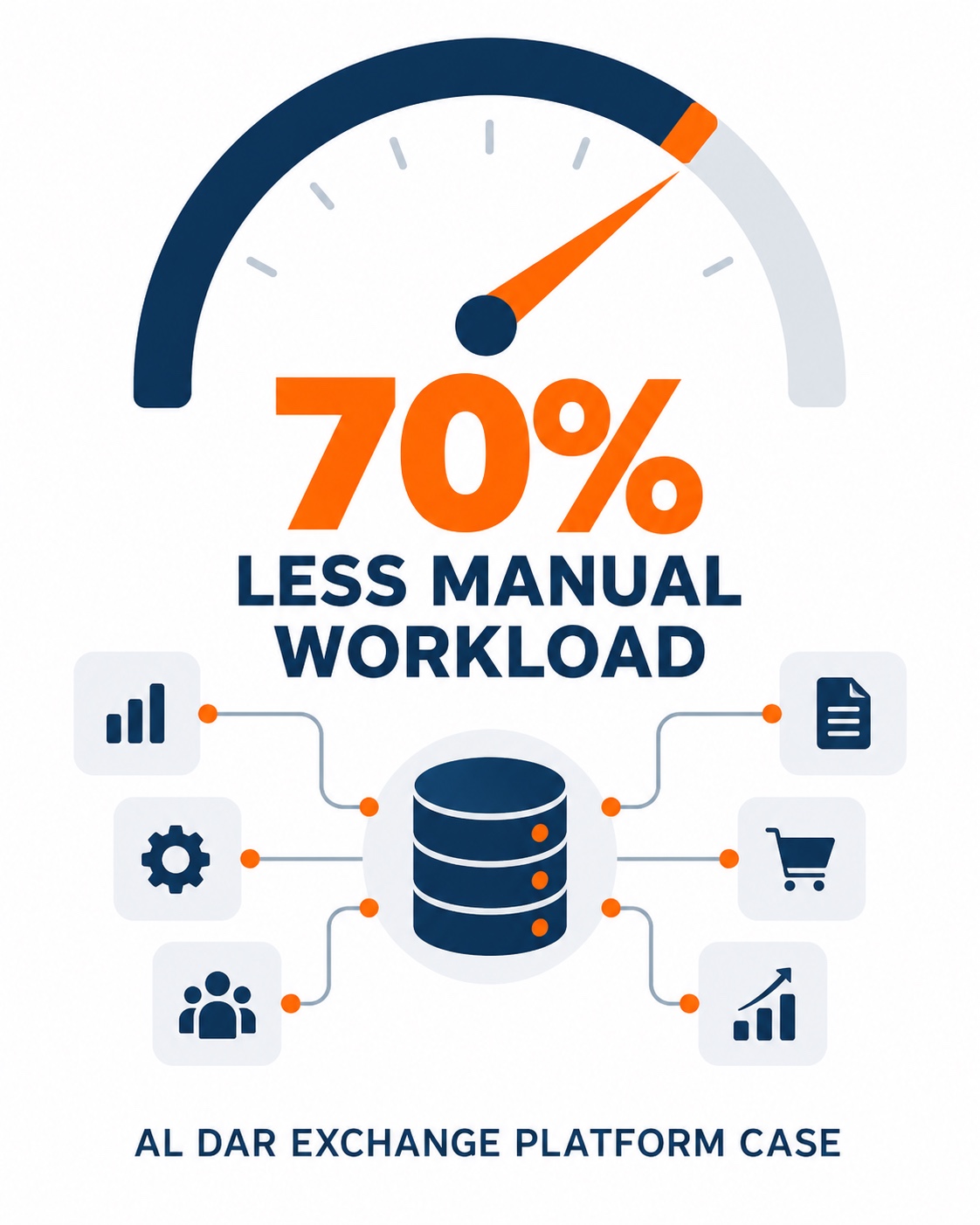
Al Dar Exchange ran customer communication through three separate, disconnected channels, website chat, WhatsApp and phone, each with its own inbox and no shared history between them. GO-Globe built a single AI-assisted platform unifying all three into one dashboard, with an automated first response available around the clock. The result was a 70% reduction in manual workload for the team handling customer contact. It is a communications platform, not an ERP, but the underlying problem it solved, several disconnected systems doing the job one connected system should be doing, is exactly what an ERP solves for finance, inventory and operations instead of customer messaging.


GO-Globe has built enterprise systems for governments, global corporations and growing businesses since 2005. We are not a reseller of packaged software repackaging someone else's product. We build systems that match your specific processes, data and team.
Every Dallas ERP project includes a dedicated project manager and a fixed-price proposal, agreed before work starts, since ERP projects commonly run over budget when scope is not locked in early. ERP consulting starts with a free assessment of your current operations, covering the exact modules you need, the integrations required and a realistic timeline, not a generic package.
Most clients recover their project cost through the efficiency gained from reduced staff hours and fewer operational errors, which lines up with the wider pattern across ERP projects generally: the real return comes from time saved on manual work, not from the software license itself.
Talk to us. Call +1 571 208 8604 or book a strategy session.
A platform that connects your finance, inventory, sales, HR and operations into one database. Every team works from the same live data without manually transferring information between separate systems.
Most GO-Globe ERP projects take eight to sixteen weeks. Single-department implementations can go live in under six weeks, including staff training.
Yes. GO-Globe integrates with platforms like QuickBooks, Salesforce, Shopify and Microsoft 365, and most custom-built systems, through secure APIs, so your existing tools stay in place instead of getting replaced.
Cloud ERP suits most small and mid-size Dallas businesses, with a lower upfront cost and faster setup. On-premise works best for larger enterprises with strict data compliance requirements, common in finance and energy.
Cost depends on the number of modules, integrations and users. GO-Globe provides a fixed-price proposal after a free assessment, so you know the full cost before committing to anything.
GO-Globe builds on Odoo or a fully custom framework, chosen based on what actually fits your business, not a fixed answer given to every client.
Yes. If you already run an ERP that is not performing, GO-Globe assesses the current setup, identifies exactly where it is slowing your team down, and recommends specific fixes rather than a full rebuild by default.
Yes. GO-Globe works with clients across the United States and in more than 25 countries. Projects run remotely, with a named point of contact and an agreed schedule of updates, so location is not a barrier to the same process or standard of delivery.