


































AI chatbot development Austin businesses invest in replaces scripted, keyword-triggered bots with a system that actually understands what a customer is asking and responds like a real conversation. GO-Globe builds AI chatbots that connect to your real business data, hand off to a human cleanly when needed, and work across your website, WhatsApp, and phone calls from one system.

AI chatbot development is the process of building a conversational system, using large language models rather than fixed scripts, that can understand a customer's actual question, hold a real back-and-forth conversation, and pull accurate answers from your business's own data instead of a generic pre-written menu of options.
This is a meaningfully different thing from the older style of chatbot most people have already used and disliked, the kind that only understands a handful of exact phrases and gets stuck the moment a customer phrases a question slightly differently. A properly built AI chatbot handles the messy, real way people actually type and talk, and knows when a conversation genuinely needs a human instead of pretending it can handle everything. This is exactly what separates a real AI chatbot development company Austin businesses can rely on from a template vendor reselling the same generic bot to every client.
Most businesses that come to us for a chatbot actually need both a text version and a voice version working the same way, pulling from the same underlying data, not two separate systems that give customers different answers depending on which one they happen to use.


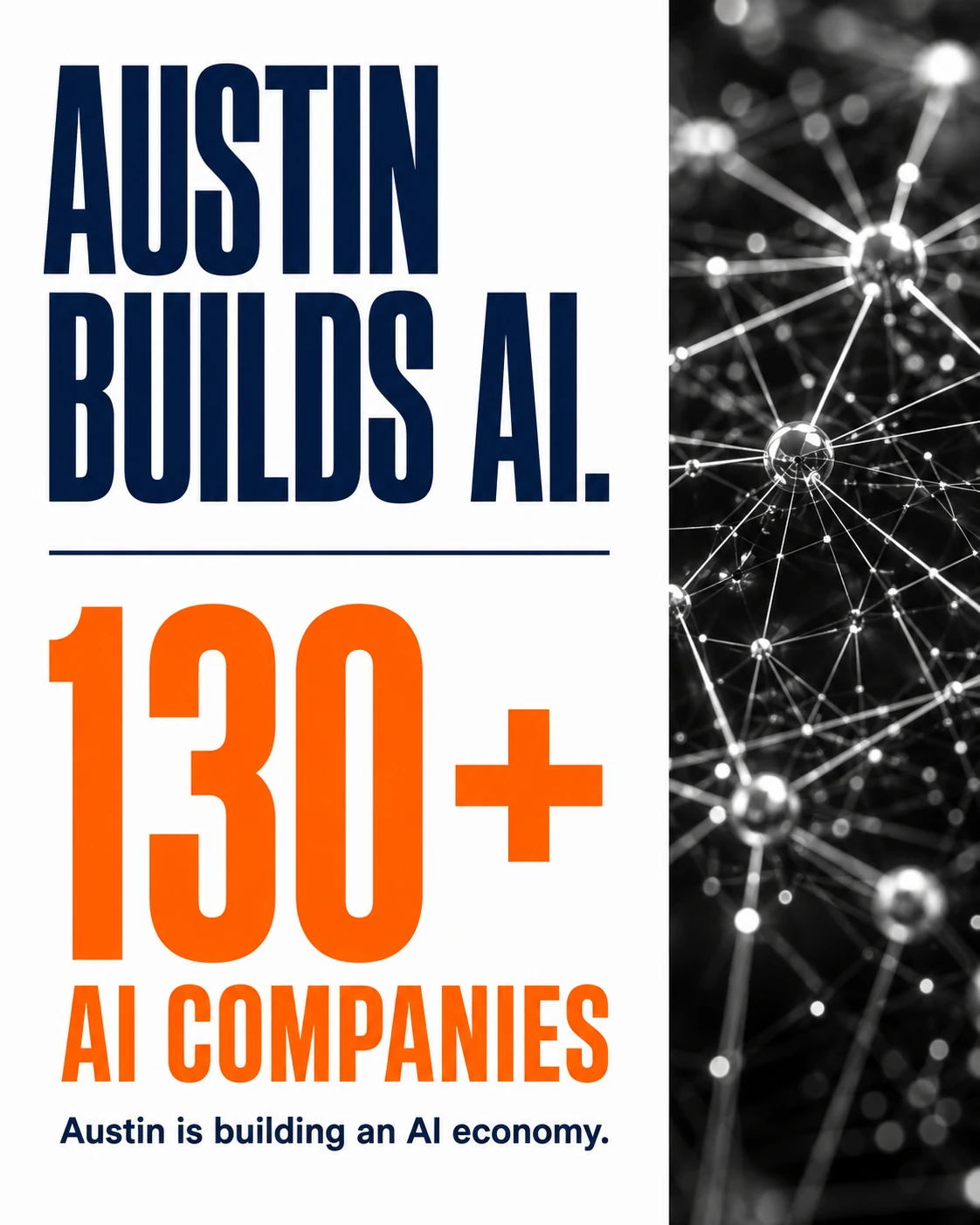
Austin isn't a market where AI chatbots are a novelty. The metro area is home to more than 130 companies building AI-powered tools locally, in a city being actively developed as a genuine Silicon and AI infrastructure hub. Customers in a market this AI-forward already expect a fast, conversational response, not a static contact form or a hold queue.
That expectation creates a real gap for businesses still running an old-style scripted bot, or no automated response at all. A customer who gets stuck in a keyword-matching loop, or waits hours for an email reply, doesn't wait around in a market this competitive, they contact the next business on the list instead.
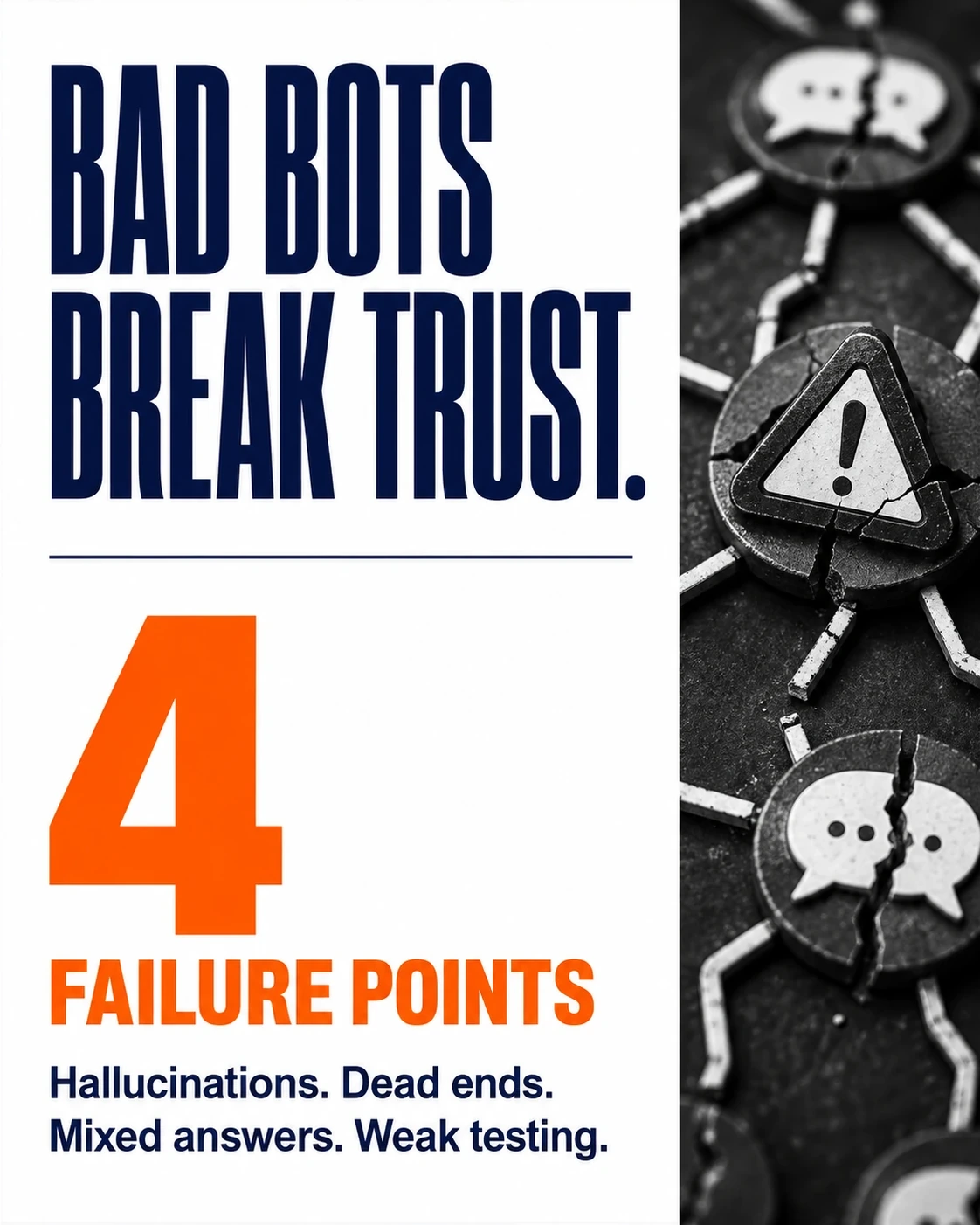
A poorly built AI chatbot is arguably worse than no chatbot at all, and it's worth knowing what causes that before choosing a development partner.
Hallucinated answers. An AI system not connected to real business data will still confidently answer a question, using its general training instead of your actual policies, pricing, or availability. That's a trust problem, not a minor bug, especially the first time a customer catches it.
No clear escalation path. A chatbot that keeps trying to answer instead of recognizing it's stuck frustrates customers far more than a scripted bot that at least says "let me connect you to someone." Knowing when to stop is as important as knowing how to answer.
Inconsistent answers across channels. A chatbot built separately for the website and for WhatsApp, without a shared data source, can end up telling the same customer two different things depending on which channel they used.
No real testing before launch. A chatbot demoed on a handful of clean, expected questions can still fail badly the first time a real customer asks something messier. Testing against actual historical conversations, not just a scripted walkthrough, is what catches this before launch instead of after.


An AI chatbot embedded directly on your site, answering real questions using your actual product, service, or policy information, not a generic script.
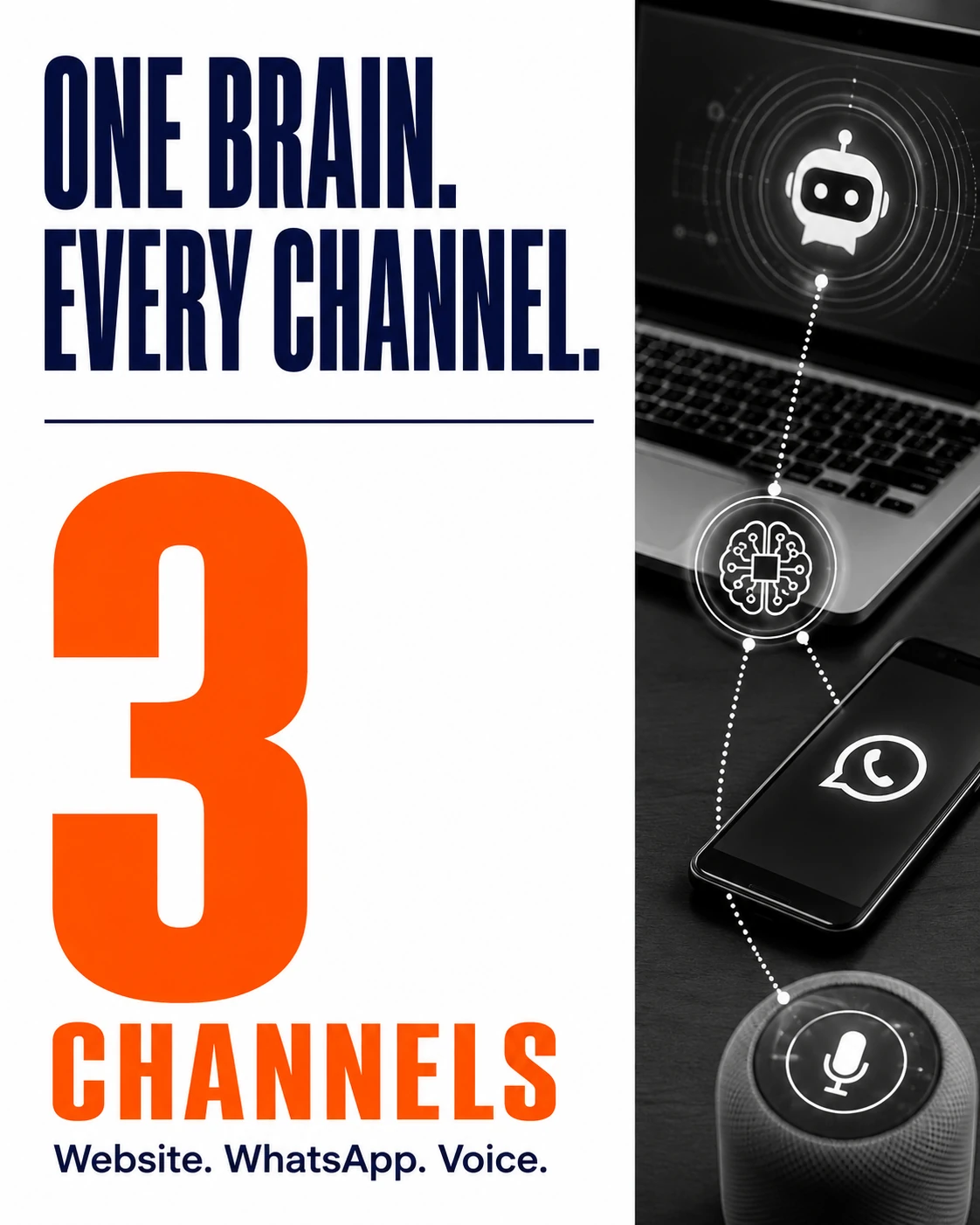
The same AI system extended to WhatsApp and text messaging, so a customer gets one consistent answer no matter which channel they reach out on.
Phone calls handled by the same underlying AI, understanding natural speech and responding conversationally, with a clean handoff to a human for anything that genuinely needs one.
Real-time conversation handled in multiple languages from the same system, useful for any Austin business serving a genuinely multilingual customer base.
The chatbot connected to your actual CRM, booking system, or database, so it can check real order status, real availability, or real account details instead of guessing.
A clear, built-in point where the AI recognizes a conversation needs a person, and hands it over with full context, instead of leaving the customer to repeat themselves.
Austin's economy isn't one industry, which means chatbot needs vary more here than in a smaller, single-industry market. Retail and direct-to-consumer brands, a real and established part of the local business base, typically need a chatbot handling order status, sizing questions, and return policies around the clock. Health-tech and service businesses often need something more careful: accurate answers about availability and process, with a fast, reliable handoff to a person for anything sensitive. Fast-scaling startups usually want the opposite priority: a chatbot that can absorb repetitive support volume immediately, without hiring a support team just to keep pace with growth.
None of these are hypothetical categories, they're the actual mix of businesses operating in Austin's own tech and retail base, and it's why we scope every chatbot project around the specific business asking for it, not a one-size template applied regardless of industry.


Your team answers the same handful of questions constantly. If most incoming messages are variations on the same few questions, that's the clearest signal a chatbot can genuinely help, not just add technology for its own sake.
Customers are messaging you across three or four different channels. Website chat, WhatsApp, phone, and social media all fielding separate conversations with no shared history is how customers end up repeating themselves, and how requests get missed.
Response time is the actual complaint, not the answer itself. If customers are frustrated by how long it takes to hear back, not by the answer once they get it, that's a speed problem an AI chatbot solves directly.
Support only runs during business hours, but customers don't. A chatbot that can genuinely answer real questions, not just say "we're closed," keeps the conversation moving overnight and on weekends.
Your team is manually routing every single inquiry. If a person has to read every incoming message just to figure out where it should go, that triage step alone is often worth automating first.


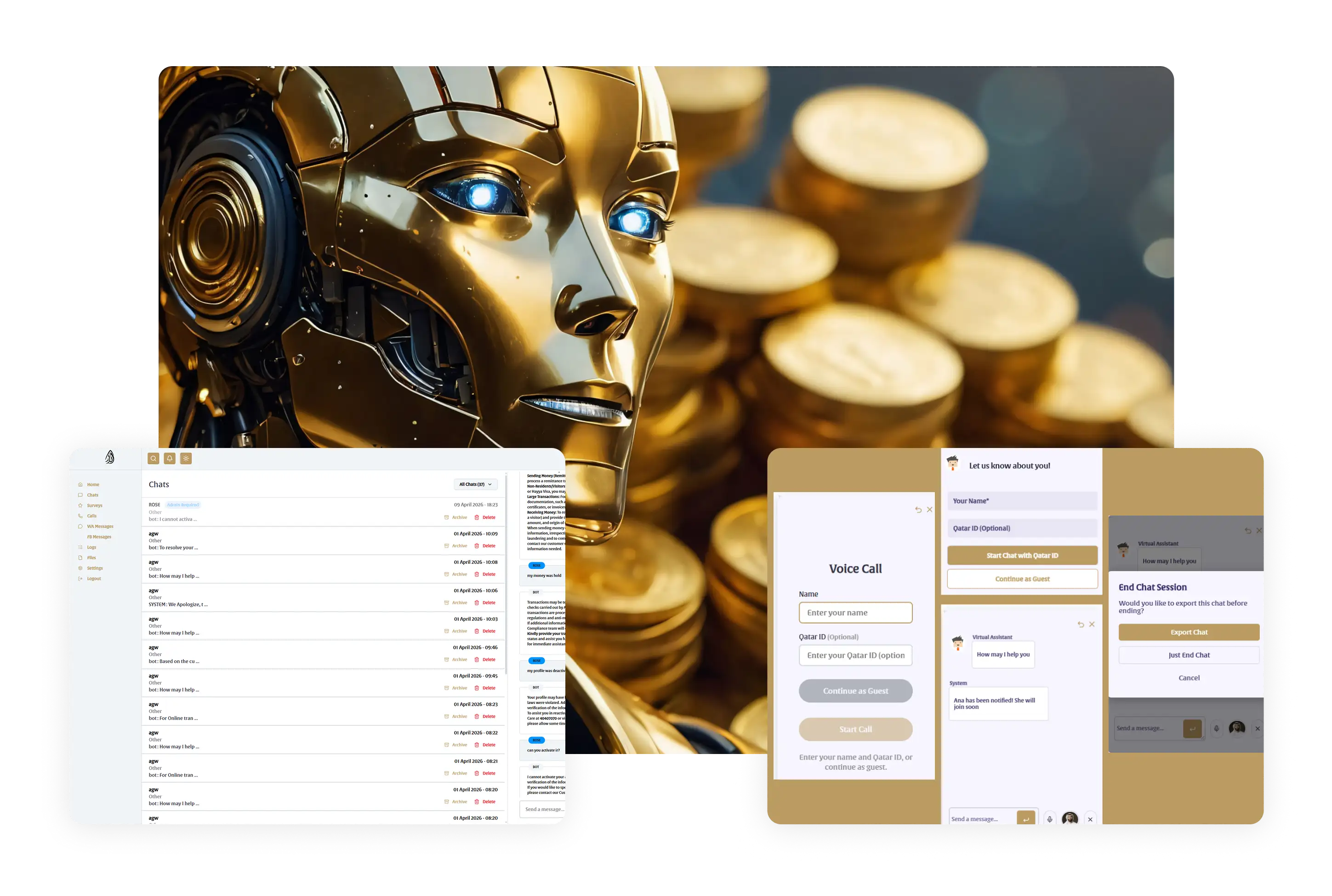
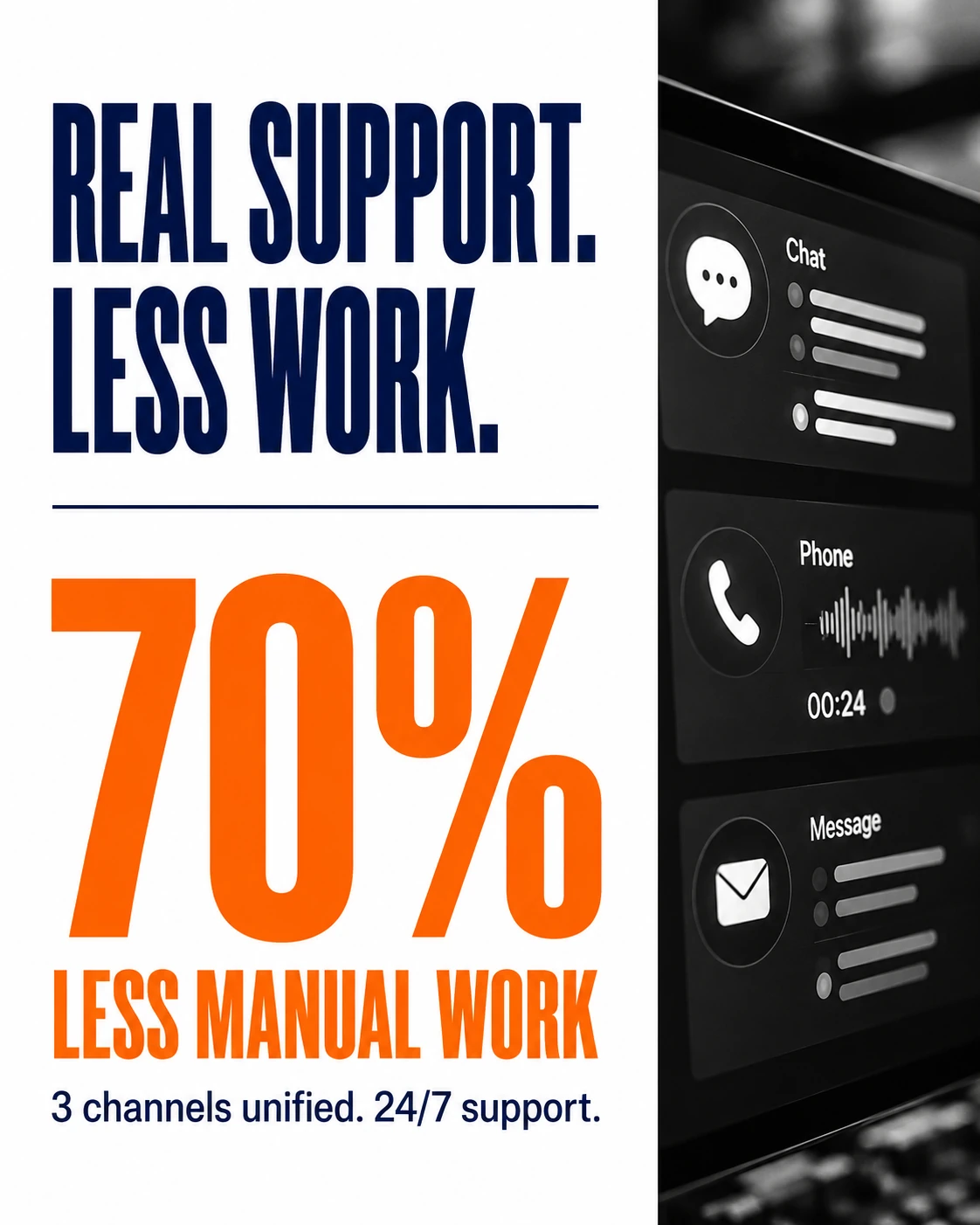
GO-Globe built an AI Support Assistant for Al Dar Exchange, unifying website chat, WhatsApp, and phone calls into one AI-powered platform. The system includes a central dashboard for all chats and call logs, real-time multi-language conversation handling, an AI voice assistant for customer calls, and a smart knowledge base that hands a conversation to a human the moment it needs one.
The result was a 70% reduction in manual office workload, with 3 previously separate communication channels unified into a single platform, and genuine 24/7 AI customer support running without additional staffing.
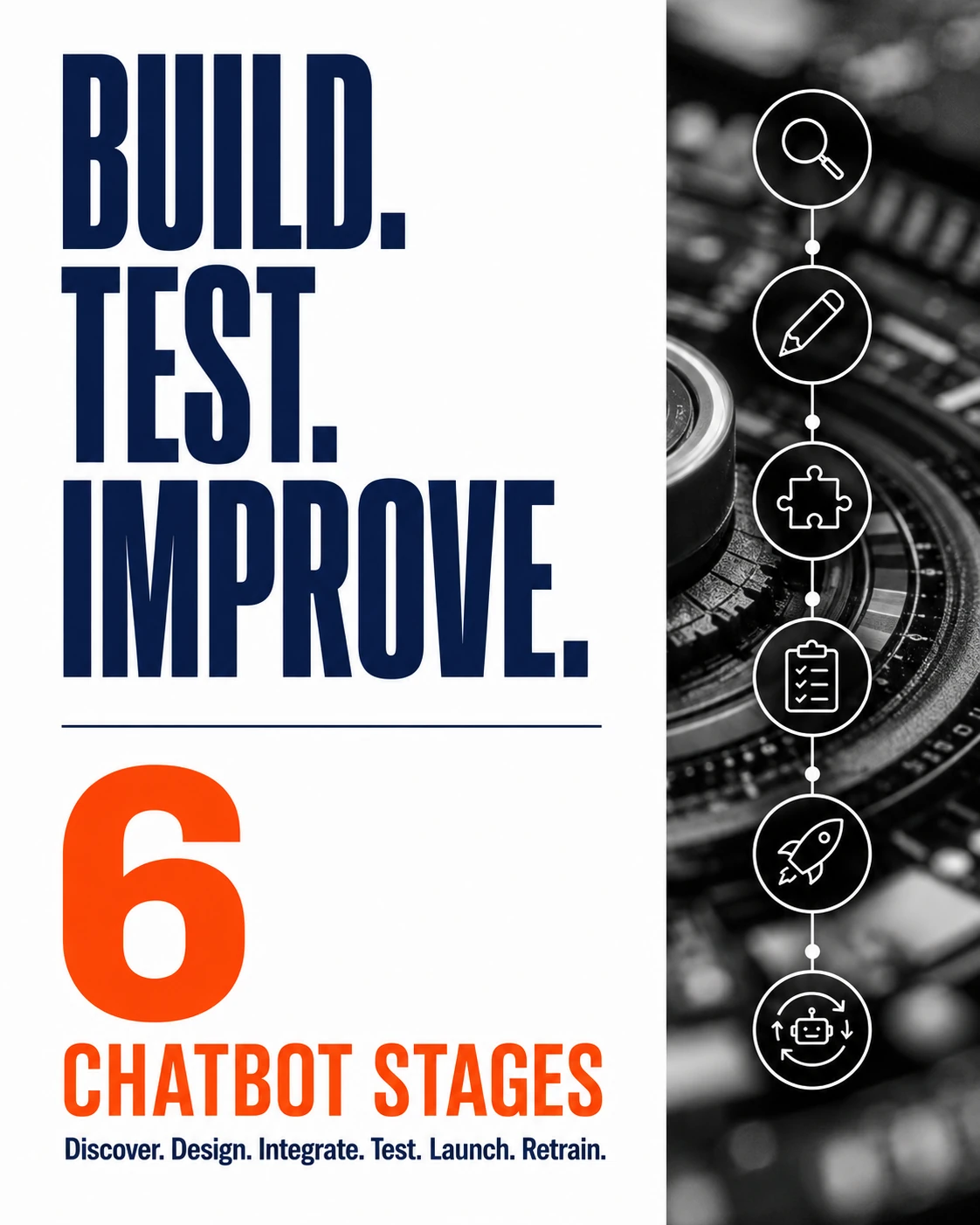
GO-Globe has been building custom digital products since 2005, with more than 700 projects delivered and over 460 clients across 28-plus locations globally. AI chatbot development draws directly on that broader systems experience, since a chatbot is only as good as the data and business logic connected behind it, not just the conversation layer on top.
A few things specifically shape how we approach AI chatbot development:

A standard chatbot matches exact keywords or button clicks to pre-written responses, and breaks down the moment a question is phrased differently than expected. An AI chatbot uses a language model to understand the actual intent behind a question and responds accordingly, even when it's phrased in a way nobody explicitly programmed for.
Yes, if it isn't connected to accurate source data. This is why we treat the data connection as core to the build, not an add-on. A chatbot pulling real answers from your actual systems is far less likely to guess than one relying only on general knowledge.
That's a design decision, not a technical limitation. Some businesses prefer to disclose it clearly, others prefer a more natural conversational tone. We build to whichever approach fits your brand and, where relevant, your industry's disclosure expectations.
Yes, and we consider this a required feature, not optional. The system is designed to recognize when a conversation needs a human and hand it over with full context, so the customer never has to repeat themselves.
Yes. The same underlying AI system can be extended to handle phone calls with natural speech understanding, using the same data connections and handover logic as the text version.
It depends on how many channels and systems the chatbot needs to connect to. A single-channel chatbot connected to one data source moves faster than a multi-channel system integrated with a CRM and booking platform. We'll give you a real timeline after the discovery and data audit step.