
































AEO services Austin businesses use help them get cited inside AI answers, not just ranked on a results page. GO-Globe builds the content structure, schema, and technical setup that Google AI Overviews, ChatGPT, Perplexity, and Gemini actually pull from when they answer a question your customers are asking.

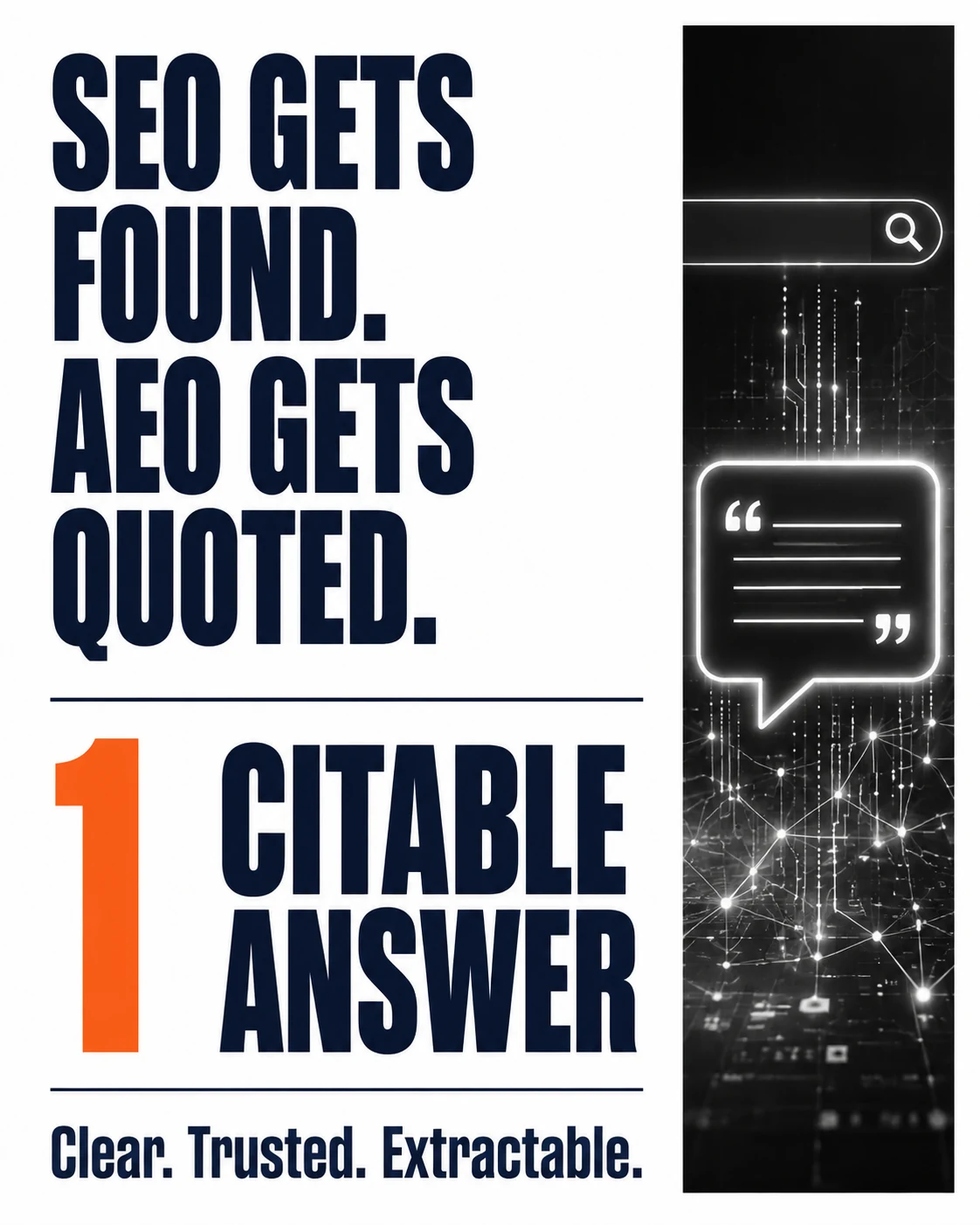
AEO, short for Answer Engine Optimization, is the practice of structuring a website so AI systems can extract, trust, and cite its content directly inside an AI-generated answer. Traditional SEO earns a ranking position a person clicks. AEO earns a citation an AI system quotes, sometimes without the user ever visiting your site at all.
The two aren't in competition. A page built well for AEO usually still ranks well in traditional search, because both reward clear structure, real evidence, and content that answers a specific question directly. The difference is what happens next: SEO gets you found, AEO gets you quoted.
These three terms get used interchangeably, and that causes real confusion when a business is deciding what to invest in.
Most businesses don't need to choose one. GO-Globe treats SEO as the foundation, AEO as the layer built directly on top of it, and GEO as the wider goal both are working toward.


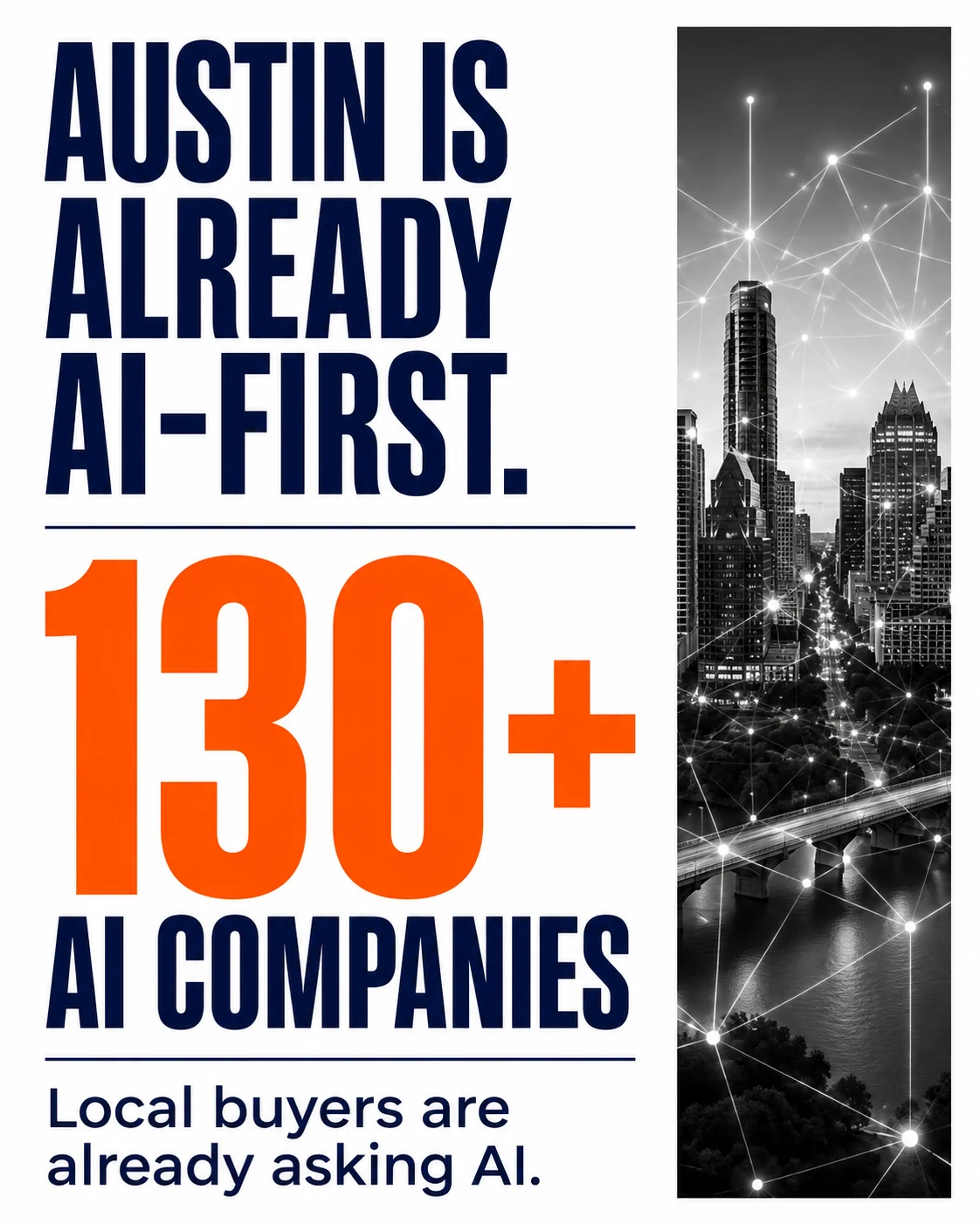
Austin isn't a market where AI search is a future concern. It's already part of the local business identity. The metro area is being actively built out as a Silicon and AI infrastructure hub, with more than 130 companies locally building AI-powered tools and enterprise automation. When a market's own economy is this AI-forward, its buyers are already using AI assistants to research vendors and services, not just Google.
That creates a specific risk for Austin businesses that haven't touched AEO yet: a competitor with weaker traditional SEO but better AI-search structure can still get quoted first, in an answer your own customer never sees a link for. This is exactly where AI search optimization Austin businesses invest in starts to matter, not later, once a competitor already owns the AI answer for your category. Being ranked doesn't guarantee being cited, and being cited is quickly becoming worth more.
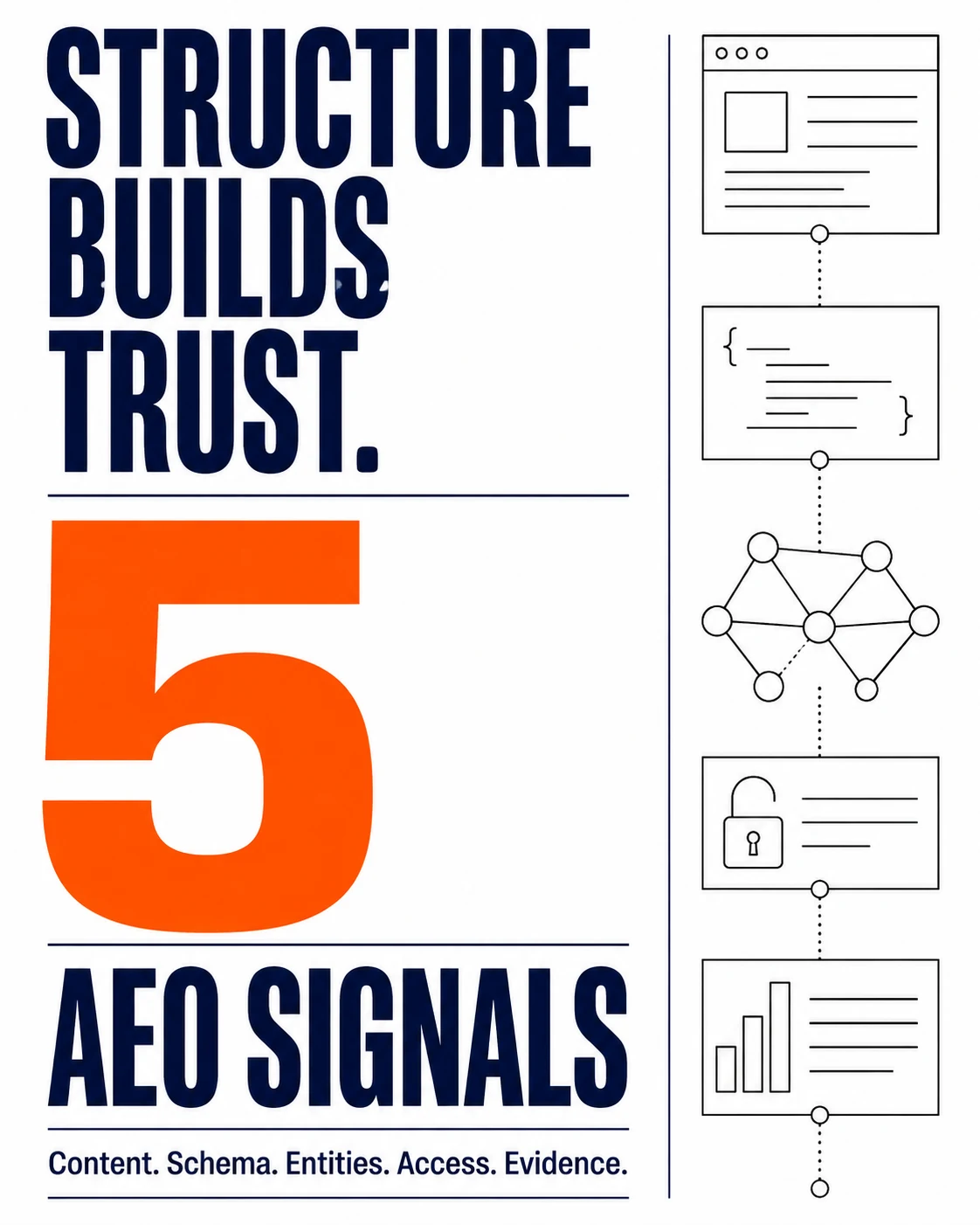
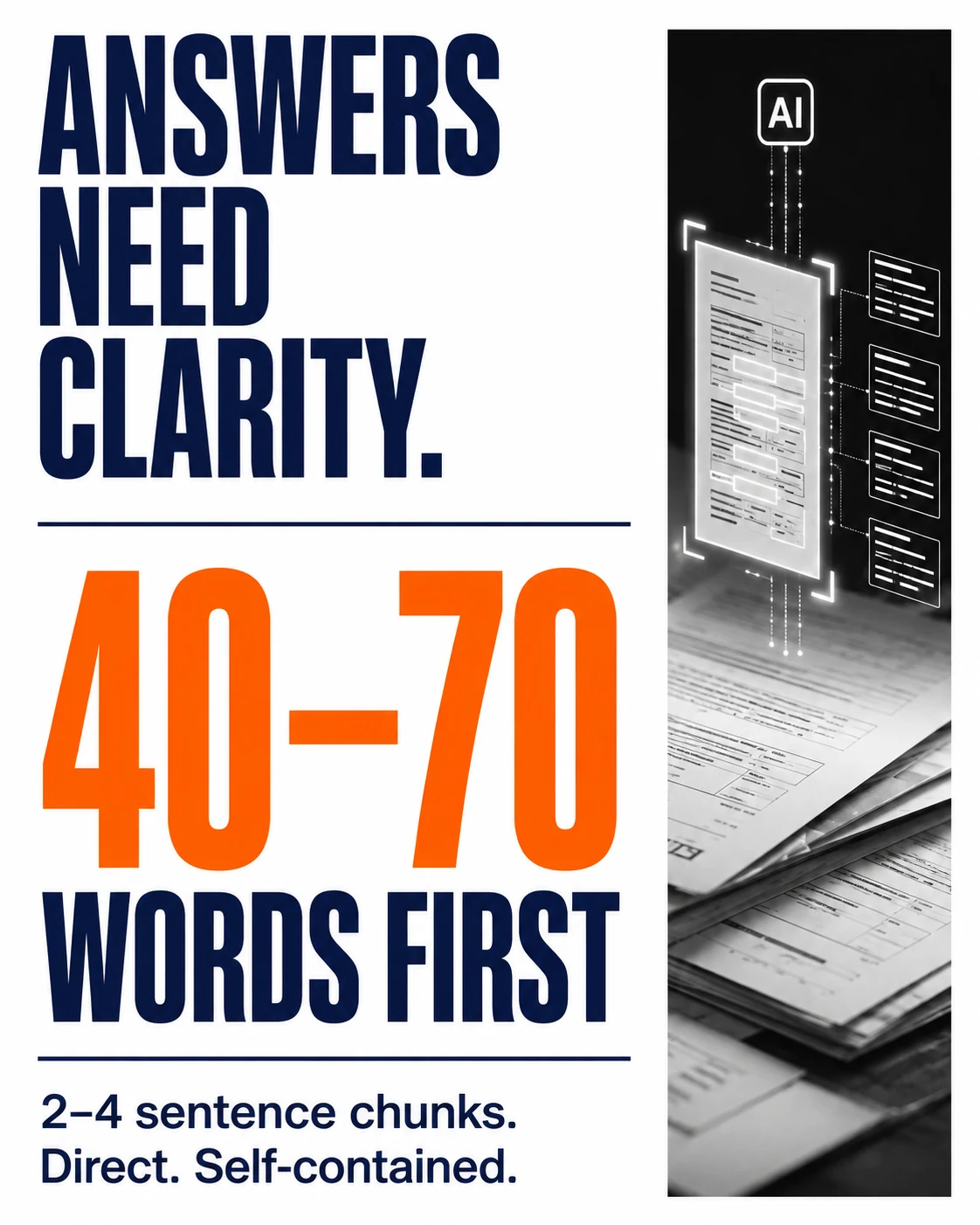
We rewrite key pages using an answer-first structure: a direct, self-contained answer in the first 40 to 70 words of a section, followed by supporting detail. This is the format AI systems extract most reliably.
Structured data that tells AI systems exactly what a page's questions and answers are, in a machine-readable format they can parse with confidence. We only ever add schema that matches what's actually visible on the page.
Consistent naming for your business, services, and category across every page, so AI systems build a confident, accurate picture of what you do instead of a fragmented or wrong one.
A technical check to confirm AI crawlers like GPTBot, ClaudeBot, and PerplexityBot can actually access and read your site's content, not blocked by a robots.txt rule nobody remembers adding.
A review of your existing pages against what AI systems actually reward: specific facts, named sources, and dated statistics, instead of vague, unverifiable marketing claims that get skipped over during citation.


This is the part most agencies skip, and it's the part that actually determines whether a page gets cited.
Short, self-contained paragraphs. AI systems process content in chunks. A 2 to 4 sentence paragraph that makes sense on its own, pulled out of context, is far more likely to be extracted cleanly than one buried in a longer block.
Question-based headings. A heading phrased the way a person would actually ask an AI assistant ("How long does mobile app development take?" instead of "Our Timeline") matches query patterns directly.
Tables for anything comparative. When a query involves comparing options, a clean table gets pulled into an AI answer far more often than the same information written out in paragraph form. The SEO vs. AEO vs. GEO table above is a working example of exactly this on this page.
Specific numbers over vague claims. "We reduced admin time" is forgettable. "We reduced admin time by a measurable, specific amount" is citable. AI systems consistently favor concrete facts over marketing language, and so do the people reading the answer.
Most businesses that come to us for AEO haven't done nothing, they've done the wrong things, or done the right things without checking if they actually worked. A few patterns show up constantly:
Schema that doesn't match the visible page. Adding FAQPage schema for questions that aren't actually answered anywhere on the page, or marking up a service that's mentioned once in passing. AI systems and search engines both penalize this mismatch. It reads as manipulation, not structure.
Treating the homepage as the only page that matters. AI citations come from deep, specific content pages answering specific questions, not from a general homepage trying to say everything at once. A business that only optimizes its homepage is leaving its actual service pages, the ones closest to a buying decision, completely invisible to AI search.
Vague claims with no source. "Industry-leading" and "trusted by businesses everywhere" get filtered out by AI systems looking for citable facts. A specific number, a named case study, or a dated statistic gets extracted. A vague adjective does not.
No consistency in how the business describes itself. If your homepage, your LinkedIn, and your Google Business Profile all describe your services slightly differently, AI systems have to guess which version is correct, and sometimes guess wrong. Entity clarity means saying the same thing about your business everywhere.


Traditional analytics tools weren't built to show you what an AI assistant is telling someone about your business. We track this directly:
This is the same measurement discipline we bring to traditional SEO reporting, applied to a newer channel that most agencies aren't tracking properly yet.


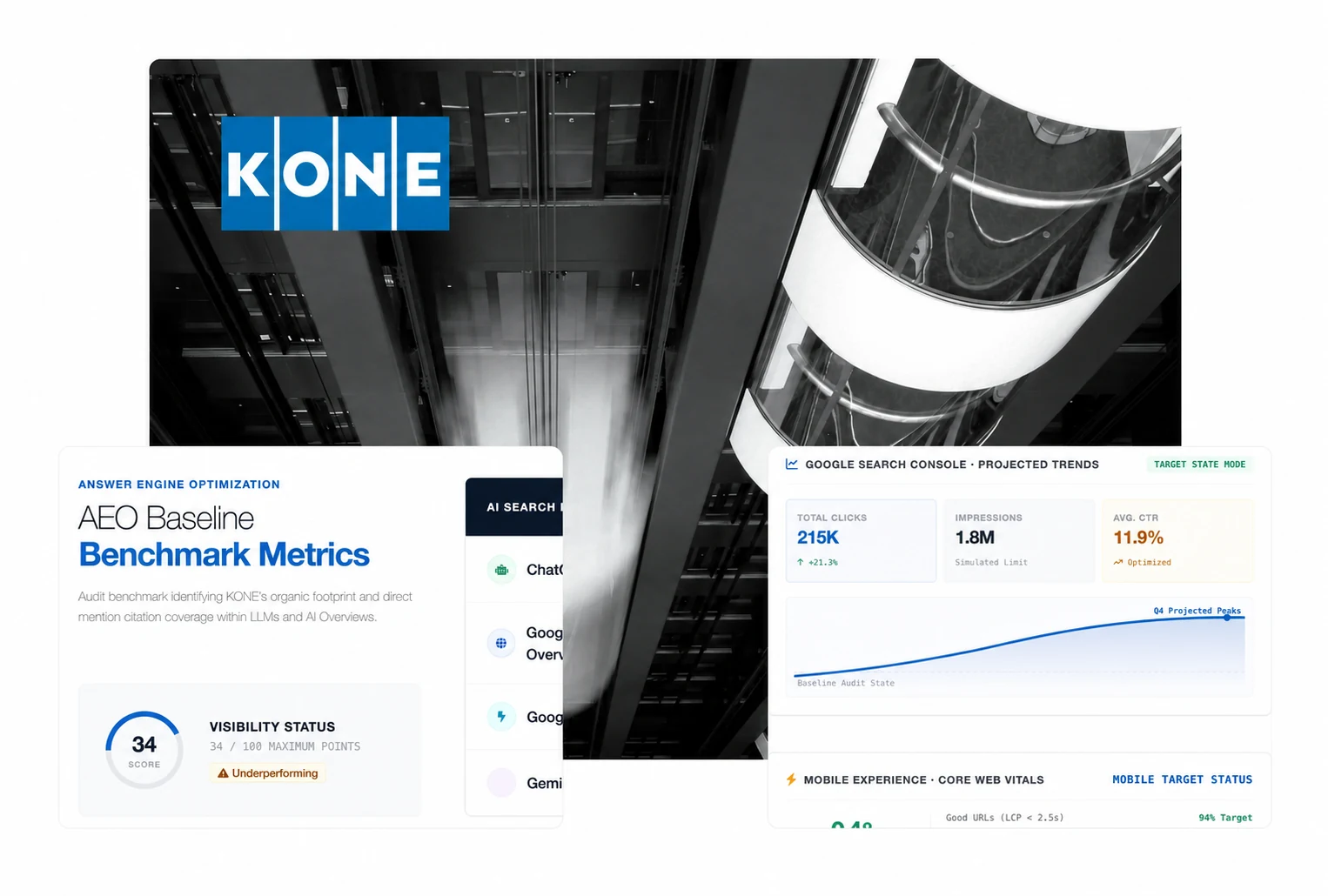
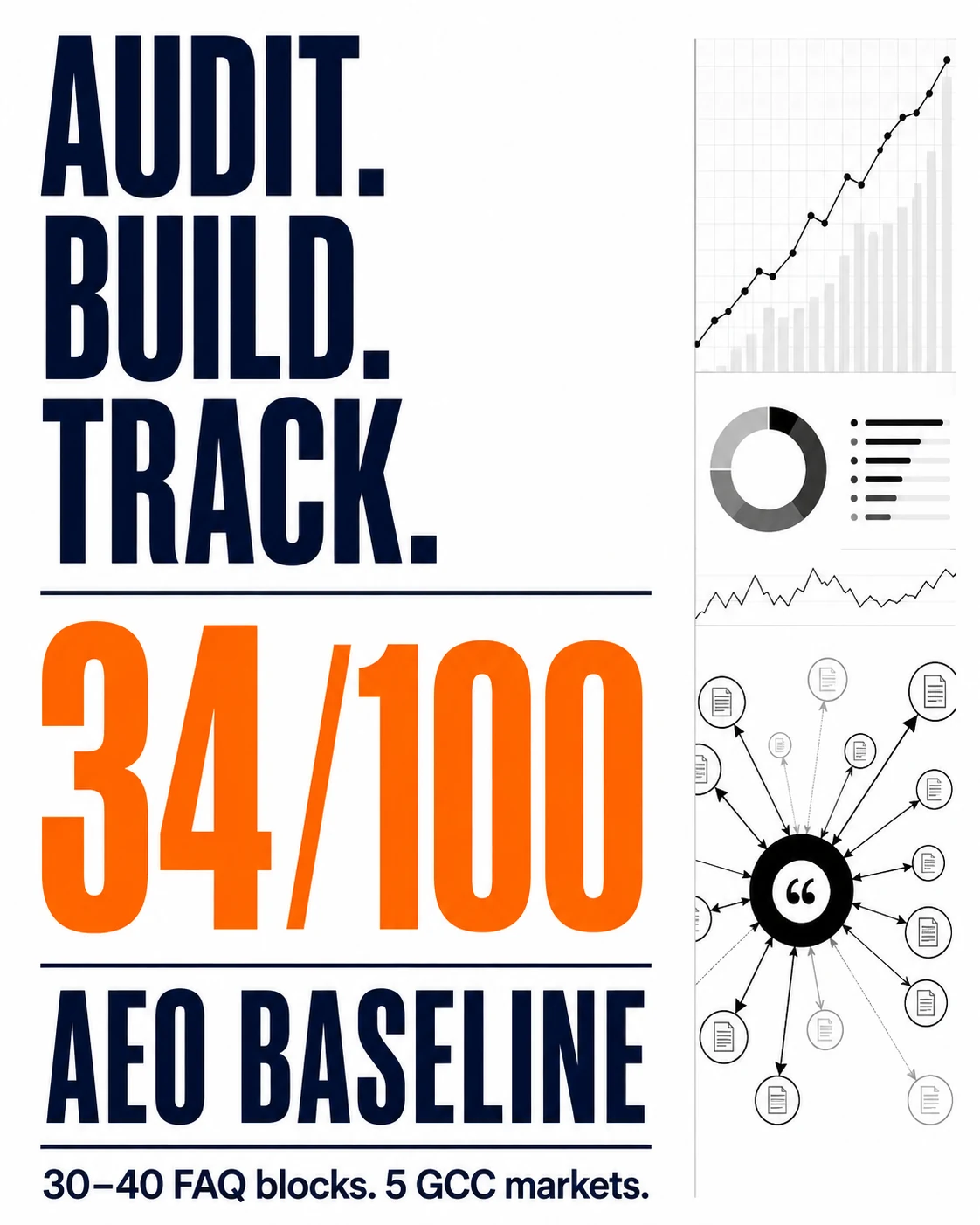
GO-Globe ran a full SEO and AEO recovery for KONE UAE, a global elevator and escalator brand with strong offline recognition but weak local search visibility. Our audit scored their existing AEO readiness at 34 out of 100, flagging five specific gaps: missing service landing pages, weak page structure and metadata, slow mobile performance, limited domain authority at 612 referring domains, and no AEO structure at all for ChatGPT or Gemini visibility.
From that baseline, we delivered 90 to 110 hours of technical SEO recovery work, built 30 to 40 AI-ready FAQ blocks across their priority pages, and produced a single master SEO and AEO blueprint designed to scale across 5 regional GCC markets from one system, instead of rebuilding the approach market by market.
GO-Globe has been building digital products and managing SEO since 2005, with more than 700 projects delivered and over 460 clients across 28-plus locations globally. AEO is a newer discipline, but the underlying skill it depends on, structuring real content clearly and backing it with real evidence, is the same thing we've been doing since the company started.
A few things specifically shape how we approach AEO:

SEO earns a ranking position someone clicks on a search results page. AEO earns a citation an AI system quotes directly inside its answer, sometimes without the person ever clicking through to your site at all.
Technical structure and schema changes can be implemented within weeks. Citation frequency across AI platforms typically builds over a longer period, since AI models don't recrawl and update their sense of a brand as fast as Google indexes a page.
No. AEO builds on the same foundation as SEO: real content, clear structure, and genuine authority. Businesses that skip SEO and try to jump straight to AEO usually don't have the underlying content quality AI systems look for in the first place.
Yes. An AI visibility audit is the first step of our process, and it's how we found the specific gaps in the KONE UAE case study above.
FAQPage and Service schema are the most relevant types for most businesses. We only add schema that matches content actually visible on the page, since mismatched schema can hurt trust with both search engines and AI systems.
It's relevant either way. Local buyers increasingly ask AI assistants to compare service providers before ever opening Google, which means local visibility in AI answers matters just as much as local search ranking does.