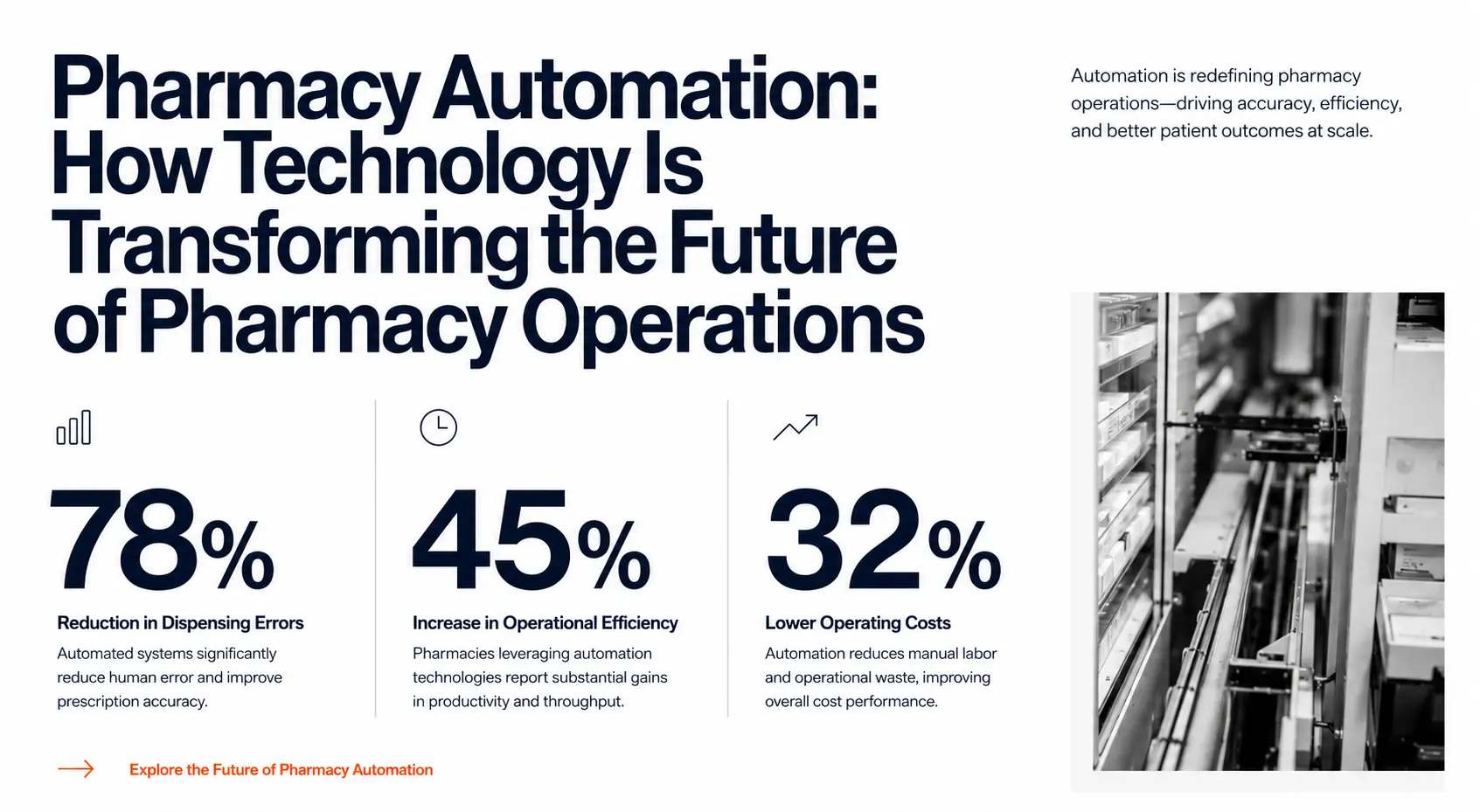
Running a pharmacy is becoming more complex every year. Pharmacists are expected to manage increasing prescription volumes, maintain accurate inventory, reduce medication errors, and provide faster patient service.
Manual processes often create delays, mistakes, and unnecessary workload.
This is where pharmacy automation is changing how modern pharmacies operate. By using smart technology, pharmacies can improve accuracy, streamline daily tasks, and create better experiences for both staff and patients.
From inventory tracking to prescription processing and dispensing workflows, automation helps pharmacies work smarter instead of harder.
Looking to modernize your pharmacy operations? Discover how our Pharmacy Management System helps pharmacies automate inventory, streamline prescription management, and improve daily workflows. Explore our Pharmacy Management System solution.
Contents
- 1 Why Pharmacies Are Moving Toward Automation
- 2 What Causes Pharmacy Operations to Become Inefficient?
- 3 How Pharmacy Automation Works: Step-by-Step
- 4 Real Example: How Automation Helps a Growing Pharmacy
- 5 Key Benefits of Pharmacy Automation Systems
- 6 Future of Automation in Pharmacy
- 7 How to Choose the Right Pharmacy Automation Approach
- 8 FAQs
- 9 Conclusion
Why Pharmacies Are Moving Toward Automation
Many pharmacies still depend on manual processes for important operations.
Staff may spend hours:
- Checking medicine availability
- Managing stock records
- Updating prescription information
- Tracking expiry dates
- Handling repetitive customer requests
These tasks take valuable time away from patient care.
As pharmacy demand increases, traditional methods become harder to manage.
The biggest challenges include:
- Human errors in medication handling
- Slow prescription processing
- Inventory shortages or overstocking
- Difficulty managing growing pharmacy operations
- Limited visibility into daily performance
Modern pharmacies need better ways to handle these challenges, which is why automation in pharmacy is becoming a major industry shift.
What Causes Pharmacy Operations to Become Inefficient?
Increasing Prescription Volumes
Pharmacies process thousands of prescriptions depending on their size and location.
Manual handling increases the risk of:
- Incorrect data entry
- Prescription delays
- Communication issues
- Medication mistakes
Automation helps reduce repetitive tasks and improves workflow accuracy.
Complex Inventory Management
Managing medicine inventory is one of the biggest challenges for pharmacies.
Pharmacists need to monitor:
- Stock availability
- Expiry dates
- Batch information
- Supplier orders
- Medicine demand
Without proper systems, pharmacies may experience unnecessary waste or stock shortages.
Growing Need for Better Patient Experience
Patients expect faster service, accurate information, and convenient communication.
Long waiting times and inefficient processes can negatively affect customer satisfaction.
This is why many businesses are exploring pharmacy automation solutions to improve daily operations.
How Pharmacy Automation Works: Step-by-Step
1. Automating Inventory Tracking
One of the biggest benefits of automation is improving stock visibility.
Modern solutions help pharmacies:
- Track medicine availability
- Monitor expiry dates
- Identify low-stock items
- Improve purchasing decisions
This reduces waste and helps pharmacies maintain the right inventory levels.
2. Improving Prescription Management
Prescription handling requires accuracy.
Automation helps pharmacies organize prescription information and reduce manual mistakes.
Benefits include:
- Faster prescription processing
- Better record organization
- Reduced human errors
- Improved communication between healthcare providers and pharmacies
This is especially useful for pharmacies handling high prescription volumes.
3. Using Automated Pharmacy Dispensing Systems
Large pharmacies and healthcare organizations are increasingly adopting automated pharmacy dispensing systems.
These systems help improve:
- Medication accuracy
- Dispensing speed
- Workflow efficiency
- Staff productivity
Automation allows pharmacists to spend more time focusing on patient care rather than repetitive administrative work.
4. Improving Pharmacy Workflow With Smart Software
Modern pharmacy automation software connects different pharmacy operations into one workflow.
It can support:
- Inventory monitoring
- Prescription tracking
- Reporting
- Customer communication
- Operational insights
Instead of managing multiple disconnected processes, pharmacies can create a smoother digital workflow.
Automation is even more powerful when all pharmacy operations are connected through one intelligent platform. Learn how our Pharmacy Management System centralizes inventory, prescriptions, reporting, and customer management in one solution. See how it works.
Real Example: How Automation Helps a Growing Pharmacy
Imagine a pharmacy that manages hundreds of daily prescriptions.
Before automation:
- Staff manually check stock
- Employees update records manually
- Expired medicines are discovered late
- Patients wait longer during busy hours
After implementing automation:
- Stock updates happen faster
- Expiry alerts prevent waste
- Prescription processing becomes smoother
- Staff spend more time helping customers
The result is a more organized and efficient pharmacy operation.
Want similar results for your pharmacy? Our Pharmacy Management System is designed to simplify complex workflows, reduce manual tasks, and support long-term business growth.
Key Benefits of Pharmacy Automation Systems
Better Accuracy
Automation reduces repetitive manual work, lowering the chances of human mistakes.
Faster Service
Automated workflows help pharmacies process requests faster and improve customer satisfaction.
Reduced Operational Costs
By reducing waste, improving inventory control, and saving employee time, automation helps pharmacies operate more efficiently.
Easier Growth
Growing pharmacies need scalable solutions.
Modern pharmacy automation systems help businesses manage increasing workloads without adding unnecessary complexity.
Future of Automation in Pharmacy
The pharmacy industry is moving toward smarter digital solutions.
Future trends include:
- Artificial intelligence in healthcare
- Predictive inventory management
- Digital prescriptions
- Smart patient communication
- Advanced pharmacy analytics
As technology develops, automation will continue improving how pharmacies manage operations and deliver healthcare services.
How to Choose the Right Pharmacy Automation Approach
Before adopting automation, pharmacies should consider:
Identify Operational Problems
Understand where time is being wasted.
Examples:
- Inventory issues
- Prescription delays
- Manual reporting
- Customer communication problems
Choose Scalable Technology
A good automation solution should support future growth.
Consider:
- Multiple locations
- Increasing prescriptions
- New workflows
- Integration needs
Focus on User Experience
Technology should make work easier, not harder.
The best systems are simple for pharmacists and staff to use daily.
FAQs
What is pharmacy automation?
Pharmacy automation is the use of technology to improve pharmacy operations such as inventory management, prescription processing, dispensing, and workflow efficiency.
How does automation help pharmacies?
Automation helps pharmacies reduce manual tasks, improve accuracy, save time, and provide better patient service.
What are pharmacy automation systems?
Pharmacy automation systems are digital solutions designed to automate pharmacy tasks such as inventory tracking, dispensing workflows, reporting, and operational management.
What are automated pharmacy dispensing systems?
Automated pharmacy dispensing systems use technology to improve medication dispensing accuracy, speed, and efficiency.
Is pharmacy automation only for large pharmacies?
No. Pharmacies of different sizes can use automation depending on their operational needs and growth goals.
Conclusion
The pharmacy industry is changing rapidly as businesses look for smarter ways to improve efficiency and patient care.
Pharmacy automation helps pharmacies reduce manual workload, improve accuracy, and create smoother daily operations.
With the right automation approach, pharmacies can prepare for future growth while delivering faster and more reliable healthcare services.