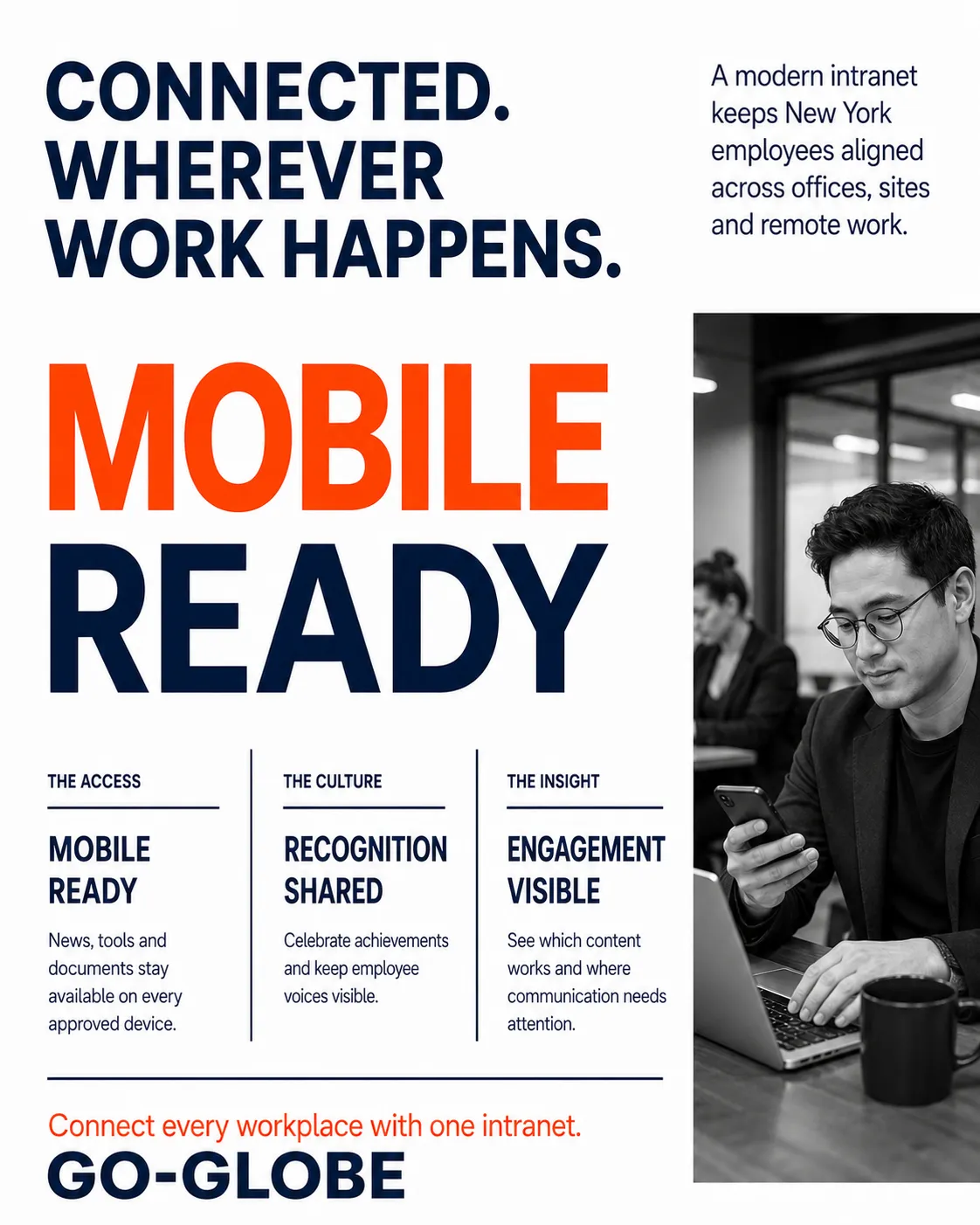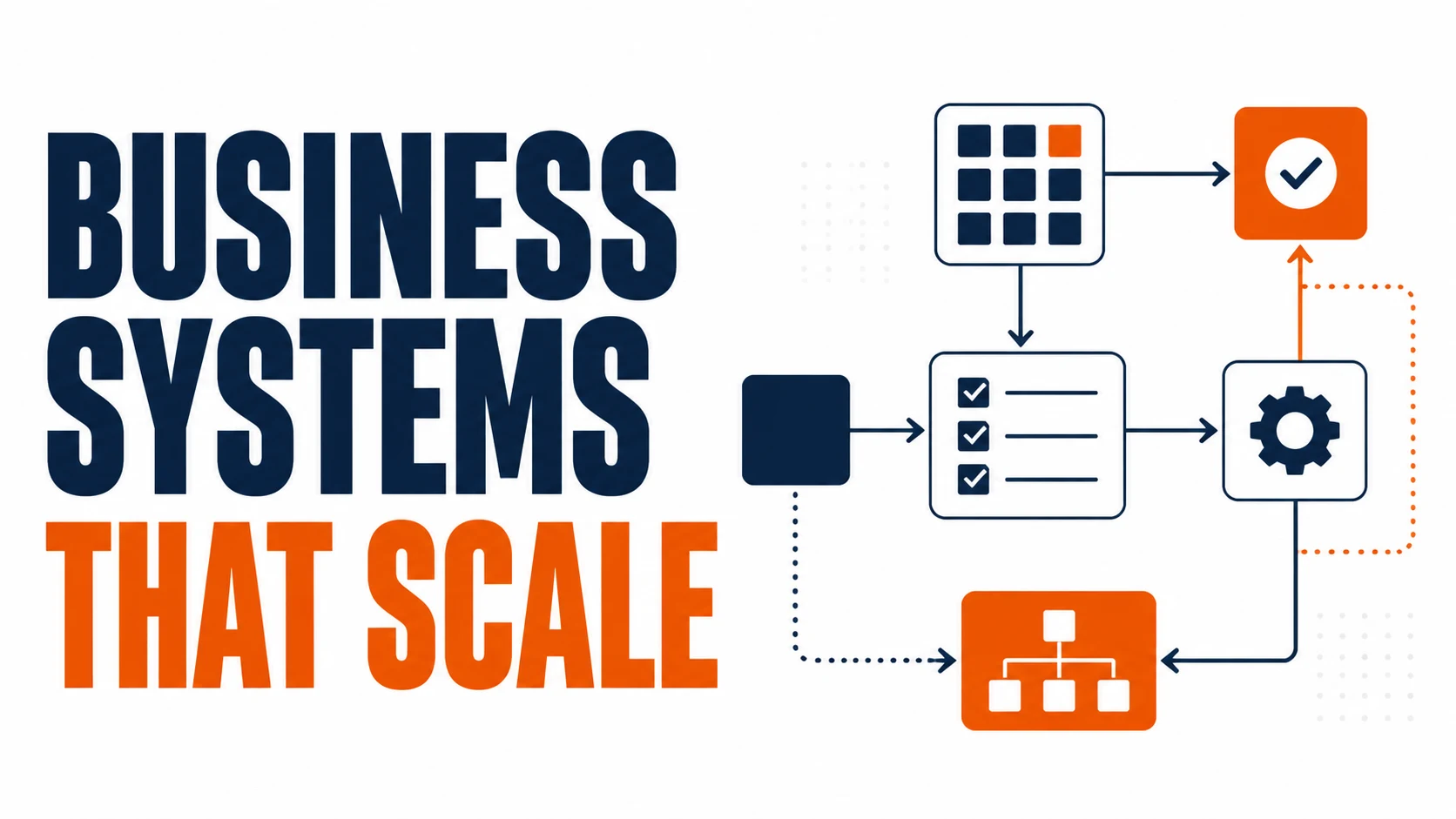



































GO-Globe builds custom intranets for businesses in New York City. We have been building business systems since 2005 and have delivered more than 800 projects for clients in over 25 countries.
An intranet is a private system your own staff log into. It holds the documents, announcements, records and tools your team needs to do their work, in one place with one login.
Most companies already have an intranet of sorts. It is just spread across a shared drive, three email threads, a spreadsheet somebody maintains, and one person who knows where everything is. This page is about replacing that with something deliberate.

An intranet is a private, access-controlled system used by an organisation's own employees. It sits behind a login, is not visible to the public, and exists to make internal information findable.
The term people increasingly use for the same thing is a digital workplace. In New York that phrase usually signals something broader than a document library: not just a place to store files, but the system through which work actually gets done, including requests, approvals, records and communication.
What a working intranet holds:
What it is not. An intranet is not a website with a password on it. The difference is that a website presents information and an intranet lets people do things: submit, approve, update and retrieve. If nobody performs an action on it, it is a document library rather than a digital workplace.
These two words get used interchangeably and they should not be. The distinction is simple and it decides what you actually need built.
An intranet is internal. An extranet is external.
| Intranet | Extranet | |
|---|---|---|
| Who logs in | Your employees | People outside your company |
| Typical use | HR, documents, internal news, staff requests | Order status, invoice submission, shared project files |
| GO-Globe product | employee portal | customer portal, supplier portal, partner portal |
| Security model | Identity tied to employment | Identity tied to a contract or account, with tighter permission scoping |
Most organisations eventually run both, and they are frequently built on the same underlying system with different access rules. But they solve different problems and they are scoped separately. A project that starts as "we need a portal" and never resolves which of these it means tends to deliver something that serves neither group well.
This page covers intranet work. If the people logging in are outside your company, you are looking for an extranet.

Intranet development in New York usually breaks into six workstreams. Not every project needs all six, and knowing which ones you can skip is most of the scoping work.
We build on Node.js, PHP with Laravel, React and .NET, with PostgreSQL or MySQL, hosted on your infrastructure or on AWS or Azure. Naming the stack matters here more than on most projects, because an intranet holds employee data and you need to know who can maintain it in five years.
Intranet design in New York gets treated as a visual exercise and it is not. It is a findability exercise. The most common failure mode for an intranet is not that it breaks. It is that it launches, and then nobody uses it.
The five reasons adoption fails:
What actually drives adoption. Put something people need weekly behind the login. Payslips, leave balances, shift schedules, expense claims. Once staff visit for those, the documents get found as a side effect. Building the document library first and hoping people come is the standard mistake.

Most New York businesses considering an intranet are choosing between a packaged platform and a custom build. The honest version of that decision:
| A packaged platform fits when | A custom build fits when |
|---|---|
| Your needs are close to standard | Your processes are genuinely specific to how you operate |
| You are already committed to that vendor's ecosystem | You need deep integration with systems you already run |
| You want it running in weeks | The platform's structure would force you to change how you work |
| You have someone in-house who knows the platform | Licence costs over five years exceed a build |
| Per-user licensing is affordable at your headcount | Per-user licensing gets expensive as you grow |
Businesses searching for a SharePoint alternative in New York are usually hitting one of three walls: the licensing cost at their headcount, the amount of configuration needed to make it match their processes, or the difficulty of connecting it to systems it was not designed to talk to.
GO-Globe builds custom intranets rather than configuring packaged platforms. That is the right answer for some businesses and the wrong one for others. If a packaged product genuinely fits your requirements, it will be faster and cheaper, and we will say so.
On intranet software in New York generally: the market splits into enterprise platforms, lightweight SaaS intranets and custom builds. The trap in the middle tier is that lightweight tools are inexpensive until you need one thing they do not do, at which point you are maintaining a tool plus a workaround.
This is where an intranet stops being a document library and becomes operationally useful, and it is the work GO-Globe is strongest at.
An ERP-integrated intranet pulls live data from the systems that already run the business, so employees see current information without switching applications or asking somebody.
What that looks like in practice:
The gain is that information stops being requested. Most internal email traffic is one person asking another for a number that already exists in a system. An integrated intranet removes that category of work rather than speeding it up.
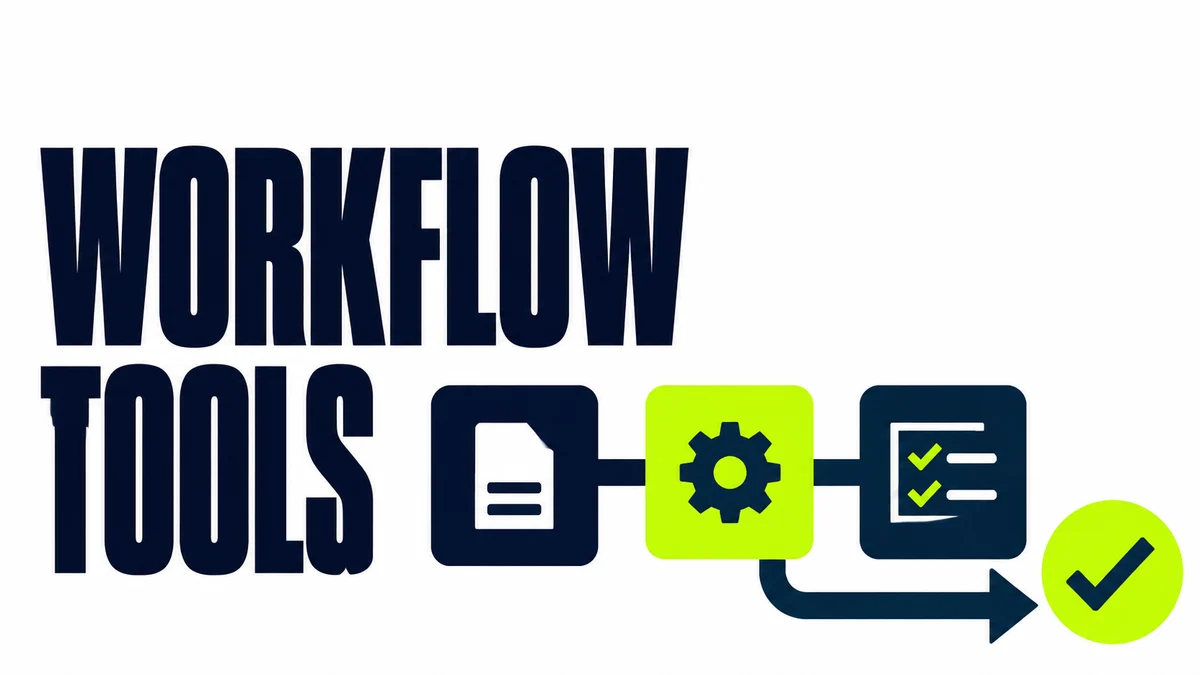
Where processes need to run rather than just display, that becomes workflow automation in New York, which is a related discipline covered separately. The intranet is where people see and submit. The automation is what happens after they do.
Integration work is also where intranet projects overrun, and the usual cause is a system without a usable API. That question should be answered during scoping, not discovered during build.

| Phase | Duration | What happens |
|---|---|---|
| Discovery and information architecture | 2 to 3 weeks | Content audit, structure, permissions model, integration scoping |
| Build and testing | 6 to 10 weeks | Development, integrations, migration, testing with real users |
| First launch | 8 to 13 weeks |
Longer than a standard website project, and the reason is content. An intranet launch requires deciding what to migrate, what to archive and what to rewrite, and that work belongs to the business rather than the developer.
What extends it: undocumented permission rules, systems without APIs, and content nobody will take responsibility for deciding on.
What shortens it: a content owner with authority to delete things.
Plan a phased launch rather than a single switch-over. Get one department using it, fix what they find, then expand. Full-organisation launches produce the largest volume of complaints on day one, which is when the intranet's reputation gets set.
Whether you are hiring an intranet development company or bringing in an intranet consultant in New York for the scoping phase only, these questions separate them.

Twenty years of building business systems. Founded in 2005, more than 800 projects delivered.
International scale. Clients in over 25 countries across corporate, government and enterprise sectors.
Enterprise experience. Systems delivered for organisations including Shell, Nestlé, LG and Dubai Municipality.
Integration first. Our strongest intranet work connects to the ERP and business systems already in place, so the intranet shows live data rather than a copy of it.
A named stack. Node.js, PHP with Laravel, React, .NET, PostgreSQL, MySQL, AWS and Azure. You always know what your system is built in and who can maintain it.
More examples of our work are in our work, and feedback from clients is in client reviews.
Talk to us: call +1 571 208 8604 or book a strategy session.
An intranet is a private, access-controlled system used by an organisation's own employees. It sits behind a login and holds documents, announcements, staff records, forms and internal tools in one place. It differs from a website in that employees perform actions on it, such as submitting requests and approving them, rather than only reading information.
An intranet is internal and used by your own employees. An extranet is external and used by people outside your company, such as clients, suppliers or partners. Both sit behind a login and are often built on the same underlying system, but they serve different groups and are scoped separately, with extranets requiring tighter permission control.
Cost depends on how much content is being migrated, how many systems the intranet must integrate with and whether those systems have usable APIs, how complex the permission model is, and whether single sign-on is required. GO-Globe quotes after a content audit and integration scoping, and prices any change to that scope before the work is done.
A typical intranet reaches first launch in eight to thirteen weeks: two to three weeks of discovery and information architecture, then six to ten weeks of build and testing. This is longer than a standard website because content decisions, deciding what to migrate, archive or rewrite, sit with the business rather than the developer.
Use a packaged platform when your needs are close to standard, you are already in that vendor's ecosystem, and per-user licensing is affordable at your headcount. Build custom when your processes are specific to how you operate, when deep integration with existing systems is required, or when licence costs over five years exceed the cost of building. GO-Globe builds custom intranets and will say plainly if a packaged product fits your requirements better.
The five common causes are search that does not return the right result, a structure organised by department rather than by what people are looking for, content that goes out of date and loses trust, no reason to visit more than occasionally, and no named owner after launch. The most reliable fix is putting something people need weekly behind the login, such as payslips or leave requests, so documents get found as a side effect.
Yes, and this is usually where the most value is created. An ERP-integrated intranet shows live order status, HR records, leave balances and team dashboards without staff switching systems or emailing a colleague for a number that already exists. The main constraint is whether the systems involved expose usable APIs, which should be confirmed during scoping.
Those tools handle conversation. An intranet handles record. A message thread is a poor place to store a current policy, a leave balance or an approval trail, because it cannot be versioned, permissioned by role or reliably searched months later. Most organisations run both, using chat for discussion and an intranet for anything that needs to be found again.