Large corporations, enterprises, and financial institutions face unique challenges that small businesses never encounter. You operate across multiple locations, countries, or continents with thousands of employees who need consistent access to systems and data. You manage complex organizational structures with divisions, subsidiaries, joint ventures, and partnerships that require both integration and separation. You handle massive transaction volumes and data quantities that smaller systems can't support. You navigate regulatory requirements that vary by jurisdiction and industry. You make decisions that affect thousands of employees, millions of customers, and billions in revenue where mistakes carry enormous consequences.
Yet many enterprise organizations still run on fragmented systems that evolved over decades through acquisitions, departmental initiatives, and tactical decisions rather than strategic planning. Sales uses one CRM system while service uses another. Finance runs on an ERP platform that doesn't integrate properly with operations. Marketing operates disconnected tools that don't share data with sales. HR manages employee information separately from payroll, benefits, and training systems. Business intelligence requires manually consolidating data from dozens of sources. Mobile access is limited or non-existent. Cloud migration is incomplete. Legacy systems create technical debt. Nobody has complete visibility into operations.


Enterprise-scale organizations face operational challenges that are qualitatively different from small business problems.
System Fragmentation and Integration Complexity
Most large organizations operate dozens or hundreds of separate systems that evolved over time through department decisions, acquisitions, vendor relationships, and technology changes. Each system solves specific problems well but creates integration nightmares. Data doesn't flow automatically between systems. Employees maintain multiple logins and switch contexts constantly. Reports require extracting and consolidating data from disparate sources. Building new capabilities means integrating with many systems.
This fragmentation multiplies costs. Licensing fees accumulate across redundant systems. Integration projects consume IT resources continuously. Data inconsistencies create errors and confusion. Security becomes harder to manage across platforms. Changes in one system ripple unpredictably through others. The technical debt grows annually.
Data Silos and Lack of Unified Visibility
When systems don't integrate properly, data gets trapped in departmental silos. Sales has customer information that finance doesn't see. Operations has performance data that strategy doesn't access. HR has employee capabilities that project managers don't know about. Marketing has campaign results that product teams don't use. Each department optimizes locally based on their data while enterprise-wide optimization remains impossible because nobody sees the complete picture.
This lack of unified visibility prevents strategic decision-making. Leaders can't answer fundamental questions about enterprise performance without lengthy manual analysis. By the time analysis completes, circumstances have changed. Organizations make suboptimal decisions based on incomplete information while competitors with better visibility capture opportunities.
Modern enterprise platforms deliver transformative benefits that justify investment through measurable returns.
Eliminate Productivity Waste Through Integration
Integrated enterprise platforms connect all systems so data flows automatically without manual re-entry. Employees access everything through unified interfaces without switching applications constantly. Changes in one system update related systems automatically. Reports pull data from all sources without manual consolidation. New capabilities integrate seamlessly without custom code.
The productivity gains are substantial. Time spent on data entry, system switching, and manual consolidation disappears. Errors from transcription and synchronization eliminate. IT resources shift from maintaining integrations to building new capabilities. The cumulative effect on enterprise productivity typically reaches 15 to 25 percent improvement, representing millions or tens of millions in annual value for large organizations.
Automate Business Processes End-to-End
Modern platforms include workflow engines that automate multi-step processes involving people, systems, and decisions. Purchase approvals route automatically based on amounts, categories, and budgets. Employee onboarding triggers tasks across departments automatically. Customer service cases escalate based on rules automatically. Contract renewals generate workflows months before expiration automatically. Compliance reviews happen on schedules automatically.
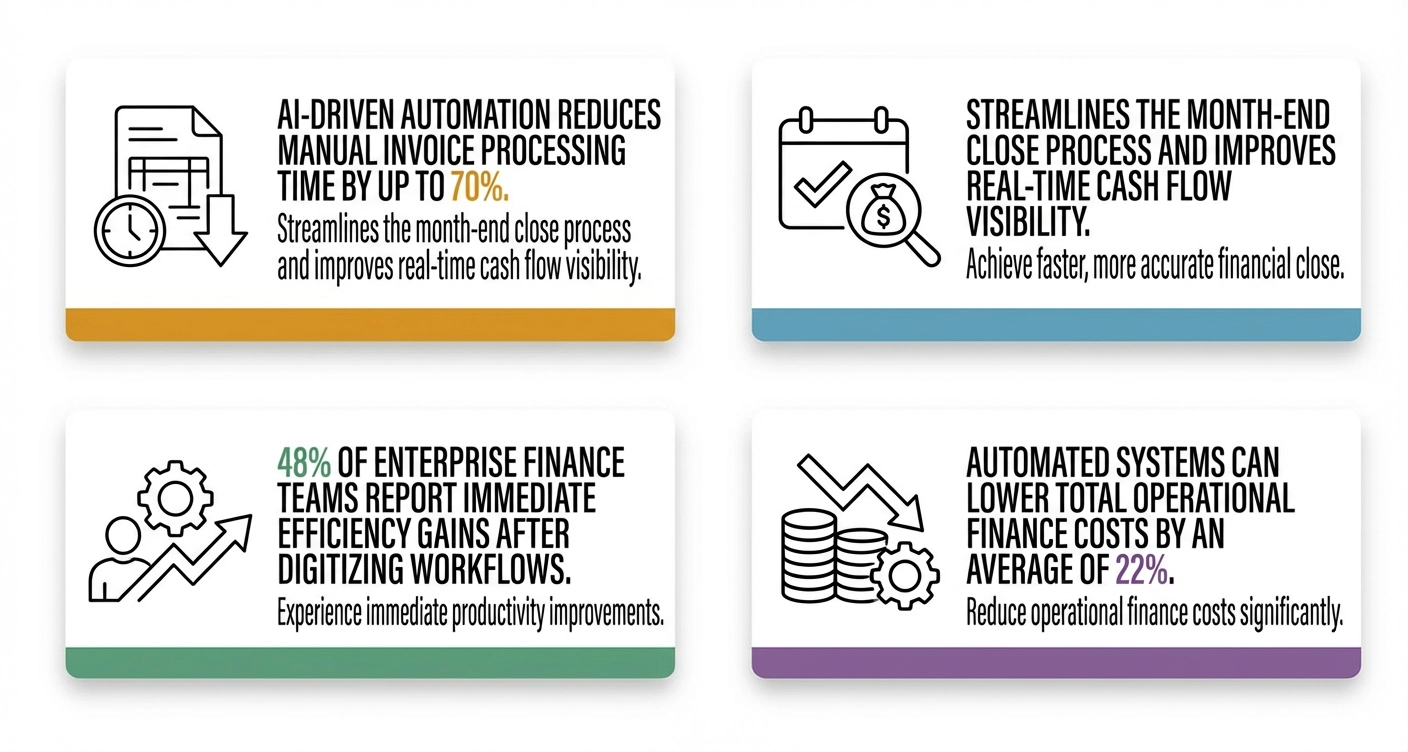
Process automation typically eliminates 50 to 80 percent of manual effort while simultaneously reducing errors and improving cycle times. What took days completes in hours. What required chasing people completes automatically with notifications. What lacked visibility becomes transparent with real-time status. The value of automating dozens or hundreds of processes across an enterprise quickly reaches millions annually.
Ensure Compliance and Reduce Risk
Purpose-built enterprise platforms incorporate compliance controls, audit trails, security features, and reporting capabilities required by regulations. Financial controls are built into approval workflows. Data privacy protections are enforced by access controls. Audit trails capture who did what and when automatically. Compliance reports generate from system data rather than manual collection.
Support Growth Without System Replacements
Cloud-based enterprise platforms scale to support organizations from thousands to hundreds of thousands of employees, from single countries to global operations, from millions to billions in transactions annually. The same platform that supports current operations scales to support 5x or 10x growth without architectural changes or system replacements.
This scalability protects technology investments and enables aggressive growth strategies. You don't hesitate to expand into new markets because systems can't handle the volume. You don't avoid acquisitions because integration seems impossible. You don't postpone initiatives because infrastructure isn't ready. Growth becomes limited by market opportunities rather than system capabilities.
Improve Customer and Employee Experience
Integrated systems create better experiences for customers and employees. Customers interact seamlessly across channels without repeating information or being transferred endlessly. Self-service portals enable 24/7 access. Personalization is possible with unified customer data. Response times improve with automated workflows.

We've built enterprise platforms for organizations including regional and multinational corporations, financial institutions including banks and investment firms, insurance companies, telecommunications providers, energy and utilities companies, manufacturing conglomerates, healthcare systems, and government agencies. Here's what our comprehensive enterprise solutions include.
Enterprise Resource Planning (ERP)
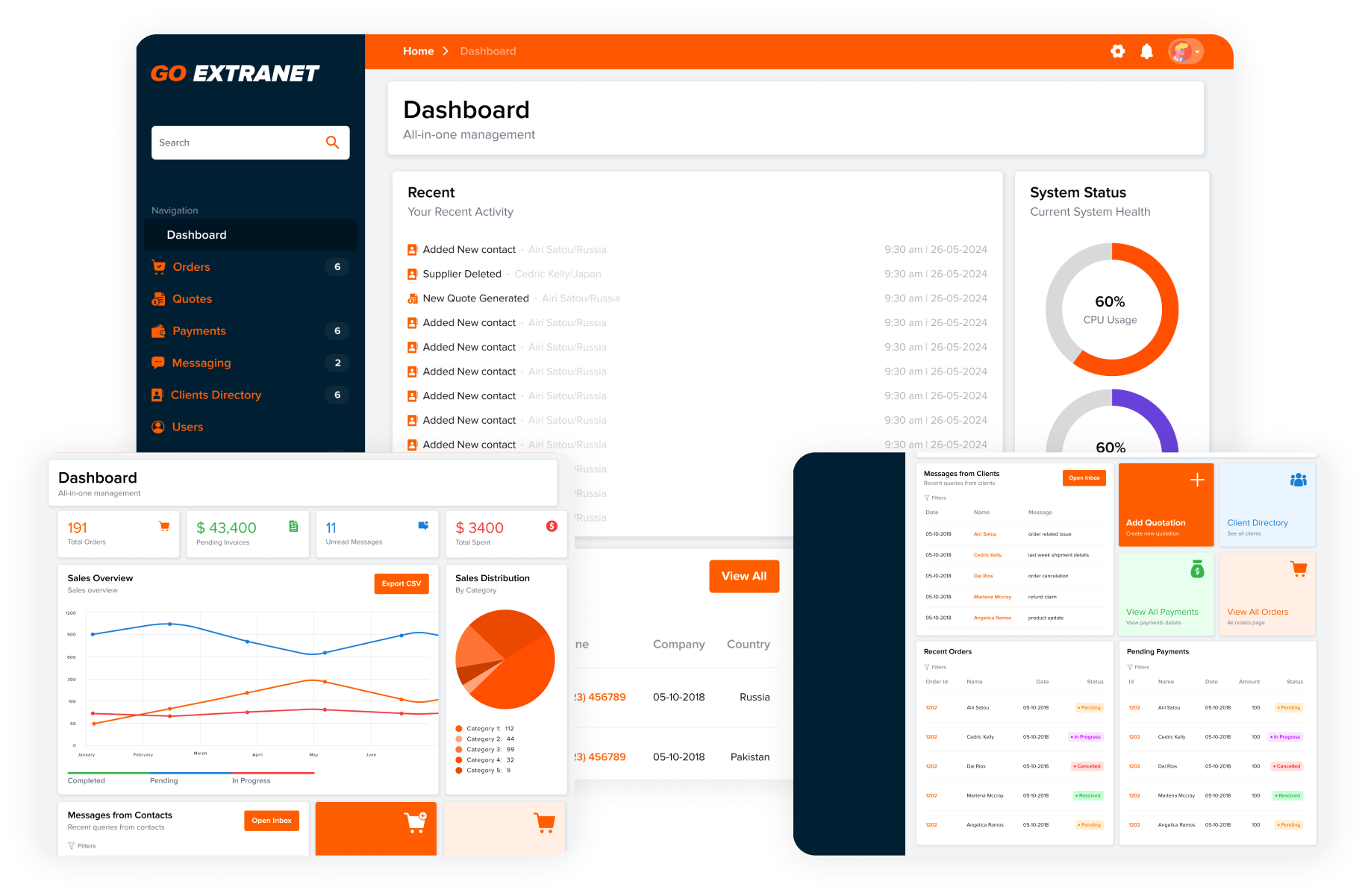
Our ERP solutions integrate all core business functions including financial management with general ledger, accounts payable and receivable, asset management, multi-currency and multi-entity consolidation, human capital management covering payroll, benefits, time tracking, performance management, recruitment, supply chain management including procurement, inventory, warehousing, logistics, project and portfolio management, customer relationship management, and business intelligence and analytics.
These integrated platforms eliminate data silos and process inefficiencies across the organization. Financial close cycles accelerate. Supply chain visibility improves. HR processes automate. Project execution improves. The entire organization runs more efficiently on shared data and integrated workflows.
Financial Services Platforms
For financial institutions, we build specialized platforms including core banking systems with accounts, transactions, loans, deposits, payments, investment management platforms for portfolio management, trading, compliance, reporting, insurance policy administration systems, wealth management systems for advisors and clients, payment processing and card management, risk management and regulatory reporting, fraud detection and anti-money laundering, and customer onboarding and KYC systems.
These platforms handle the unique requirements of financial services including regulatory compliance, real-time transaction processing, security and audit requirements, multi-currency and cross-border operations, and integration with financial market systems and payment networks.
Corporate Portals and Intranets
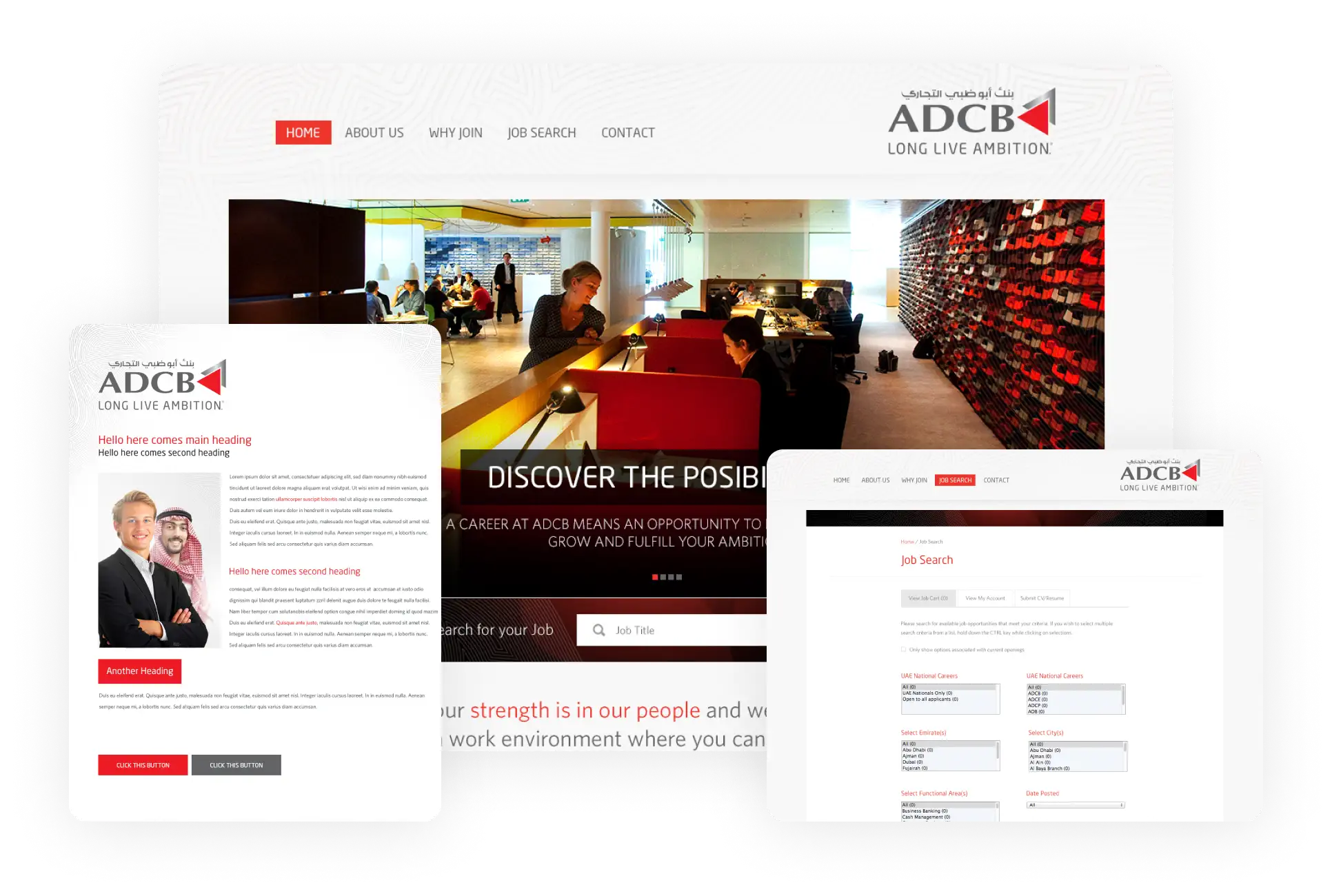
Modern corporate intranets go far beyond document repositories to become comprehensive employee experience platforms including personalized employee dashboards, company news and communications, department and team collaboration spaces, employee directory and organizational charts, document management and knowledge bases, HR self-service for benefits, time off, and more, learning management systems, idea submission and innovation programs, employee recognition and engagement tools, and integration with all enterprise applications.
These portals become the digital workplace where employees access everything they need for work. They improve communication, engagement, and productivity while reducing IT support burden through self-service capabilities.
Business Intelligence and Analytics
Enterprise organizations generate massive data volumes that must transform into actionable insights through comprehensive analytics platforms including executive dashboards for real-time visibility, operational reporting for departments, financial analytics including profitability analysis, customer analytics including segmentation and lifetime value, predictive analytics and forecasting, data warehousing and integration from all sources, self-service business intelligence tools, mobile analytics access, and automated distribution of reports and alerts.
These platforms turn data from liability to asset by making insights accessible throughout the organization. Decision-making improves at all levels from strategic to operational.
Enterprise implementations require proven methodologies that manage complexity and risk.Enterprise Architecture and Strategy (Weeks 1-4)
We begin with comprehensive discovery including understanding current state architecture, identifying pain points and opportunities, defining future state vision, creating architecture roadmaps, planning migration strategies, assessing change management needs, and building business cases with ROI projections.
This planning phase ensures alignment between technology investments and business strategies while managing expectations and building stakeholder commitment.
Phased Implementation (Months 3-18)
We structure implementations into manageable phases typically covering requirements and detailed design, development and configuration, integration with existing systems, testing and quality assurance, training and change management, pilot deployment with select users, full production rollout, and stabilization and optimization.
Phased approaches manage risk by validating each stage before proceeding while delivering value incrementally rather than requiring big-bang transitions.
Change Management and Training
Enterprise implementations succeed or fail based on user adoption. We provide comprehensive change management including stakeholder engagement and communication, training programs for all user types, documentation and job aids, super-user programs for ongoing support, feedback mechanisms and rapid response, celebrating early wins, and continuous improvement based on user input.
Organizations often underestimate change management requirements. We ensure people aspects get appropriate attention and resources.
Integration and Migration
Connecting new platforms with existing systems requires expertise including API development and integration, data migration from legacy systems, maintaining data quality, ensuring business continuity during transitions, phased cutover strategies, rollback plans if issues arise, and performance optimization.
We have extensive experience making complex integrations work reliably even with difficult legacy systems.
Post-Launch Support and Optimization
After launch, platforms require ongoing attention including monitoring system performance, providing user support, gathering feedback for improvements, adding new features and capabilities, optimizing processes based on data, scaling resources as needed, and maintaining security and compliance.
We establish sustainable support models that keep platforms current and valuable long-term.

Corporate holding companies deploy platforms for portfolio company management, consolidated reporting, capital allocation, M&A integration, shared services, and strategic planning.
Enterprise divisions within larger organizations build systems for divisional operations, integration with corporate systems, departmental workflows, business unit reporting, and division-specific requirements.
Global enterprises implement systems for multi-region operations, multi-currency financial management, cross-border supply chains, global workforce management, international compliance, and worldwide customer support.
Organizations implementing integrated enterprise platforms typically see operational costs decrease 15-25% through elimination of waste and automation, decision-making speed improve dramatically with real-time data, employee productivity increase 20-40% through better tools and processes, customer satisfaction improve significantly, compliance costs decrease 30-50% through systematic controls, time to market for new capabilities accelerate, and return on investment realized within 18-36 months.The strategic value of better decision-making and faster execution often exceeds measurable operational improvements.

Stop wasting millions annually on inefficient systems and processes. Stop making critical decisions based on incomplete or outdated information. Stop frustrating employees with disconnected systems that multiply effort. Stop disappointing customers with inconsistent experiences. Stop accepting operational constraints that limit growth strategies.
Modern enterprise platforms eliminate waste systematically. You gain complete visibility into operations in real time. Processes automate end-to-end. Productivity increases dramatically. Compliance becomes systematic rather than manual. Growth becomes limited by opportunities rather than infrastructure. Strategic advantages compound over years.
Every quarter without transformation means continuing millions in waste and missed opportunities.
Timelines vary dramatically based on scope. Departmental solutions might deploy in 3-6 months. Enterprise-wide transformations typically require 12-24 months. We provide realistic timelines during planning.
Modern platforms integrate with existing systems. You don't discard working systems that provide value. Integration enables gradual migration while protecting investments and avoiding big-bang risk.
We customize platforms extensively for industry-specific requirements. Our team includes specialists in financial services, healthcare, manufacturing, and other sectors who understand unique regulatory and operational needs.
Yes. We collaborate regularly with major platform vendors, system integrators, and technology partners. We recommend best-fit solutions rather than forcing specific vendors.
Most modern enterprises pursue cloud-first strategies for scalability, cost, and innovation benefits. We support cloud, hybrid, and on-premise deployments based on your requirements, constraints, and strategies.