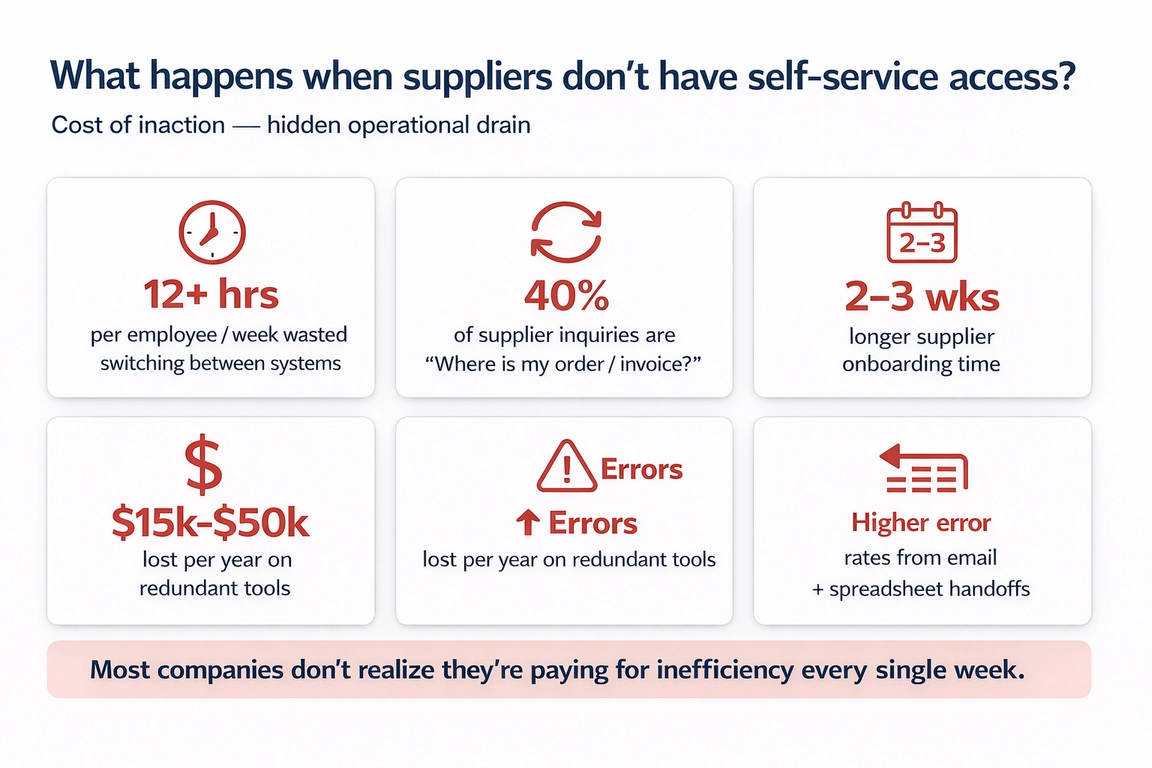





























New York businesses juggle complex supplier networks every day. Purchase orders. Invoices. Delivery updates. All of it scattered across emails, spreadsheets, and phone calls nobody has time for.
A supplier portal fixes that. It gives your vendors one place to submit quotes, check order status, and update delivery dates. Your team gets a real-time view of everything happening across your supply chain.
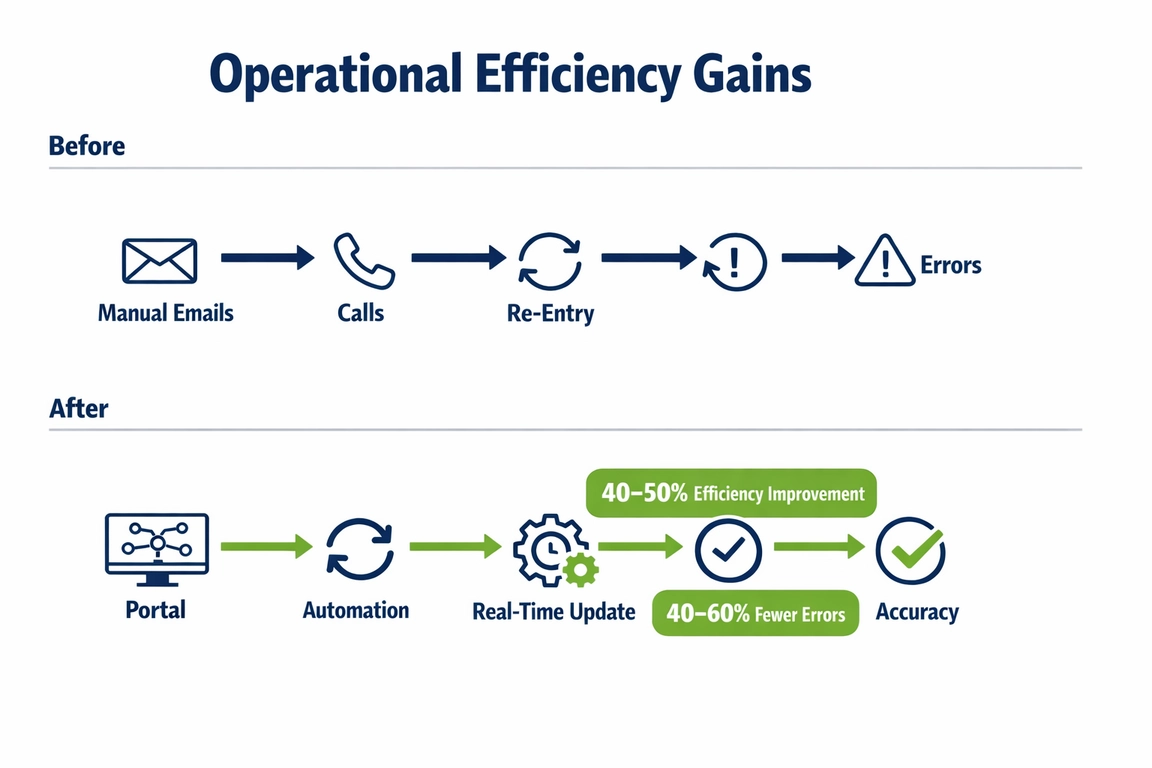
This is not a small efficiency tweak. McKinsey estimates that digitizing procurement this way can cut operational costs by 30 to 50 percent. It can also automate up to 60 percent of the manual tasks your team handles today.


Competing in New York means operating lean. A supplier portal gives your procurement team real-time visibility into supplier performance, contract terms, and spending. All of it lives in one dashboard instead of five disconnected tools.
The system learns from your past orders too. It tracks which suppliers deliver on time. It flags which ones run over budget. Next time, it recommends the better choice.
The gap between fast and slow procurement teams is bigger than most people expect. Top performing teams generate a purchase order in about five hours. The slowest teams take up to 48 hours for the exact same task.
Invoices and purchase orders get processed without anyone typing data by hand. The system reads the document and fills in the right fields. It checks the data against existing records. It flags anything that looks off before it reaches an approver.
Suppliers log into their own portal to submit quotes, update order status, and answer questions. They get instant answers instead of a slow back-and-forth email chain. Everyone works from the same current version of every document.
The system studies your buying patterns. It flags cost-saving opportunities, forecasts demand, and recommends preferred suppliers. The recommendations come from real delivery and quality history, not just the lowest quote.
Automated workflows cut processing time dramatically. Organizations using advanced procurement platforms report 15 to 20 percent cost savings and 40 percent faster cycle times than manual processes. Your team spends time on strategy, not paperwork.
The system tracks spending patterns. It flags consolidation opportunities, contract compliance gaps, and cheaper alternatives. Every suggestion comes from real performance data, not guesswork.
Suppliers get paid on time, communicate clearly, and get evaluated fairly. That builds the kind of trust that gets you better terms during the next negotiation.
The portal tracks certifications, watches for compliance gaps, and keeps a full record of every action. When an auditor asks for proof, you already have it.
Most supply chain risk hides beyond your direct suppliers. It lives in the vendors your vendors depend on. The portal maps that full network, so a disruption two tiers down does not catch you off guard.
The system tracks contract terms from negotiation through renewal. It alerts your team before a deadline slips by. No more renewing a bad rate because nobody noticed the date.
Your procurement team is not always at a desk. Cloud access means approvals, supplier messages, and order tracking work from a phone just as well as a laptop.
Successful AI supplier portals seamlessly connect with your existing technology infrastructure without disrupting operations. Our web development experts ensure smooth integration with ERP platforms, accounting software, and inventory management systems. The platform exchanges data bidirectionally, maintaining consistency across all business applications and eliminating manual data synchronization.
API-driven architectures enable custom integrations with specialized industry applications and legacy systems. The flexible framework accommodates unique business processes while maintaining standardized interfaces for common procurement functions. This approach preserves existing investments while enhancing capabilities through artificial intelligence and automation.
Single sign-on functionality provides users with unified access to all connected systems through a single authentication process. Role-based permissions ensure appropriate access levels across integrated platforms while maintaining security and compliance requirements. The consolidated interface reduces training time and improves user adoption rates across the organization.
We start by talking to your team about current pain points and goals. That discovery phase sets clear success metrics before anything gets built.
The platform adapts to how you already buy and approve. We do not force a rebuild of a process that already works.
Your existing supplier data moves over through automated migration. We test everything thoroughly before launch. A pilot run with a few suppliers confirms it all works before the full rollout.
Hands-on training for your team and onboarding support for suppliers makes adoption stick. A portal nobody uses is not worth building, so this step matters as much as the technology itself.
Enterprise supplier portals handle sensitive financial data, proprietary information, and confidential business relationships requiring robust security measures. Multi-factor authentication, encryption, and intrusion detection systems protect against unauthorized access and cyber threats. Regular security audits and penetration testing identify vulnerabilities before they can be exploited.
Compliance frameworks address industry-specific regulations including SOX, GDPR, and sector-specific requirements relevant to New York businesses. The platform maintains detailed audit logs documenting all user activities, system changes, and data access patterns. Automated compliance reporting generates documentation required for regulatory filings and internal governance processes.
Data residency options ensure information storage complies with jurisdictional requirements and corporate policies. Disaster recovery and business continuity plans protect against data loss through redundant systems, regular backups, and failover capabilities. Our blockchain development services can enhance transparency and immutability for critical procurement records.
Dashboards turn raw procurement data into something your team can actually act on. You see trends, catch anomalies, and spot savings opportunities without digging through spreadsheets.
Forecasting tools project future spending based on history and current market conditions. You plan budgets with real numbers instead of last year's guess. Benchmarking shows how your procurement performance stacks up against similar businesses.
Clear goals set during planning make ROI easy to track later. Processing time, cost savings, and supplier performance all get measured automatically. No more pulling numbers together by hand for a quarterly report.
Regular reviews keep the system improving. As your business changes, the portal adjusts with it, rather than becoming outdated software nobody wants to touch.
GO-Globe brings decades of experience delivering enterprise technology solutions to New York businesses across diverse industries. Our team combines deep procurement expertise with technical capabilities spanning artificial intelligence, cloud infrastructure, and enterprise integration. We understand the unique challenges facing organizations in competitive markets and design solutions that deliver measurable business results.
Our comprehensive service model encompasses strategy consulting, custom development, implementation support, and ongoing optimization. We partner with clients throughout the technology lifecycle rather than simply delivering software and moving to the next project.
Local presence in New York enables on-site collaboration, rapid response times, and deep understanding of regional business dynamics. Our digital marketing services complement technology implementations by promoting supplier portal adoption and communicating value to stakeholder communities. This holistic approach addresses both technical and organizational aspects of digital transformation.

Implementation typically takes eight to sixteen weeks depending on complexity and how many integrations you need. A phased rollout can deliver initial capabilities in six to eight weeks, with more features added after.
Yes. The platform integrates with major ERP systems including SAP, Oracle, Microsoft Dynamics, and most custom platforms through secure APIs. We handle the technical integration work.
Training includes administrator workshops, end-user sessions, and supplier onboarding support. Ongoing support covers help desk service, system monitoring, and regular business reviews.
The system analyzes spending patterns, supplier performance, and market trends to recommend sourcing strategies and supplier selection. It keeps improving as it processes more of your actual transactions.
Yes. Encryption, multi-factor authentication, and regular audits protect your data. Redundant infrastructure and disaster recovery keep the system available even if something goes wrong.